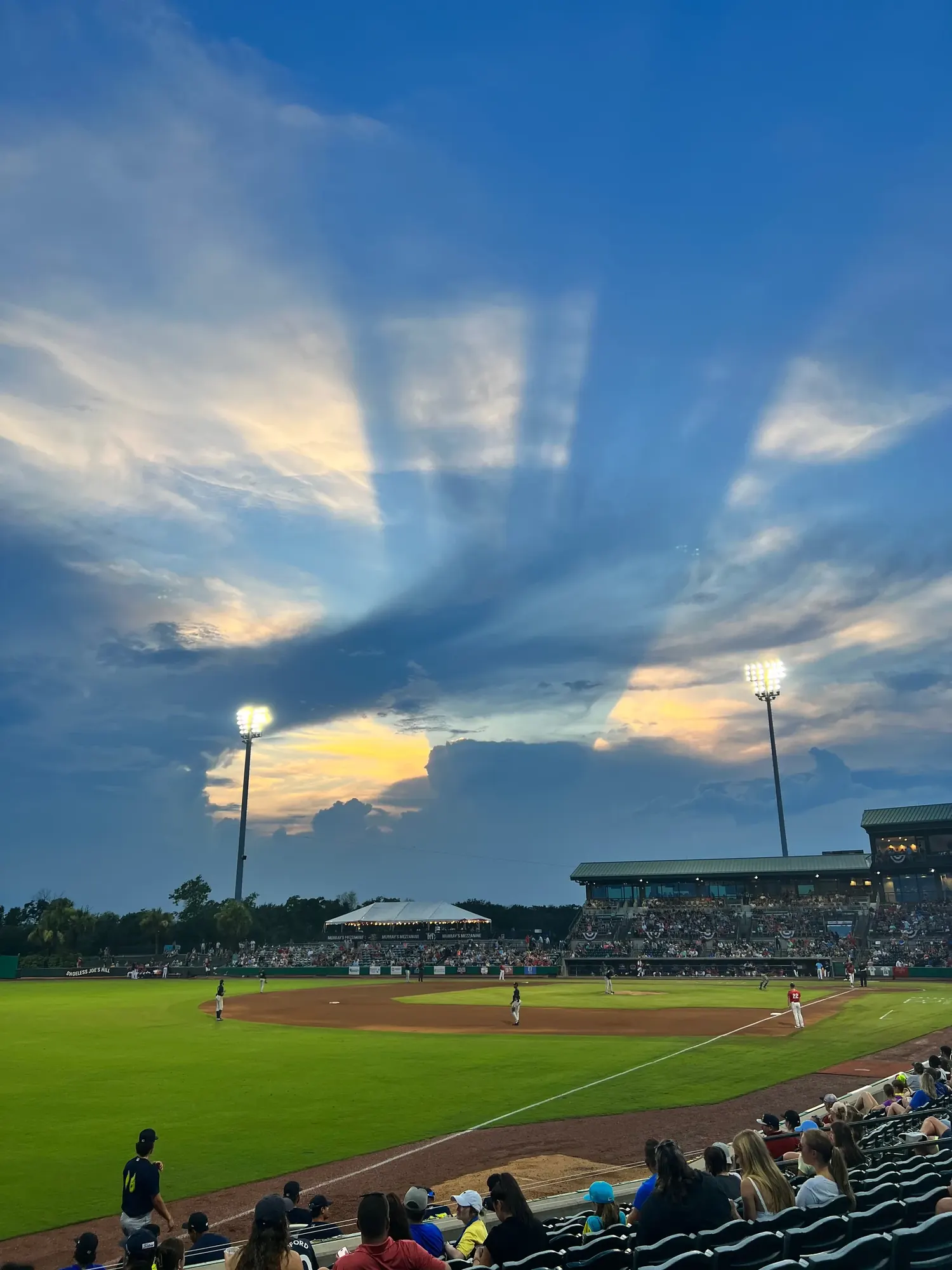
A Night at The Joe
A wristband, a family in front of me, and a conversation that outlasted the game
A wristband, a family in front of me, and a conversation that outlasted the game
At Joseph P. Riley Jr. Park, I learned that my face was not sufficient proof that I was old enough to buy a beer.
I had reached the front of the line when the attendant asked to see my wristband. I did not know I needed one. He pointed out the ID check stand and I wandered over, showed my license, and returned wearing the small official evidence that I was over twenty-one. I remember thinking that the evidence in my case should have been visible.
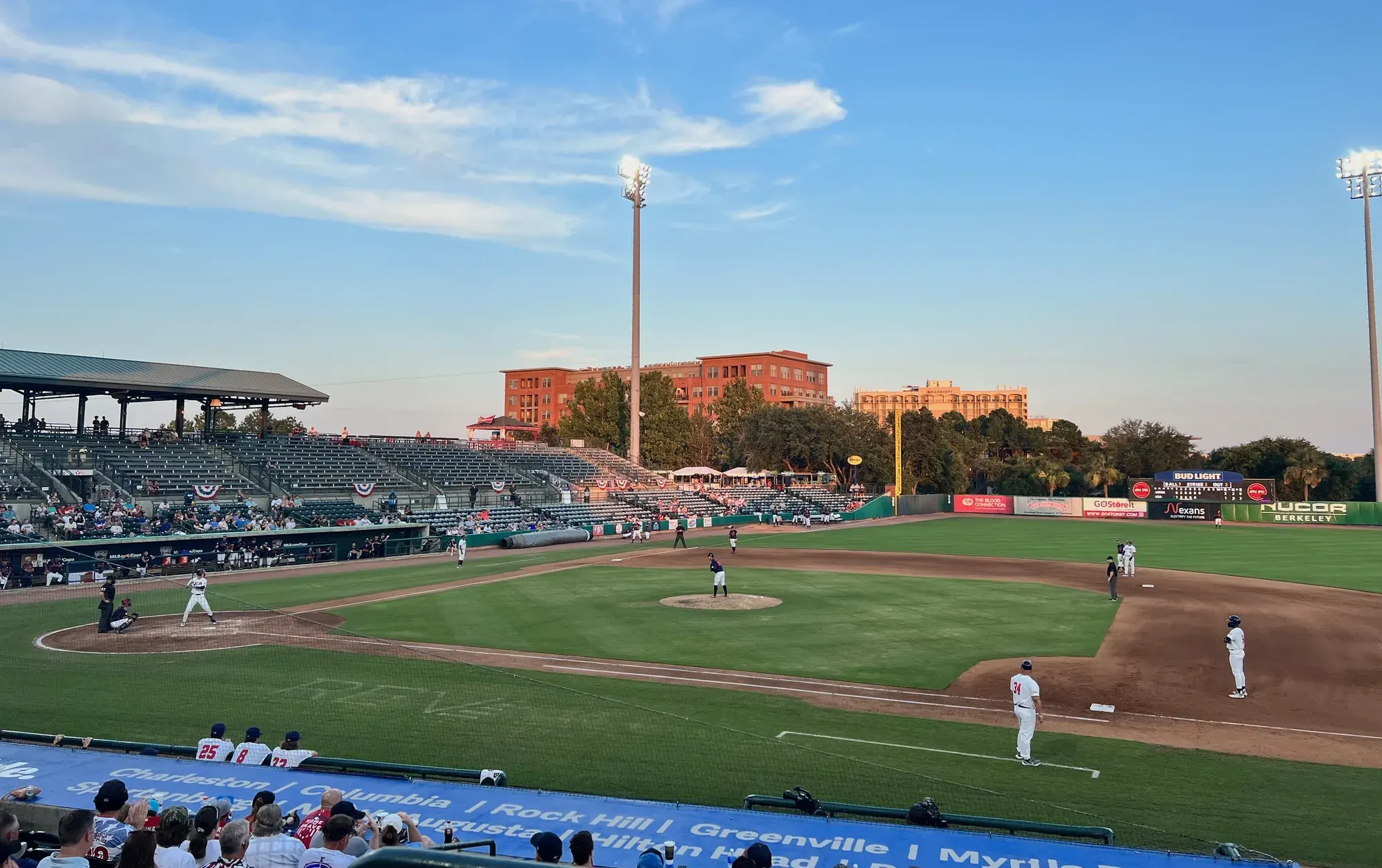
Joseph P. Riley Jr. Park, mid-game · Charleston, South Carolina (Michael Holland)
It was one of two baseball nights during my month in Charleston. The first game I attended featured college players from the United States and Japan. The other was a RiverDogs game. I bought a RiverDogs shirt for myself and another for my son Brendan because of the team's connection to Aaron Judge and the Yankees. Brendan and I joked that, since we now had the same shirt, we would have to coordinate so we did not wear them together. Months later, people in other cities would see mine and ask whether I was from Charleston.
That evening, though, I was simply a baseball fan at a minor-league game by himself. A family of four sat in front of me: a father, a mother, and their two sons. At some point the father and I began talking, and the conversation continued across several innings.
Baseball gave us somewhere to start. We both loved the game, and both of us had taken our sons to minor-league parks. We talked about how affordable those nights could be for a family, about sitting close to the field, about taking our sons to games. We talked about Cuba and its love of baseball. He wanted to go there someday.
He also told me about his work. I was fascinated. He was a mason and crews hired him to help repair some of the old houses South of Broad. I had spent hours walking past those houses. They were among the reasons Charleston had begun to feel like a city where I might live.
From the sidewalk, I encountered them as finished objects: magnificent, expensive, apparently permanent. But he knew them differently. Their age and beauty depended on people with the skills to keep them standing.
When the game ended, we shook hands but I did not get his name. What remains is the length of the conversation and the easy movement among subjects: sons, baseball, the cost of taking a family to a game, the houses, Cuba.
The houses remained beautiful after that night. I still walked South of Broad and imagined the lives contained behind their doors. But they no longer appeared complete. Someone had to know where they were failing. Someone had to be called, arrive with a crew, and do the work that allowed permanence to keep looking effortless.