Inside the Inheritance
Reflections on America at 250
Reflections on America at 250
I was upstairs when I heard the bang.
I came down to find the movers had opened the sliding door to the small porch above the street. Instead of carrying the furniture down the stairs, they were throwing it off the balcony into the truck below. A bookcase shattered on impact. They did not pause. To them this was a job to finish, a schedule to keep. They had no reason to know how many Friday nights had accumulated in that room, or what it had taken to build that home on the budget I had. I did not yet understand what I was doing. I only knew that something I had built had become unrecognizable to people with no reason to recognize it.
The next morning, I packed what fit into a carry-on and one checked bag, put the rest in storage, and went to Newark Airport with the particular confidence of a man who has not recently tested his assumptions. It was September 25, 2022. My sons were in college and I decided months earlier that I was leaving too, not for another house but for the road, and wherever it would take me. I told myself I was starting over. Whatever the furniture could not hold would finally fall away.
I was wrong. Four years later, as America turns 250, I understand how wrong in a way I could not have understood standing in that empty townhouse. The things I thought I had left behind kept arriving before me. They appeared in how I answered questions from strangers, in the parts of my story I smoothed for easier telling, in the loneliness I sometimes dressed as freedom, and in the habit of turning what I witnessed into something I could use. I had left a house but not the man who had lived in it. One thing came with me by choice: my grandparents' wedding photograph.
It is a sepia-toned studio portrait, with the beveled border mat photographers used in the late 1920s and early 1930s. They look happy in a way that does not announce itself. My grandmother left Broadford, County Clare in 1926 and crossed the Atlantic into a country that had not yet decided what to do with the Irish. They were caricatured, suspected of divided loyalty, and treated as a moral threat to the country's existing order. They were admitted, eventually, through a bargain that later generations often preferred not to examine.
She built a life anyway, with my grandfather, who was from Belfast. She had my father. She had grandchildren. She did not live to know that one of them would carry her photograph across the country she crossed an ocean to reach.
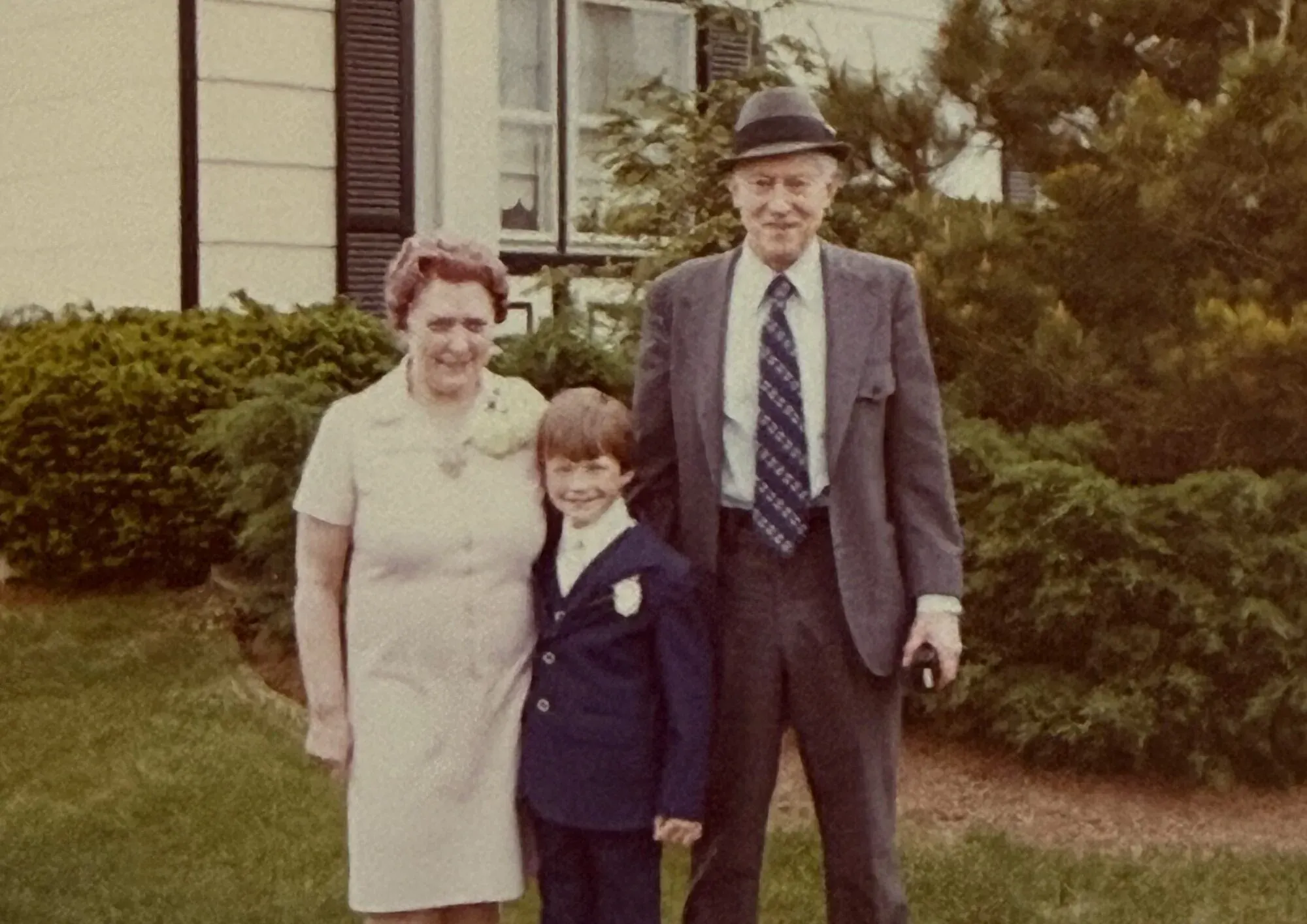
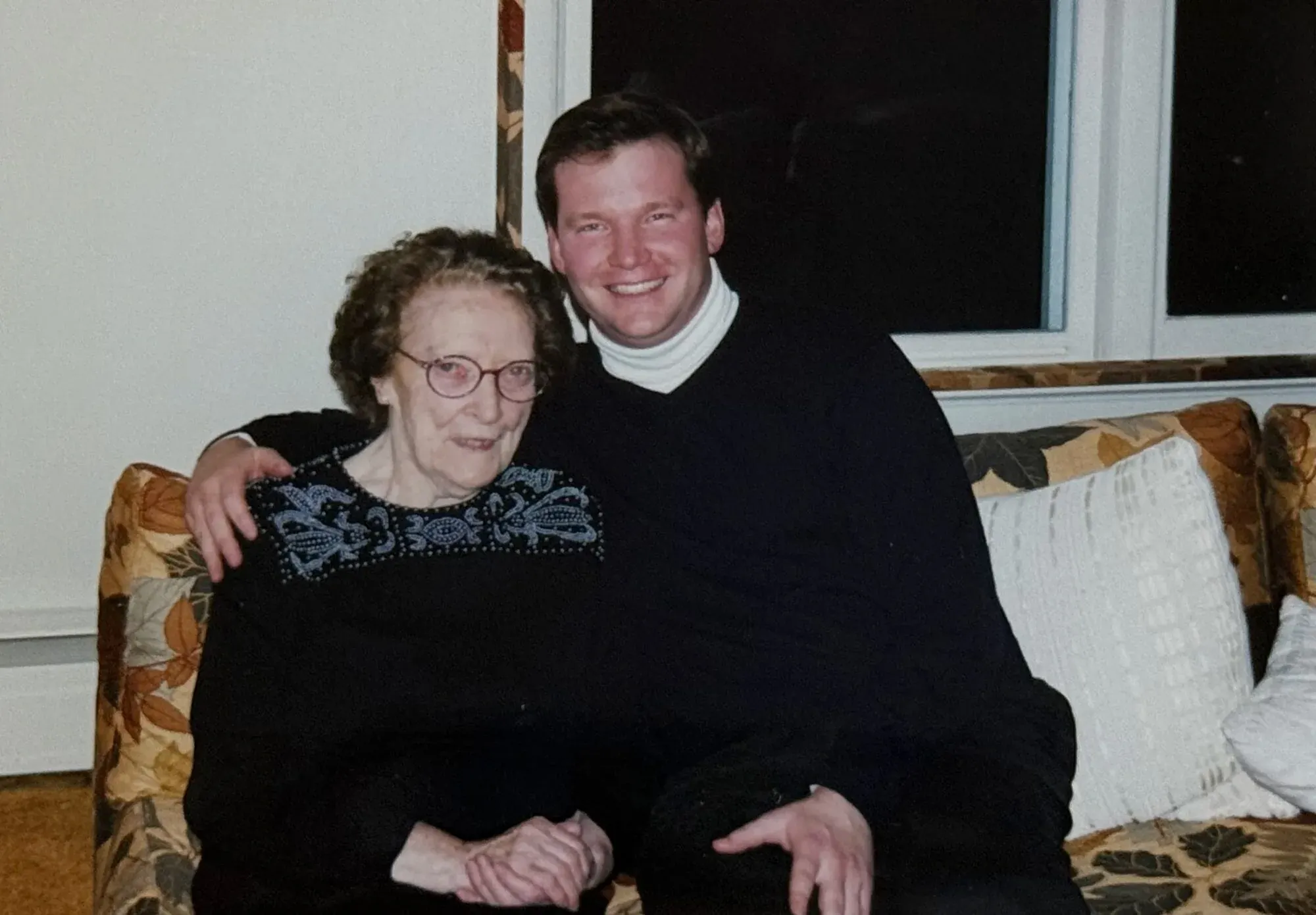
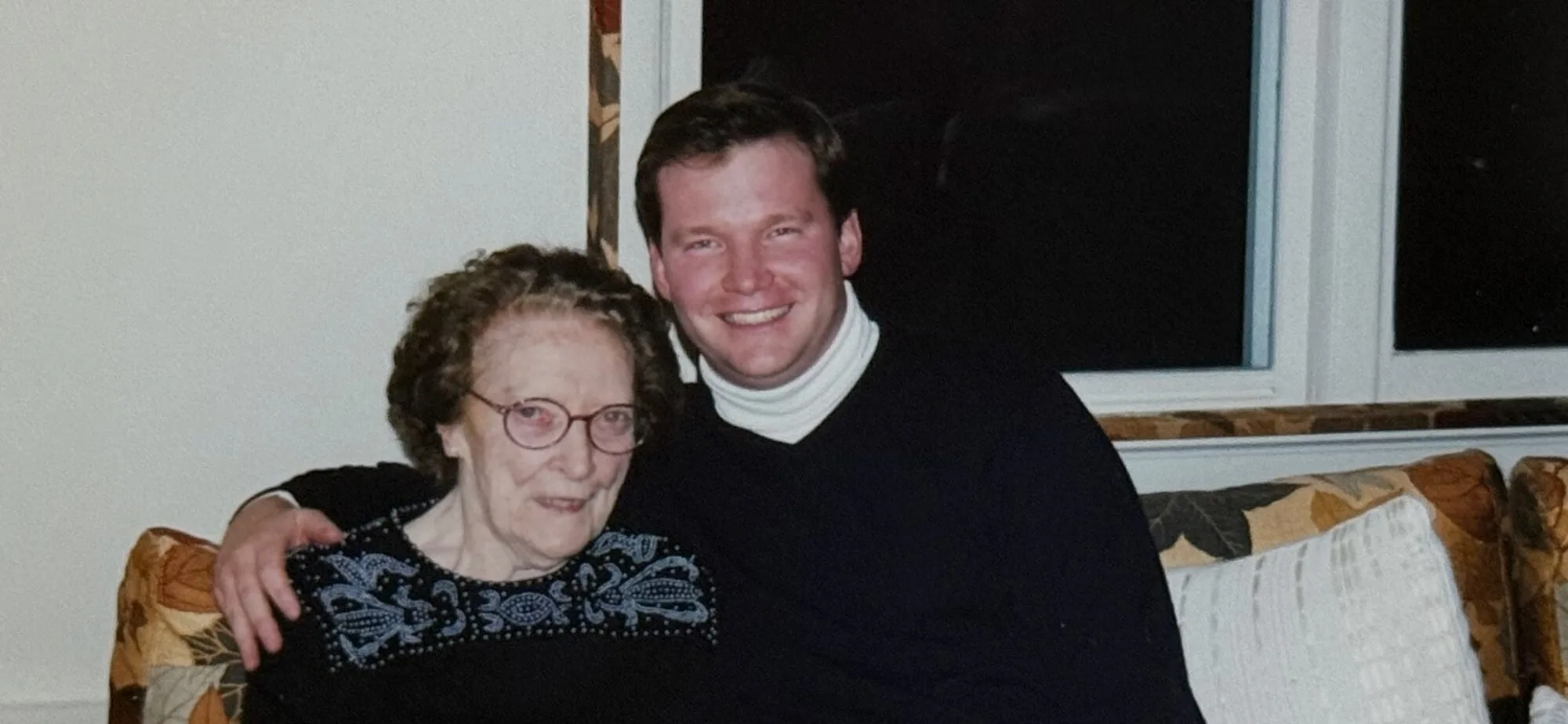
With my grandparents, May 1977 (George Holland); with my grandmother, circa 2000 (Anne Holland)
I went back to our family farm in Broadford many years ago. I stood in the fields on a gray afternoon, the kind of gray that is specific to the west of Ireland, low and close, the cold coming up from the ground. I tried to imagine the version of her life in which she never left. I still do. But the imagined life keeps dissolving. She built something in America that outlasted her, and I have spent these years trying to understand what I owe to that and what it asks of me beyond gratitude.
I put the photograph out wherever I stay. It has sat on bedside tables and kitchen counters in more than forty cities. It has been to places she never imagined, and to places where her story did not sit alone. I brought it with me to North Dakota.
I had gone to Standing Rock Sioux Reservation because of the pipeline fight. The land and the river had been at the center of a national argument the news had covered intensely and then largely left behind. I wanted to see the place after the argument moved on. I wanted to understand what sacred ground looks like when you are standing on it. I also wanted to learn more about Tȟatȟáŋka Íyotake, known to most Americans as Sitting Bull, the Hunkpapa Lakota holy man and leader whose name I had encountered in history books without understanding what his life and death required me to know.
Jennifer Martel's Lakota name is Wahukaze Nunpa Win, which means Two Lance Woman. She is a citizen of the Cheyenne River Sioux Tribe and serves as the Sitting Bull Visitor Center Coordinator at Sitting Bull College on the Standing Rock Reservation. When I reached out to ask permission to visit, I expected to spend an hour. I spent three.
She spoke about Sitting Bull as legacy rather than myth, about Standing Rock as a living community, about the river and the pipeline, and about forms of knowledge that did not fit easily inside the vocabulary I had been given. She spoke, too, about her children and grandchildren, and what she wants them to carry.
I remember listening with respect, but also with a shame I did not know what to do with. The longer she spoke, the more aware I became of how little I knew about what had been done to the people whose land I was standing on.
I also remember trying, probably more than once, to bring my own family story into the room, how the Irish had their own history of colonial dispossession and famine. Looking back I can hear what I was actually doing. I was trying to locate myself outside the story of what had happened to Indigenous peoples, to say without quite saying it that my people had arrived later, that they had not written the treaties or broken them.
At Standing Rock, I began to understand how easily memory can become a defense.
After we finished talking, I drove through Fort Yates, past the tribal headquarters, down to the Missouri River and the Standing Rock Monument. Then I went to find the place where Sitting Bull had first been buried.
Sitting Bull was killed on December 15, 1890, at his cabin on the Standing Rock Agency, during an attempted arrest ordered by U.S. authorities who feared his influence over the Ghost Dance movement. He had survived years of resistance, confinement, and broken promises. He did not survive the government's conclusion that his influence had become too dangerous to leave alone.
The grave site sits on a modest rise set back from the road, marked by a bronze plaque mounted on a large granite stone. The marker records that he was laid to rest there, and that in 1953 his remains were moved across the border to Mobridge, South Dakota.
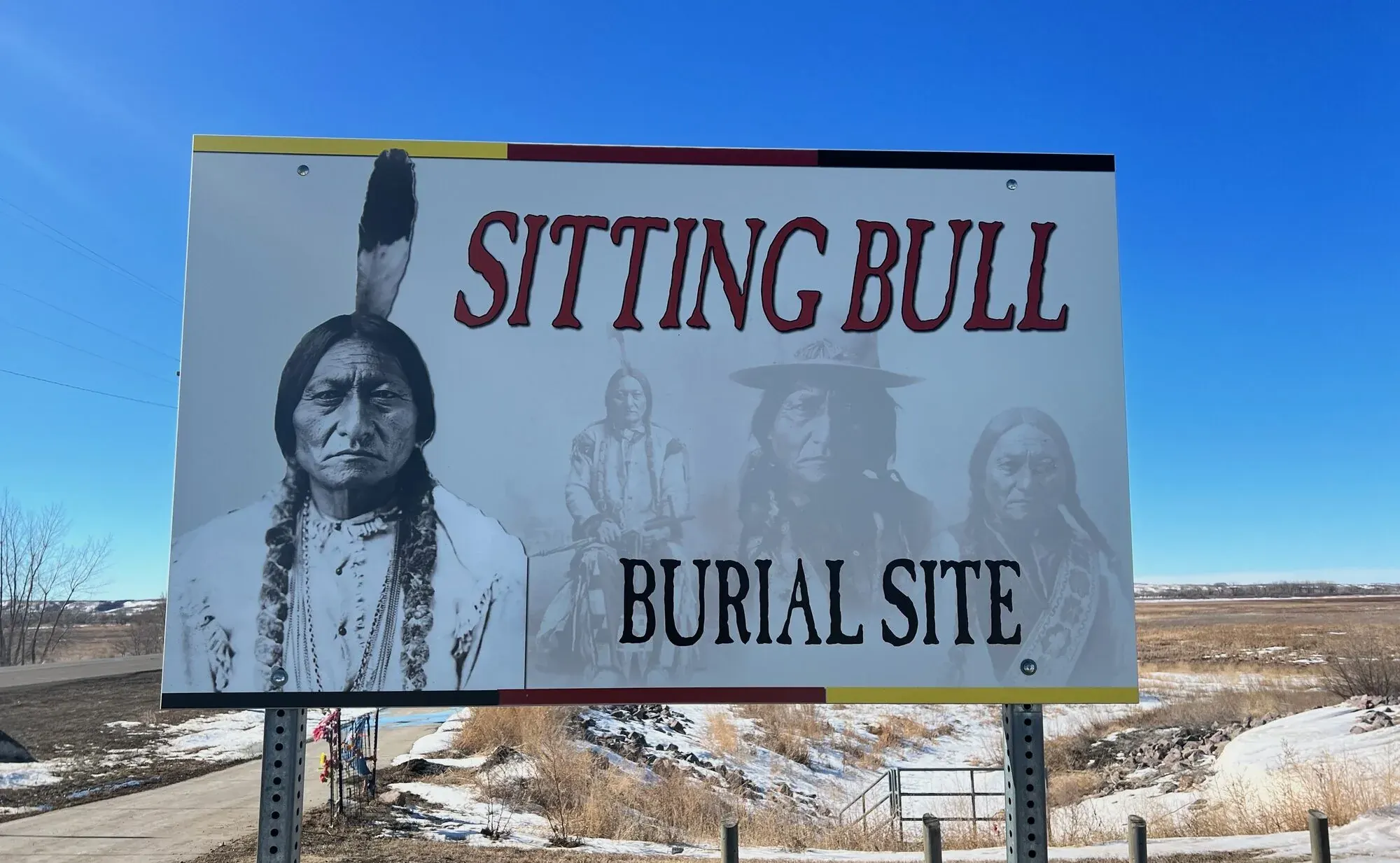
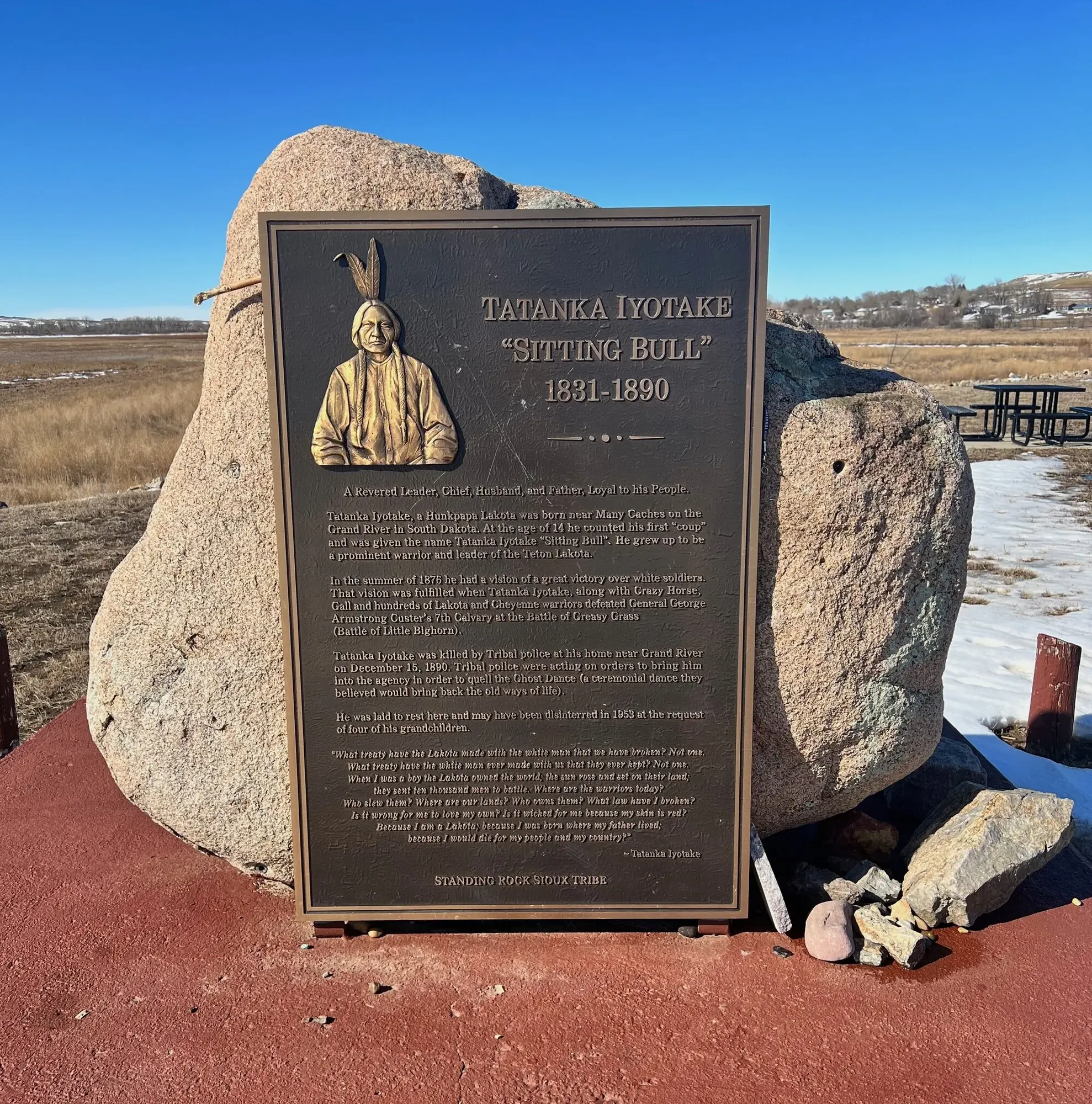
Sitting Bull Burial Site; grave marker erected by the Standing Rock Sioux Tribe · Standing Rock Sioux Reservation, Fort Yates, North Dakota (Michael Holland)
Jennifer had spent three hours inviting me into a history I had mostly known from too far away. A short drive away, the man whose legacy she helps keep present had been buried, moved, and argued over by a country that had tried to contain him in life and in memory. I stood there for a while, then walked back to the car and sat for a moment before driving away.
More than a year would pass after Standing Rock before I found myself in Philadelphia. My son had taken a job there after college, and it gave me a reason to finally walk the streets where the promise was made.
Philadelphia in December is cold but the city feels more like itself. I walked through the historic district across more than one visit. The area is now encircled by modern office towers, but the complex anchors everything around it. Independence Hall, the Liberty Bell, and the National Constitution Center sit within a few minutes of each other on foot. Christ Church Burial Ground, where Benjamin Franklin is buried beneath a simple stone that visitors cover with pennies for reasons no one fully agrees on, is about a third of a mile away. Elfreth's Alley, the oldest continuously inhabited residential street in America, is a few minutes further on.
Philadelphia was not only a founding city for me. My grandfather left Belfast in 1923, arrived in Boston, and made his way to Philadelphia, where he lived before eventually moving to New York. I do not know what he saw first, or how long he stayed, or whether the city felt like arrival or interruption. But knowing he entered America here changed something about how I moved through those streets. My grandfather passed through Philadelphia on his way to becoming part of the American story. So, in a different way, did I.
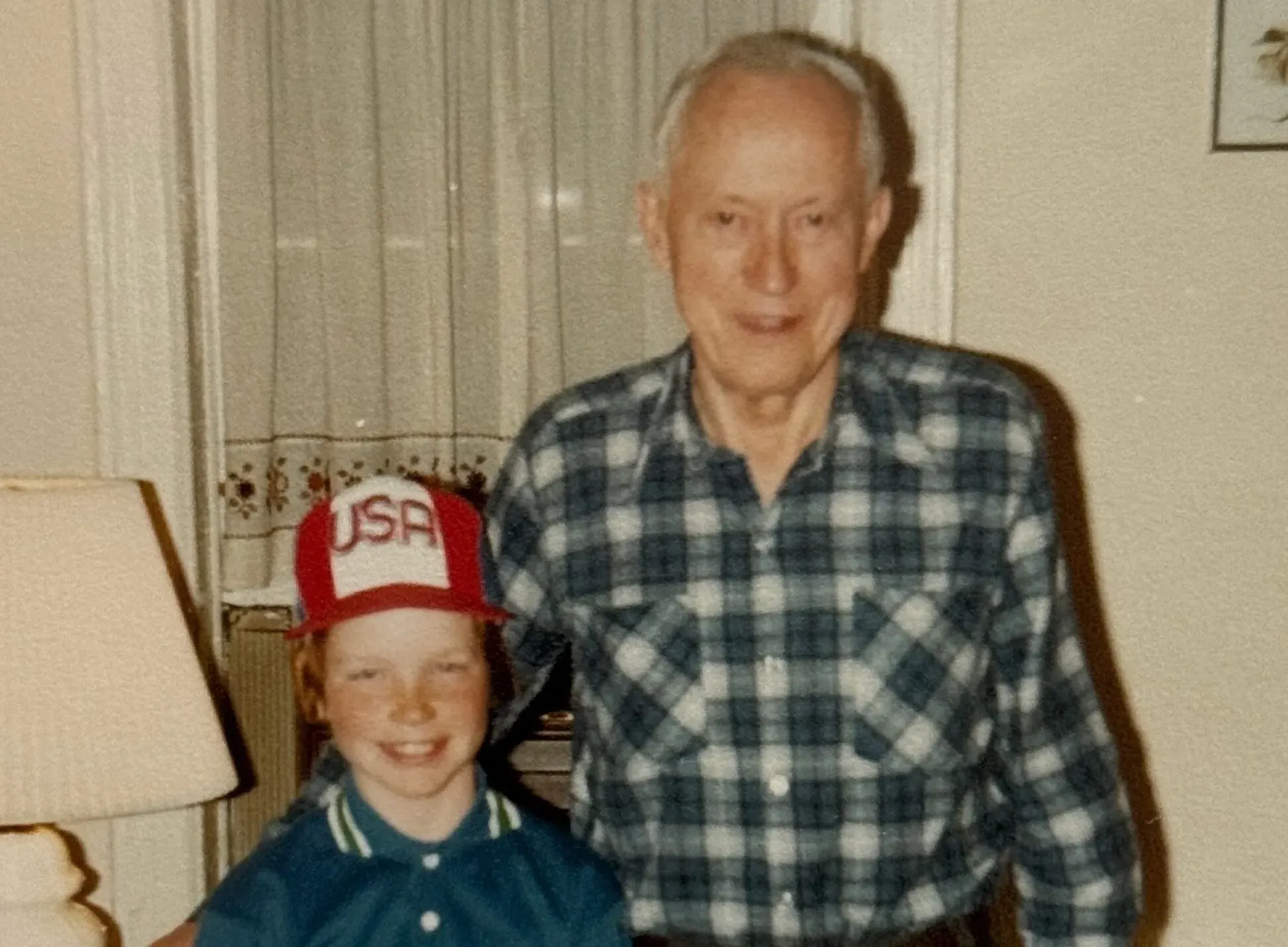
With my grandfather, circa 1980 (George Holland)
The center of it all is Independence Hall itself, which is smaller than the paintings suggest. The room where the Declaration was adopted and the Constitution was debated is large enough to hold history, but small enough for men to hear one another across the floor without raising their voices. Ordinary afternoon light comes through the windows. The wooden chairs look uncomfortable in the way old chairs often do, built more for posture than ease. The room has acquired the slight unreality of a place Americans have looked at for so long that the looking has become part of the room itself.
The scale still matters. These were men making a statement of rebellion against the most powerful empire in the world, arguing about authority, representation, and the terms by which a people might actually govern themselves. The language that later became national inheritance began there as ambition, fear, and nerve. It is easy, from two and a half centuries away, to question what they missed. The room reminds you they could not.
I tried to understand what the men in that room believed they were doing. They were not drafting language for posterity. They were committing treason in the name of political beginning. The Declaration was not a commemorative document when it was written. It was a revolution. Later, in the same building, another group of men argued over a Constitution meant to make that rebellion governable, trying to turn rupture into structure, to begin again by designing a new political order on different ground.
I could not make that room innocent. The people whose land became the territorial foundation of the expanding republic were not present in its imagination as sovereign equals, and the expansion of the promise would require their removal. The immigrants who arrived later, including my own family, entered an order already shaped by exclusions they had not authored but would eventually benefit from. The men in Independence Hall could not have imagined my grandparents, could not have imagined the reservation I had been on, could not have imagined what 250 years would ask of the sentences they were writing. No one could. But I walked those streets feeling the distance between the promise and the record, and I did not want to collapse that distance into either reverence or dismissal. What is omitted does not disappear. It remains in the room, in the land, and in the grave, waiting for someone to ask whether the promise can become more honest than the people who first made it.
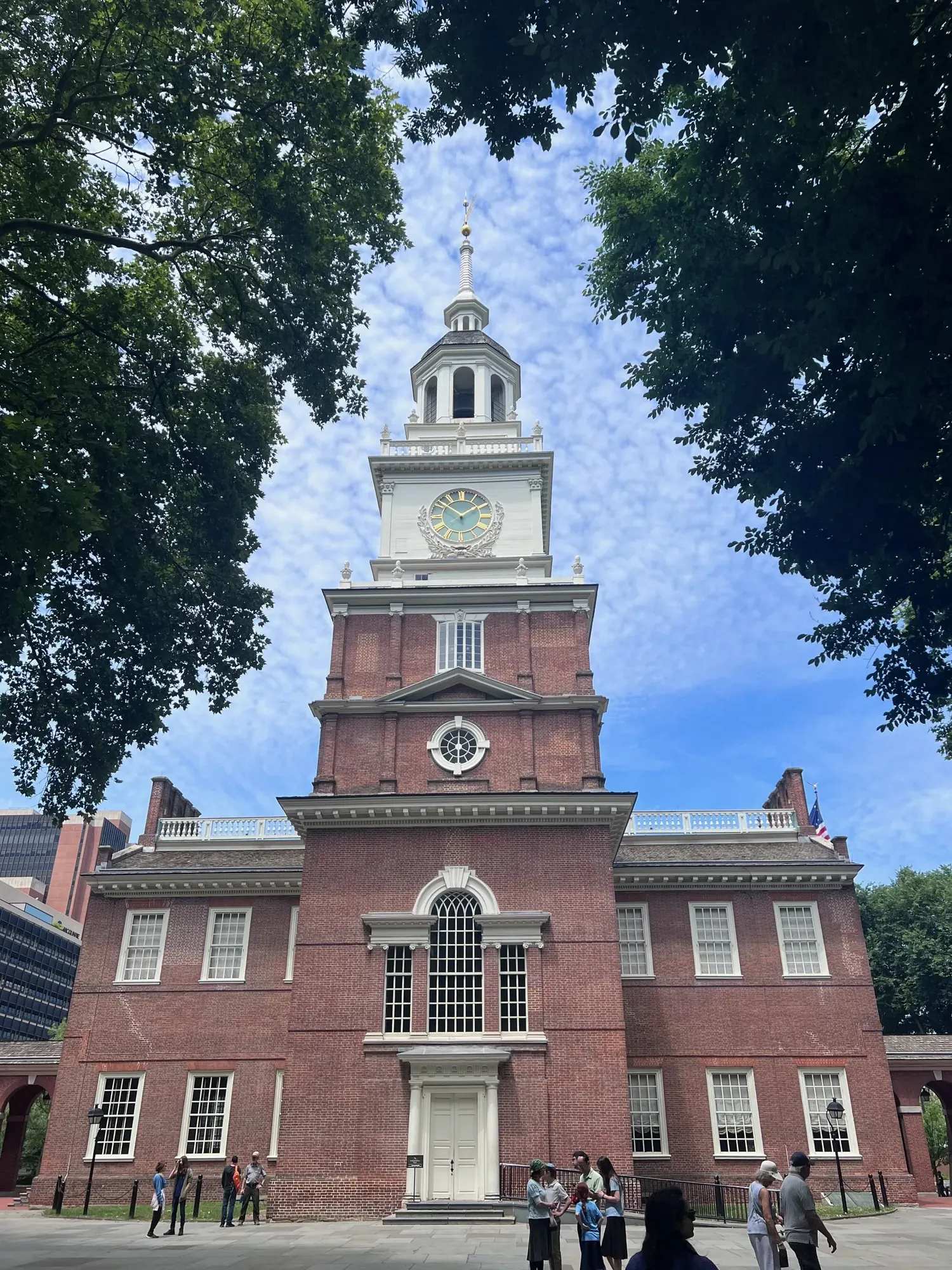
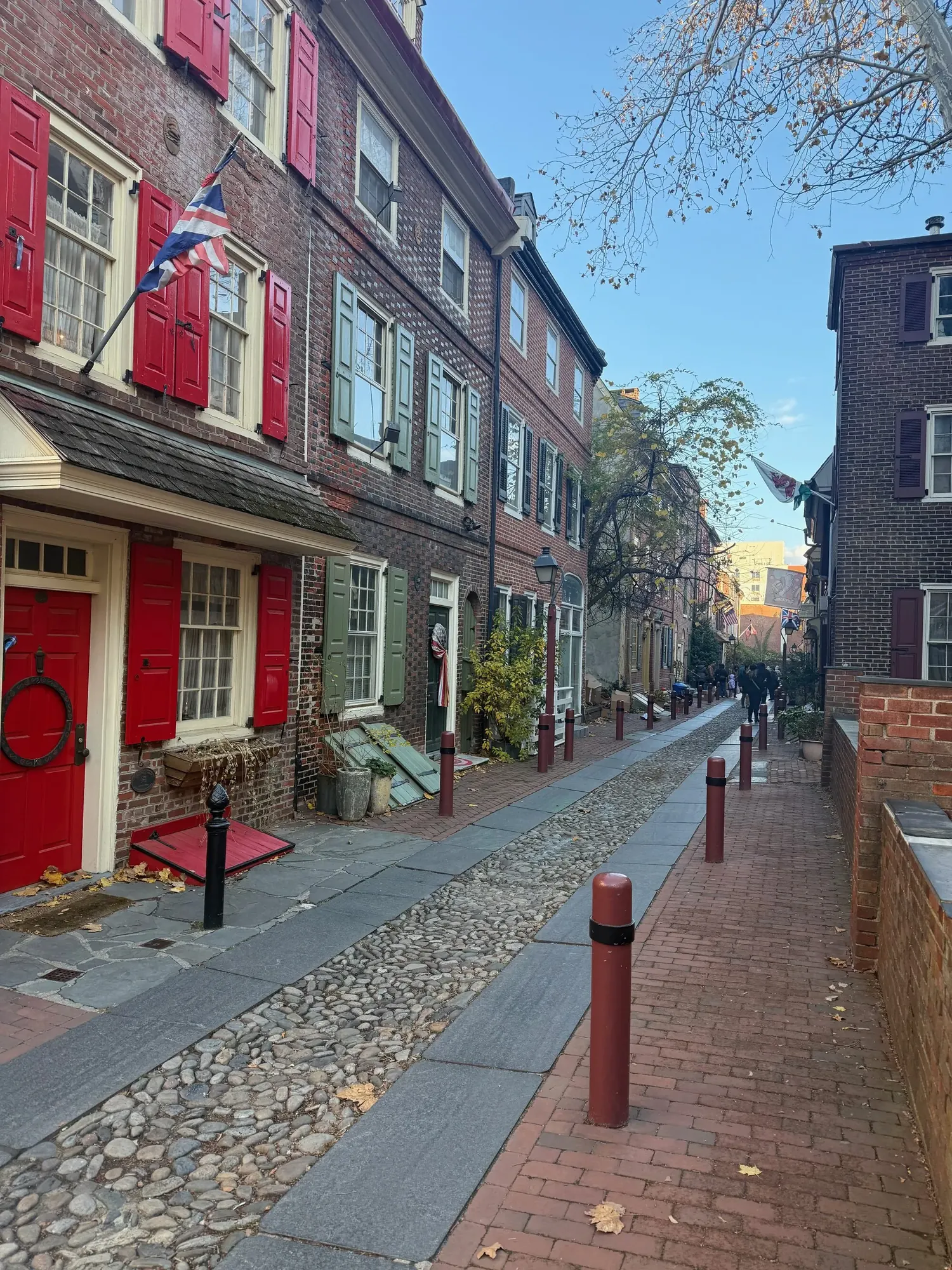
Independence Hall; Elfreth's Alley · Philadelphia, Pennsylvania (Michael Holland)
But founding rooms are not the only places where a country explains itself. Cemeteries do too. The rows of white markers at Arlington stretch further than you expect when you are standing among them rather than seeing them in photographs. The cemetery covers 639 acres, but acreage is not the measure that matters when you are walking there. Each marker holds a name, and each name is the remainder of a life that did not return to whoever was waiting for it. The number is too large to hold as a number, so you stop trying and walk instead. The walking is what the place asks for, not reflection as an organized activity, but the slow movement of a body through a field of names, in the particular light of a late afternoon, with the sound of the city somewhere beyond the treeline.
Even the ground at Arlington refuses a clean story. Before it became a national cemetery, it was a plantation, the Arlington estate of the Custis and Lee families, built in part by enslaved labor. James Parks, who had been born enslaved on the property, dug some of the first graves after Union troops occupied it during the Civil War. He is buried there too. I did not know that as a child when I first came here. I knew the rows, the silence, the idea of sacrifice. The ground holds more than that.
At the Tomb of the Unknown Soldier, the ceremony reduces remembrance to discipline. Twenty one steps. Turn east. Twenty-one seconds. Turn north. Twenty-one seconds. Twenty-one steps back across the mat. The number is not decorative. It symbolizes the 21-gun salute, the highest military honor, and the guard performs the ritual with a precision that makes the crowd feel almost incidental. Since 1937, the Tomb has been guarded without interruption. Weather changes. Presidents change. Wars begin and end. The guard walks anyway.
That was what held me. Not the spectacle, because it is not spectacle in the usual sense. It does not ask to be liked. It does not need applause. The ritual continues whether the crowd understands it or not, which may be why it carries such force. In a country that turns nearly everything into commentary, the guard does not explain the meaning of the Tomb. He walks it. The unknown dead are not recovered by language there. They are kept company by repetition.
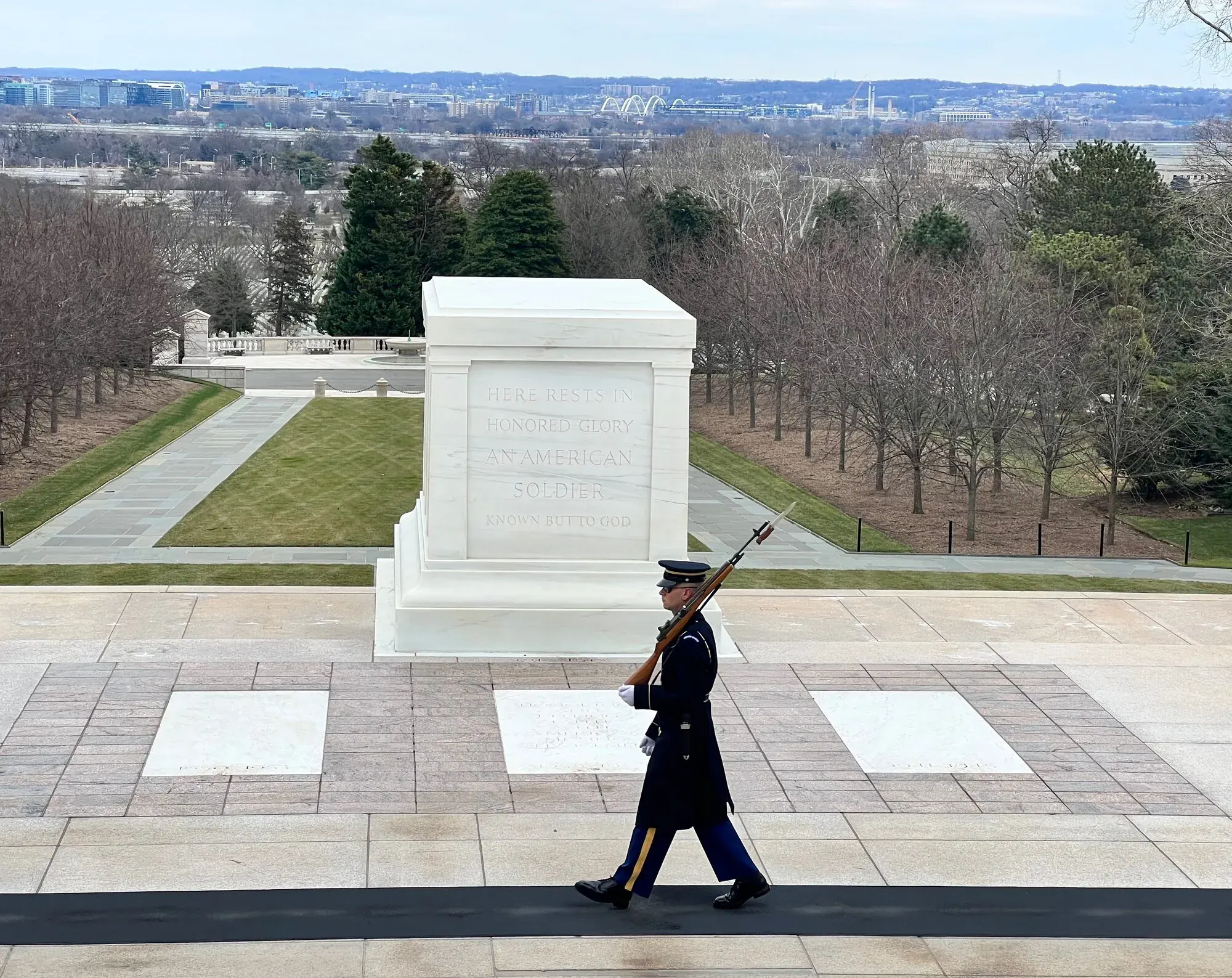
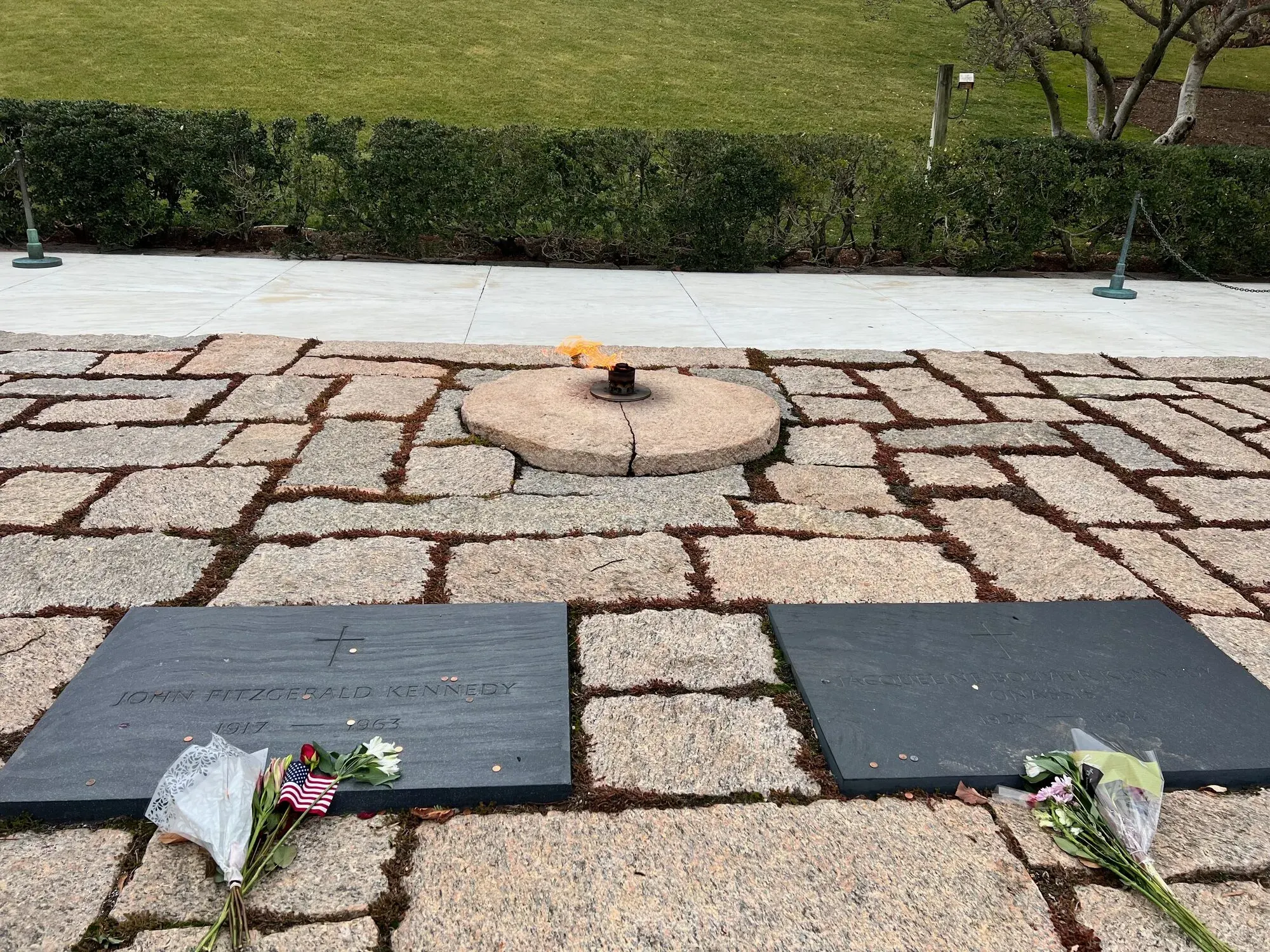
Tomb of the Unknown Soldier; John F. Kennedy grave with eternal flame · Arlington National Cemetery, Arlington, Virginia (Michael Holland)
At Kennedy's grave the eternal flame burns whether anyone is watching or not. When I was there, someone had left fresh flowers. I do not know who left them or what they were feeling, but the flowers were fresh enough that the person had not been gone long, and there was something in that I could not reduce to sentiment or dismiss as gesture. Remembrance was still being practiced there. It had not finished becoming history.
Arlington asked nothing of me except presence, the willingness to slow down and stay long enough to understand that some people found the country's promise serious enough to give everything for it. Not the promise as it was extended equally, because it was not. Not the promise as it was made to everyone, because it was not. But the promise as an idea that someone, in some year, under some circumstances, found worth dying for. I have been in enough places to know how available cynicism is at a moment like that. I have also been in enough places to know that cynicism and clarity are not the same thing. The people buried there believed something, or served something, or were called by something larger than the self. What it cost them cannot be turned into an argument without losing part of its dignity.
In 1976, I celebrated the bicentennial with the uncomplicated joy available to a seven-year-old boy in a safe suburb, surrounded by flags, fireworks, two-dollar bills, and the easy certainty that the country's story belonged to me. I meet the semiquincentennial with less innocence, but not less love. If anything, that love is deeper now and more serious. I have seen too much of what has been excluded, buried, defended, and carried to mistake America for either the story it tells about itself or the verdict its critics want to deliver. The country I have seen will not fit inside either performance. It lives in the distance between the promise and the record, and so do I.
For a long time, I thought the hardest part of this odyssey was learning how to see America clearly. I moved through city after city, watching the arguments on screens and then the lives around them.
I convinced myself that if I stayed long enough and listened carefully enough, I would find the country as it really was. The buried histories. The conditional bargains. I was wrong. I thought I was excavating the ruins of America.
It took me years to realize I was excavating my own.
That is where I am writing from now. Not from innocence. Not from exile. Not from the comfort of being above the argument. I am writing from inside the inheritance, which means inside the debt as well as the gift.