This Land Was Made for You and Me
Why "us vs. them" is powered by proximity.
Why "us vs. them" is powered by proximity.
For most of my life, I lived inside one version of "us" without realizing it was a version.
Born in Queens, then suburban New Jersey, then suburban Connecticut. College in Boston. Three years in London. Then back to the Tri-State area for decades. From there, it's easy to absorb an unspoken map -- the kind you don't argue for, you just breathe in. We are where things happen. The center of finance and media and culture and urgency. The rest is "out there." Smaller. Slower. Less important. Less real.
You don't even fully know you believe it. But it shows up in the jokes about flyover states, the dismissal of "small markets," the assumption that the country is what you see on your screens.
Then I dismantled my anchor.
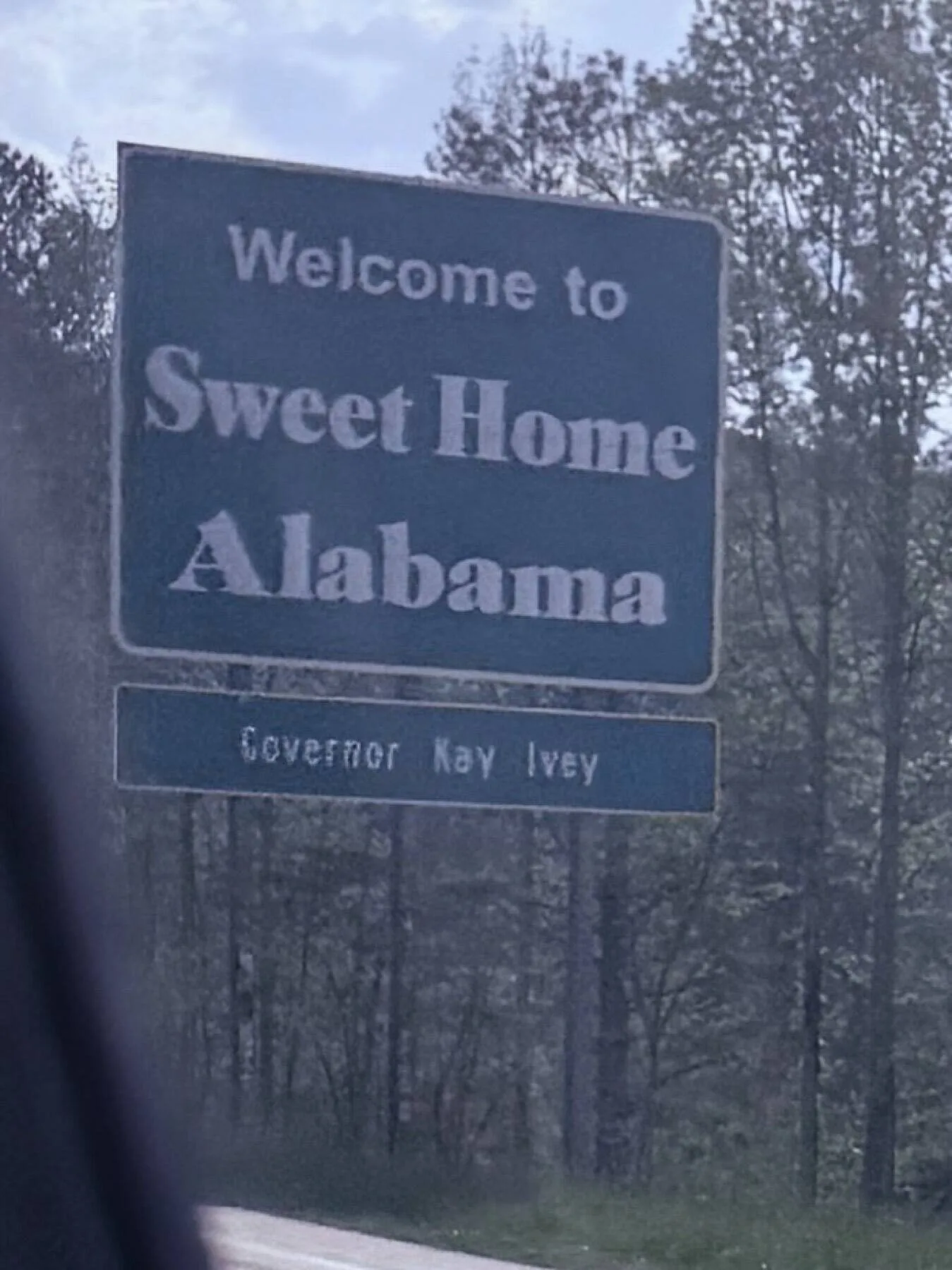
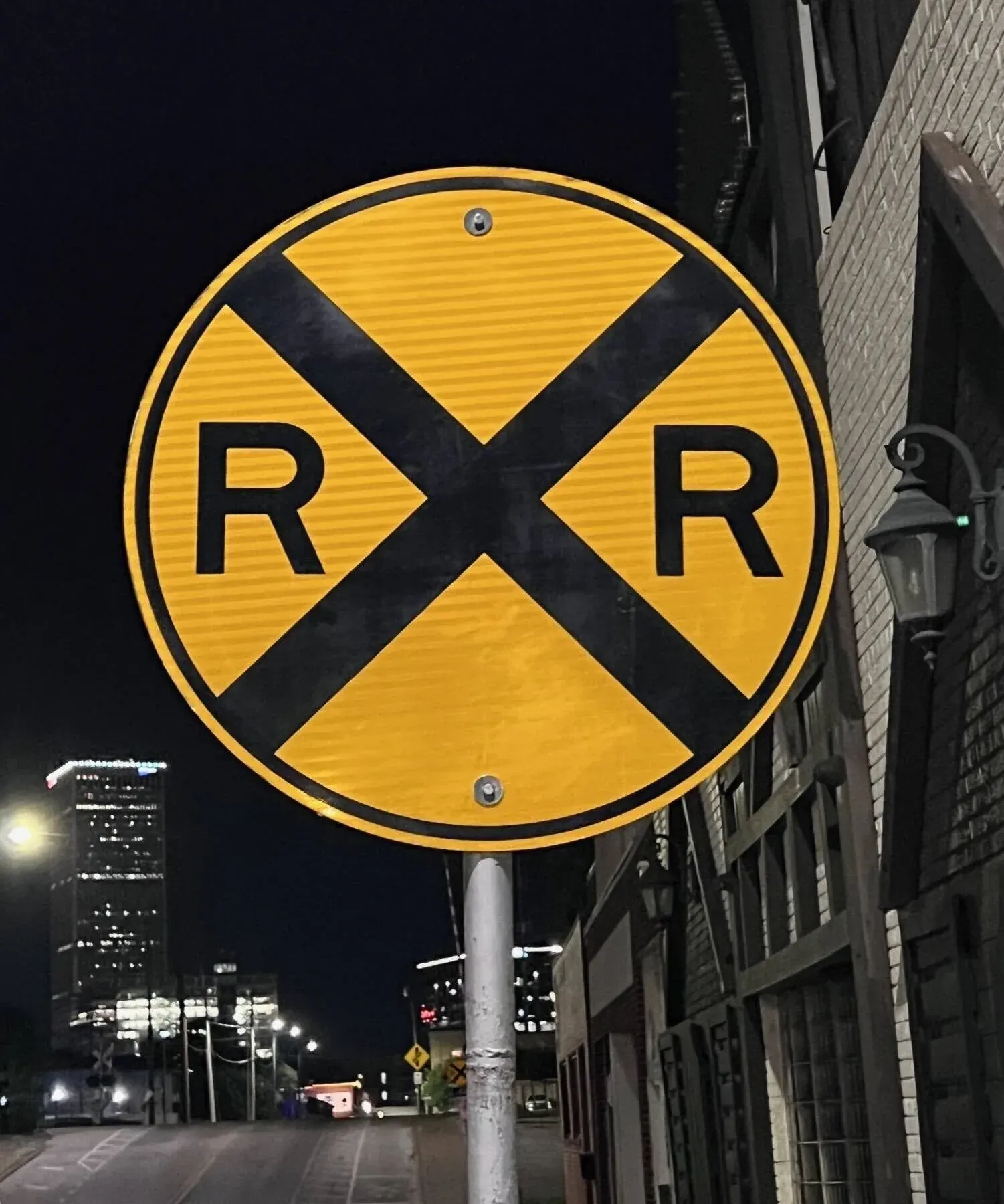
E Third Street, The Pearl District, Tulsa, Oklahoma; Route 20, Muscadine, Alabama (Michael Holland)
Not in theory. In real places. Dayton. Memphis. El Paso. Des Moines. Charleston. Boise. Denver. Cincinnati. Chicago. Milwaukee. Austin. Miami. Richmond. Portland. Tulsa. Living as a resident in these communities shattered the unspoken map I carried since my childhood. Not hotels. Not curated weekends. Real neighborhoods. Grocery stores. Cafés. Daily life.
I didn't just find a different way of life; I found a different "us."
And here's the part we often miss, because we rarely live it.
People don't choose to experience themselves as "them." Most don't wake up and think, I'm the other. I'm the outsider. I'm the problem.
They experience themselves as "us." As the center of their own obligations. Their own pride. Their own history. Their own place. Their own universe.
Living in the Tri-State area for most of my life, it was easy to believe that "out there" was waiting for validation. That the country was a set of secondary markets orbiting the real story. Then I started living "out there" long enough to stop narrating it.
You learn quickly what the Northeast doesn't always understand. In these cities, life is not a placeholder. It's not a compromise. It's not "until I can get somewhere better."
It's the main event.
People are raising families. Building businesses. Holding down institutions. Keeping promises. Carrying grief. Showing up for high school games and local charities. Sunday services and school board meetings. They know their streets. They hold them dear. They have their own center.
And as I looked for ways to belong, something disorienting happened. The roles flipped. I found myself trying to read a room the way I never had to back home.
What does it mean to be a good neighbor here? What does it mean to show up for this community? What are the local signals of credibility here?
And the more fluent I became in those rooms, the more my old room started to look strange.
Not wrong. Strange. The Tri-State version of "us" began to look like a version of "them" from the places I was living.
Frantic. Expensive. Status-coded. Self-important. More certain it is the baseline. More convinced that its anxieties are the country's anxieties.
In other words: the same place I once treated as the center started to feel, at times, like a province.
I caught myself doing something I never expected. Catching up with someone from my old life, I heard myself defending Des Moines — the place, the people, the pace — against the kind of casual, "Why would you ever be there?" dismissiveness. I wasn't trying to be contrarian. I was protecting something real from a story that had never met it.
And last spring, after more than two and a half years on the open road, I was walking down E Grace Street in Richmond toward the Virginia State Capitol when it hit me. "Us" and "them" are not fixed identities. They are proximity categories.
They are what happens when familiarity feels like truth. Most of our certainty is just distance wearing a costume.
Distance lets you turn people into types. It lets you confuse a headline with a life. It lets you fill in the blanks with whatever story your own room has been telling you.
And here is the nuance we're all currently struggling to name: "Out there" is no longer just a place on a map. It is a digital destination. A place in our heads. The people you only encounter through a screen. A digital elsewhere where other Americans get flattened into avatars.
Proximity does the opposite. Proximity forces detail. Detail forces humility.
It's hard to keep caricaturing "them" when you've walked their streets, stood in their grocery line, and realized the stakes they carry don't need your approval to be real.
Public America is engineered for othering. It has become a business model for an industry of consultants, operatives, influencers, and special interests who profit from permanent conflict while staying insulated from its consequences. We all have very real, deeply felt connections to the issues we care about. But Public America takes that sincerity and weaponizes it. It turns algorithmic division into revenue and outrage into identity. It convinces people that the only way to feel like "us" is to push somebody else into "them."
But Street-level America is often more complicated than that.
Are there problems? A staggering number of them. I've seen them in every zip code I've lived in over the last three and a half years. But street-level problems are visceral and material: homelessness, the cost of gas, the "Help Wanted" sign in the window of a shop that's been there forty years. It's the affordable housing crisis and the quiet struggle of food insecurity in the shadow of a brand-new stadium.
One is a ghost to be feared; the other is a challenge to be solved.
And when you are face-to-face with the lived reality of a community, you realize that local pride and local pain usually occupy the same block. People don't coexist because they agree on a political platform. They coexist because daily life requires it. Because they share a watershed, a school district, and a grocery store. You can't "other" the person holding the door for you at the local diner quite as easily as you can a profile picture on X.
Public America tells you the country is breaking apart. My experience is different. The country isn't collapsing; it's being misread. And the misreading starts with a single mistake: believing your room is the whole building.
Most of our certainty is just distance wearing a costume.
E Pluribus Unum was never just a motto. It was an argument. Out of many, one is not something we inherit. It's something we have to choose, over and over, especially when it's easier to shrink "us" by enlarging "them."
Woody Guthrie saw the whole building. When he sang, "This land was made for you and me," he wasn't offering a platitude about sharing. He was drawing a line against exclusion, on behalf of the people who had been told they didn't count.
He was arguing that there is no "out there." There is only here.
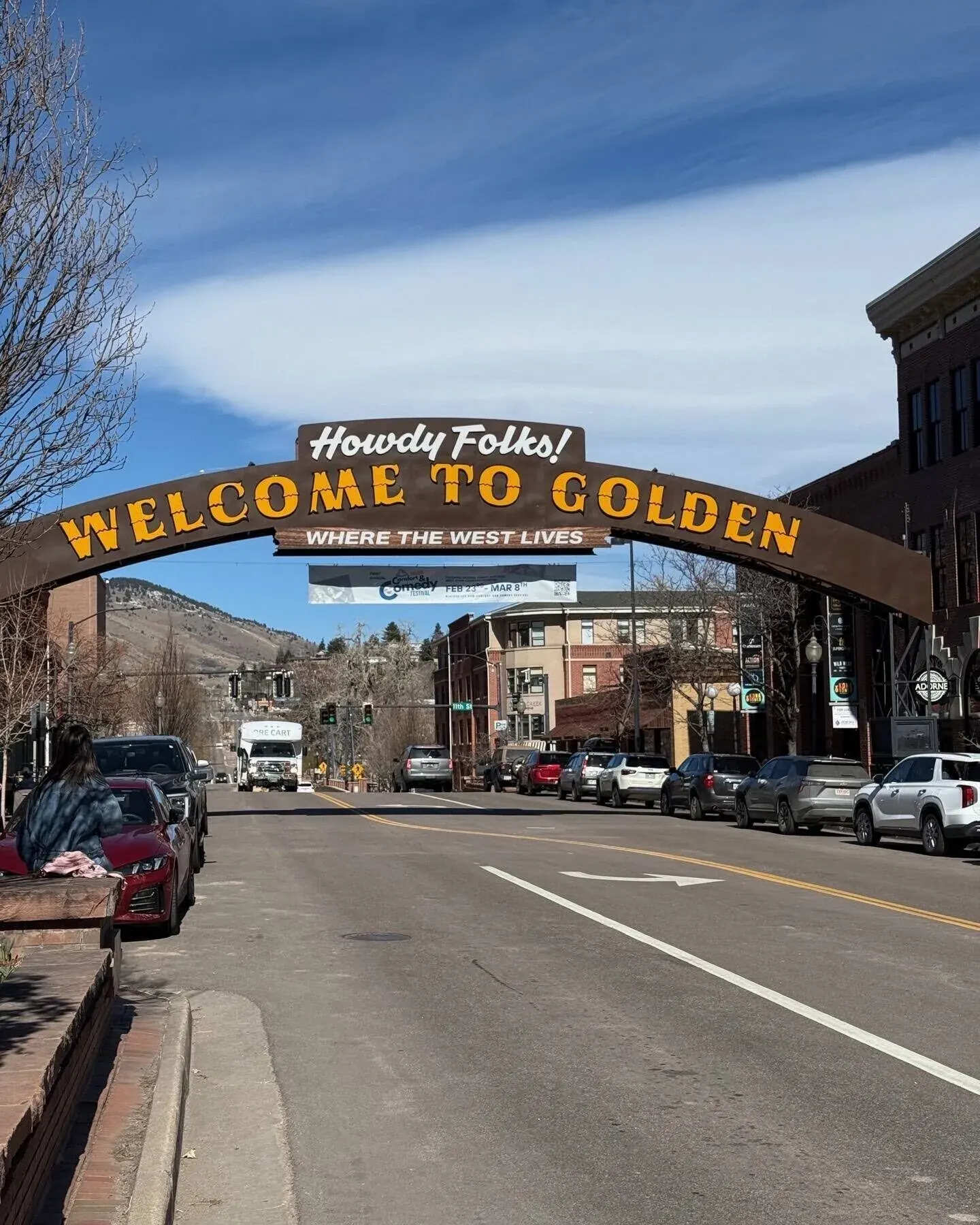
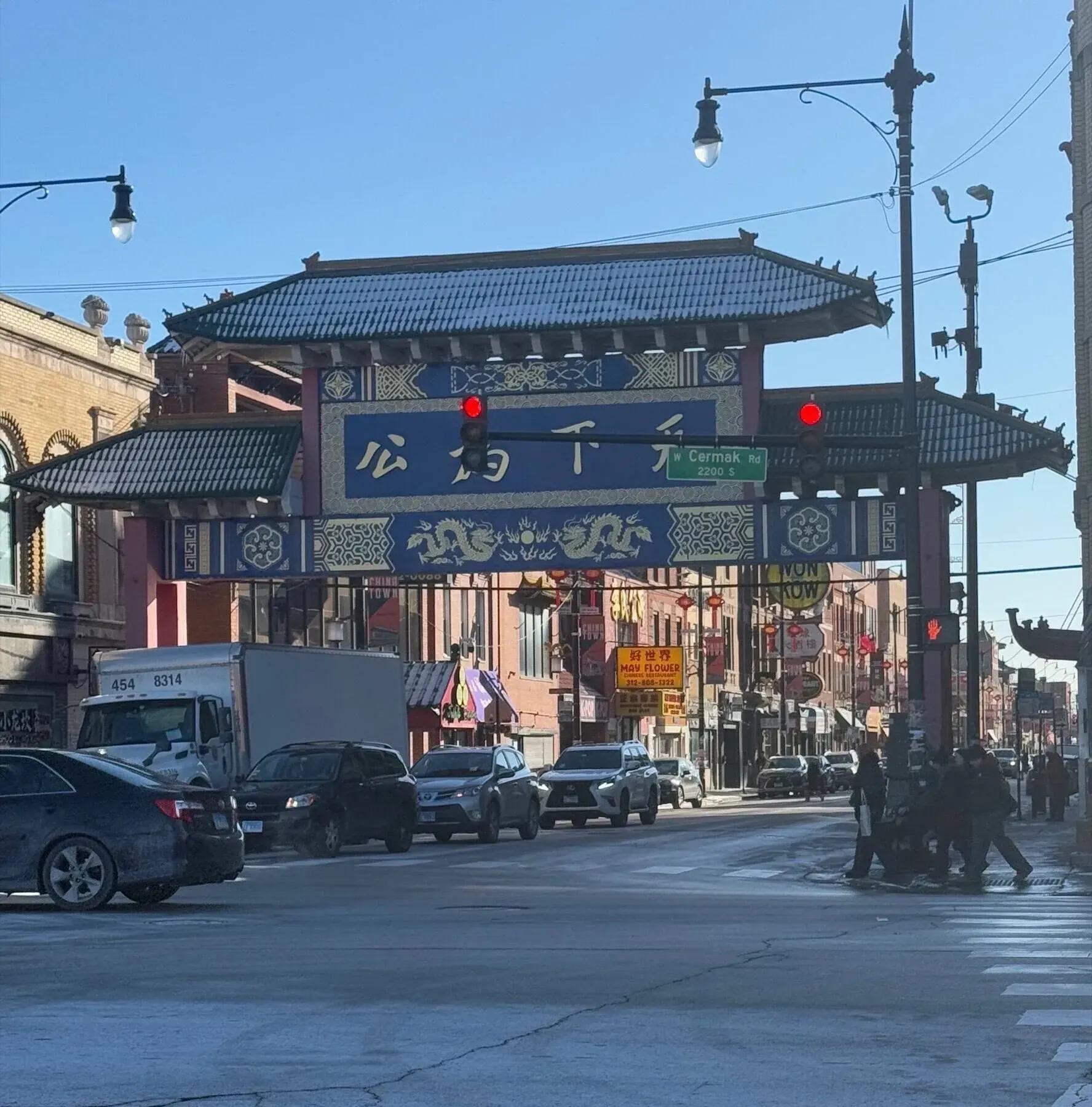
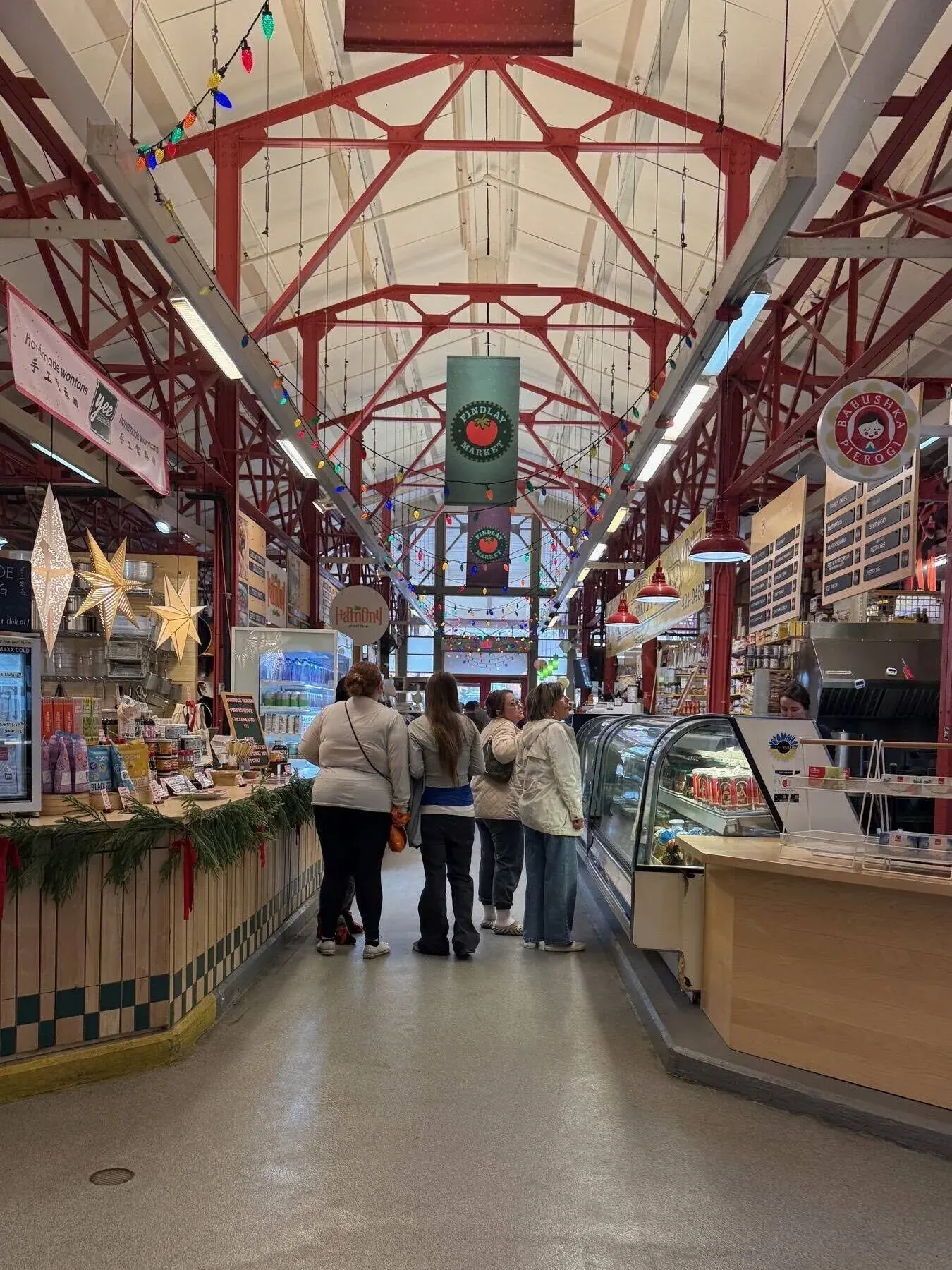
Washington Avenue, Golden, Colorado; Chinatown Gate, S Wentworth Ave, Chicago, Illinois; Findlay Market, Over-the-Rhine, Cincinnati, Ohio (Michael Holland)
And as I travel across this country, I'm often asked some version of the same question. Usually at the end of a conversation. Usually by someone tired of being told our country is unfixable. "What can I do?"
Start closer than politics. Stop letting distance do your thinking for you.
You don't need a nomadic lifestyle to stop looking at the person in front of you through the filter of the room you've been living in. Most of the damage we're doing to each other right now isn't ideological. It's relational. We're forming opinions about people we've never met, places we've never entered, lives we've never tried to understand.
Because the minute you cross an invisible border and realize you're someone's "them," you'll understand what you've been doing to other people all along.
And you'll see the truth that sits underneath our Nation's motto.
I am both "us" and "them."
So are you.