Issue 14 · August 21, 2026
I had been following Ernest Hemingway's path for years by the time I took the Green Line from Chicago to Oak Park.
I had gone to Finca Vigía, his home outside Havana and looked through the window toward the typewriter where he worked on The Old Man and the Sea and For Whom the Bell Tolls. I had driven to the Florida Keys to tour his house in Key West. In Paris, I had walked the Latin Quarter streets where he lived as a young writer, found the location of his apartment on Rue du Cardinal Lemoine and the room he rented on Rue Descartes to write. I had returned to Shakespeare and Company, even though the bookstore now occupies a different location from the one Hemingway knew. I had read his novels and his account of his time in Paris in A Moveable Feast. Wherever I encountered traces of his life, I tried to imagine him there.
Oak Park offered something different. After visiting places where Hemingway had gone to become Hemingway, I could finally go back to where he began.
I remember the anticipation on the trip out from downtown. It was a cold day, and I arrived before the Ernest Hemingway Birthplace Museum opened. I stopped for coffee and a chocolate chip cookie at Courageous Bakery & Cafe on Lake Street, walked around, passed the house, and eventually returned when it was time to go inside. There was something strange about finding the beginning of a life I associated with so many distant places in a Victorian house on a residential street.
The house has been restored to evoke the home Hemingway was born into in 1899. I moved through its parlors and dining room, past the piano and family photographs, listening to the docent and trying to imagine the scale of life inside those rooms before anyone knew what Ernest Hemingway would become. His mother, Grace, was a trained musician. His father, Clarence, was a physician and outdoorsman. This was a household of music, medicine, manners and expectation.
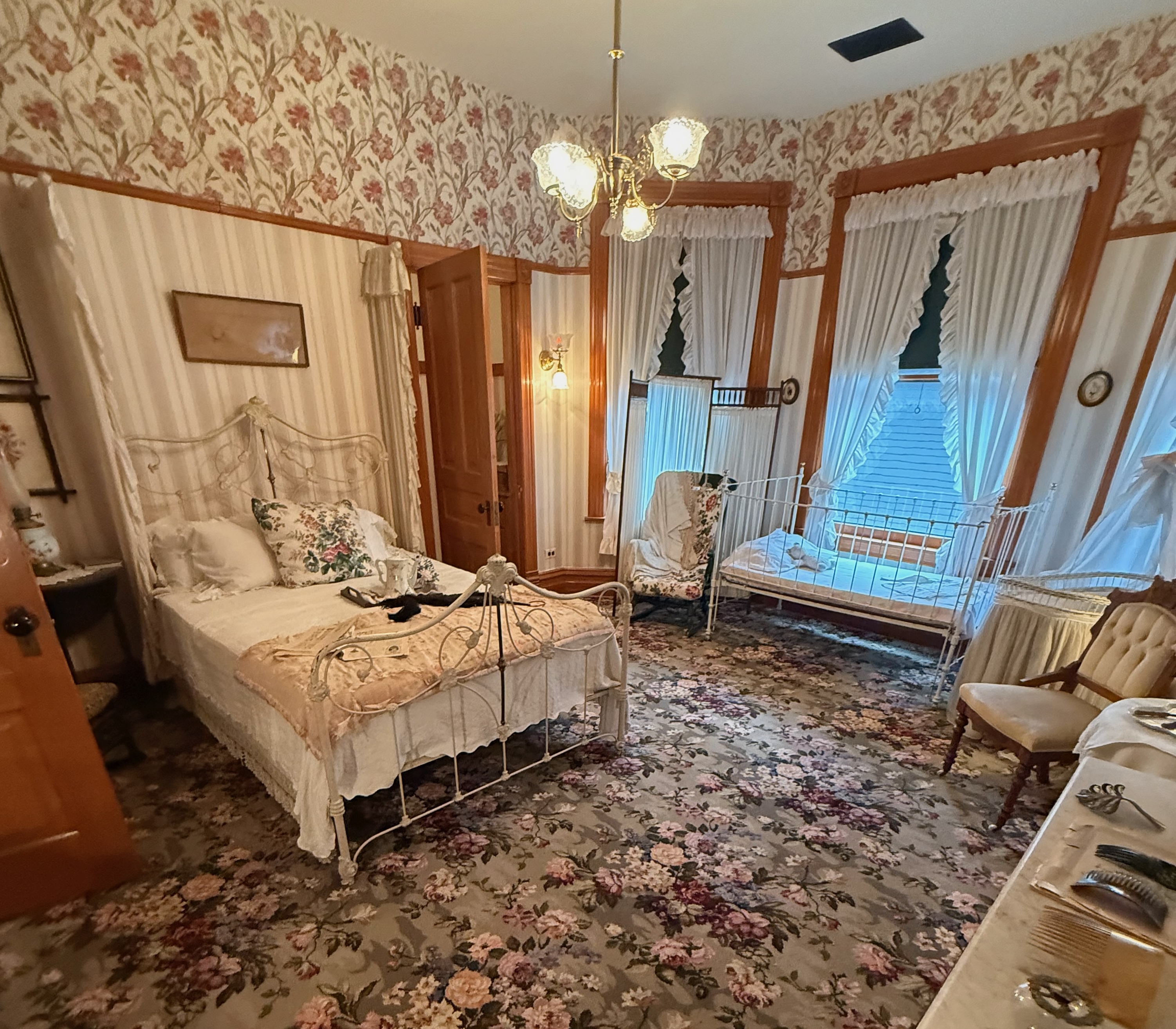
Upstairs, I stood in the bedroom where Hemingway was born. Flowers covered nearly everything: the carpet, the wallpaper, the pillows, the upholstered chair. Lace curtains framed the tall windows, and a white iron bed stood across from the narrow crib. The room belonged unmistakably to the Victorian household into which he arrived, decades before the spare sentences, fishing boats, bullrings, and wars. Nothing about this bedroom could explain The Sun Also Rises or A Farewell to Arms.
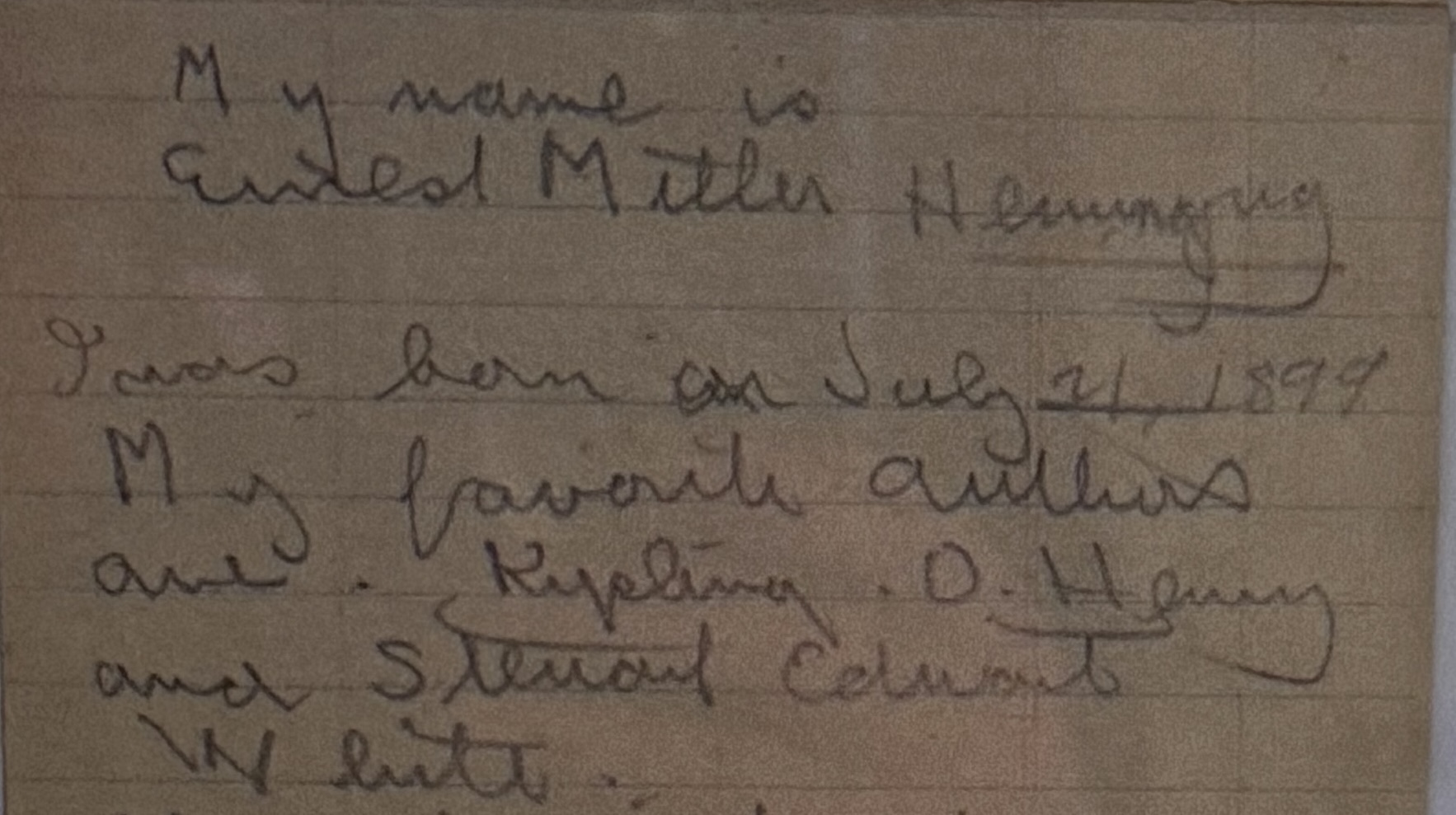
Elsewhere in the museum was a short autobiographical piece Hemingway wrote when he was thirteen. He introduced himself by his full name and birthday, then listed some of the things he liked: Kipling and O. Henry, lady slippers and tiger lilies, trout fishing, hunting, football and boxing. His favorite subjects included English, zoology and chemistry. At the end came a single sentence: "I intend to travel and write."
I had already visited the geography on the other side of that sentence.
Havana. Key West. Paris.