Issue 03 · June 5, 2026
The feeling is always the same. I could be walking down Capitol Boulevard in Boise or Water Street in Milwaukee, Broad Street in Richmond or Chapel Street in New Haven. Completely different parts of the country, but the same realization.
The longer I traveled, the harder it became to ignore the dissonance between the country I encountered and the country reflected back to me through screens. On these streets there is a strange familiarity, the ordinary choreography of people trying, however imperfectly, to make a life. Then I would glance at my phone and be pulled into a different country altogether, one narrated almost entirely through outrage and contempt, every nuance flattened into argument.
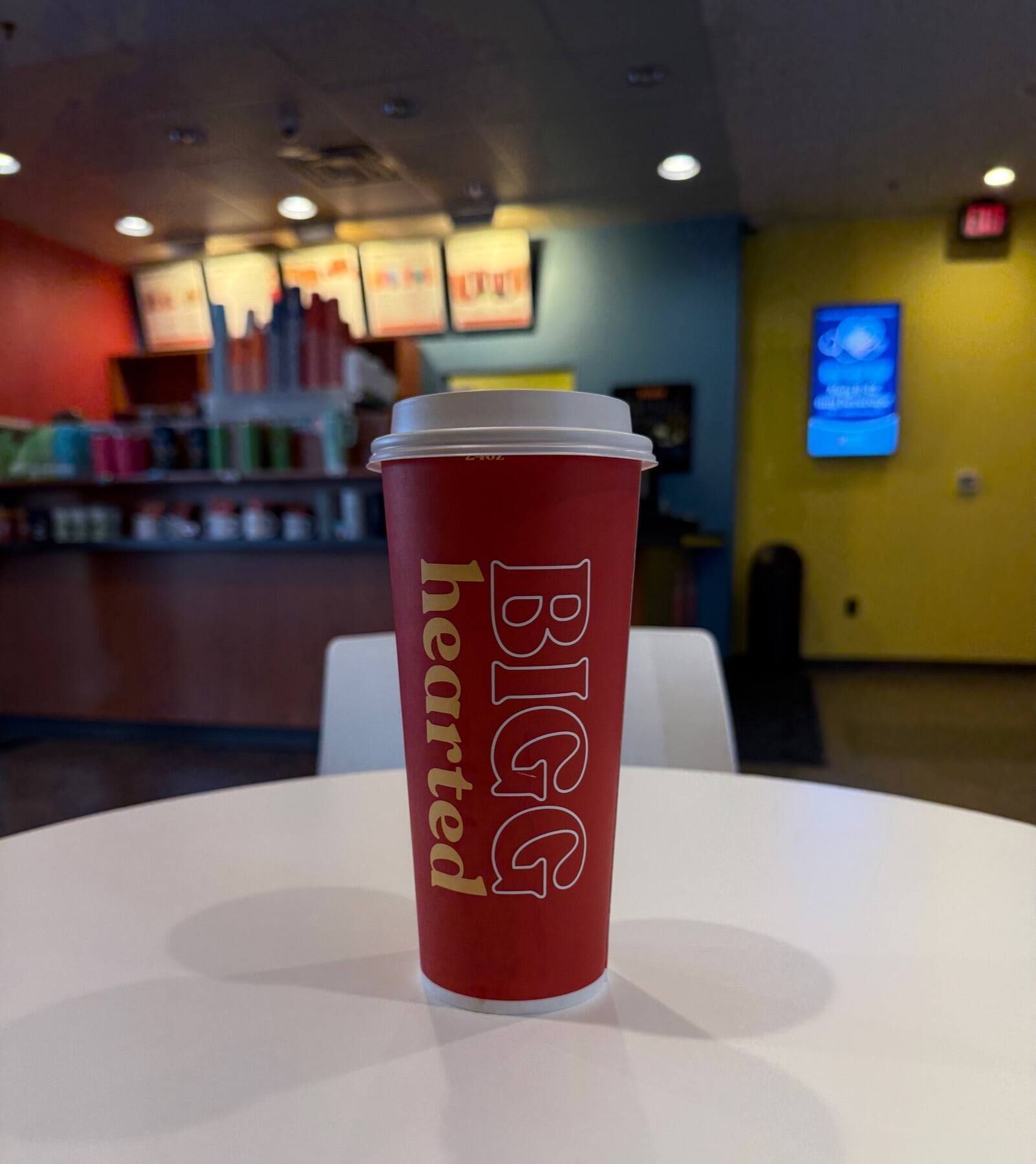
I began to wonder whether America suffers from something deeper than polarization. We are surrounded by information about one another and starved of actual encounter. And in every place I stayed, the same desire kept surfacing: the desire to belong. I watched it on weekday mornings at a Biggby in Dayton, where the same regulars gathered before work and would have known if anyone stopped coming.
Belonging is not the same as fitting in. It is closer to a basic human need than a preference: the felt assurance that you are part of something, and that if you went missing, someone would notice. When people have it, they can disagree without rupture and lose an argument without losing their place. When they lose it, they have nothing holding them. A country full of people with nothing holding them is not so much divided as unmoored. Much of what we call division is something quieter wearing a louder costume. It is unbelonging, looking for somewhere to put itself.
That longing is the most ordinary and human thing, and the most easily wounded. Alongside it, in city after city, I began to notice the same forces working against it. I came to think of them as the Four Enemies of Belonging.
Belonging requires being known. Performance is the practiced art of not being known. You cannot belong from behind a mask. Public life is increasingly staged: officials deliver soundbites designed to inflame, and every platform rewards intensity over sincerity and outrage over understanding. But the performance does not stay on the screen. We learn from it, treating the person across the table as an audience to win or an opponent to beat. The mask that protects us in public follows us home. A country can survive deep disagreement. What it cannot survive is the suspicion that nobody means anything at all, because a nation of performers is finally just a nation of strangers.
If performance distorts the present, erasure distorts the story a country tells about itself. Lately the rewriting has become explicit. The administration directed federal agencies to comb through the nation's monuments and museum exhibits and remove anything judged to disparage Americans. The words transgender and queer were scrubbed from the Stonewall National Monument's website. But erasure runs in every direction. The deindustrialized towns of the Midwest were written out of the story of progress the moment the work left. And it began long before any of this, with the broken treaties and deliberate dismantling of Indigenous life across the Great Plains. Amnesia suggests forgetting. Erasure is more active: the decision that some people belong at the center of the story while others remain on its edges. Whenever a nation narrows the stories it will tell about itself, it narrows the range of people who can see themselves inside it.
If erasure asks who belongs in the story, dehumanization asks whether we still recognize one another as human once we are in it. We have become fluent in categorization. The homeless become a threat. Every immigrant becomes illegal. Suffering becomes data. One afternoon on Main Street in Memphis, a man stopped me, shook my hand, and asked if I would buy him lunch. We talked while he ate. In a policy debate he was a line item, a cost. On the sidewalk he was a person who was hungry and wanted company. Human vulnerability rarely arrives in the form of an argument. It arrives in the form of a person. Before people can be excluded or feared, they must first be reduced to something simpler than they are. The moment we stop seeing the full person, belonging erodes. Not because people disappear, but because their humanity does.
Eventually, something gives. Everywhere I traveled, people described a growing reluctance to connect. Old friends avoided the subjects that once deepened them. Again and again, the same quiet calculation: easier not to bring it up, easier not to attend. Viewed individually, each decision makes sense. The danger is that enough reasonable decisions can produce a profoundly disconnected society. Performance, erasure, and dehumanization operate between people. Isolation operates within them. Belonging loses its footing quietly, as the relationships that sustain it weaken from disuse.
I came looking for America and kept finding myself in it.
I have written all of this as if I were standing outside it. I was not. I carried every one of these enemies with me. Traveling alone for years makes you crave connection. More than once I would end up at a bar, and when it came out that I had only lived there a few weeks, I would take a stranger on the journey and watch their eyes widen. I told myself it was connection. It was closer to a stage and an audience. I edited my own story the way a city edits its history, keeping what was easy to celebrate and burying the rest. I reduced people, too: some I stopped for, many I walked past, already turning a few of them into a sentence. And I isolated, more elegantly than most, because withdrawal is harder to notice when it looks like adventure.
The gap I felt between the country on the screen and the country on the street ran straight through me the entire time. I am not its diagnostician. I am one of its symptoms, trying, imperfectly, not to become one of its causes.
So is the country.
-- Michael Holland
Finding America chronicles a multi-year odyssey through the places, histories, and myths that shape American life.
Since 2022, Michael Holland has lived in more than forty communities, exploring what becomes visible when we slow down, stay longer, and experience places on their own terms. It is a search for a country that is often very different from the one we debate.
The odyssey continues.