Issue 12 · August 7, 2026
I came to Omaha without much of a reason.
While living in Des Moines, I took a road trip west across the Great Plains toward Rapid City to see Mount Rushmore, the Crazy Horse Memorial and Custer State Park. On the return trip, I changed the route, coming down through tribal lands after visiting Standing Rock Sioux Reservation. Omaha happened to be along the way.
There was also, embarrassingly, Peyton Manning. For years I had heard him shout "Omaha! Omaha!" at the line of scrimmage until the city's name became less a place than a piece of American noise lodged in my memory. I wanted to see what was there.
I parked in a garage and started walking.
There was no itinerary. I was following a map on my phone, but not toward anything in particular. I've learned that the best way to meet an unfamiliar city is to let it make the first decision.
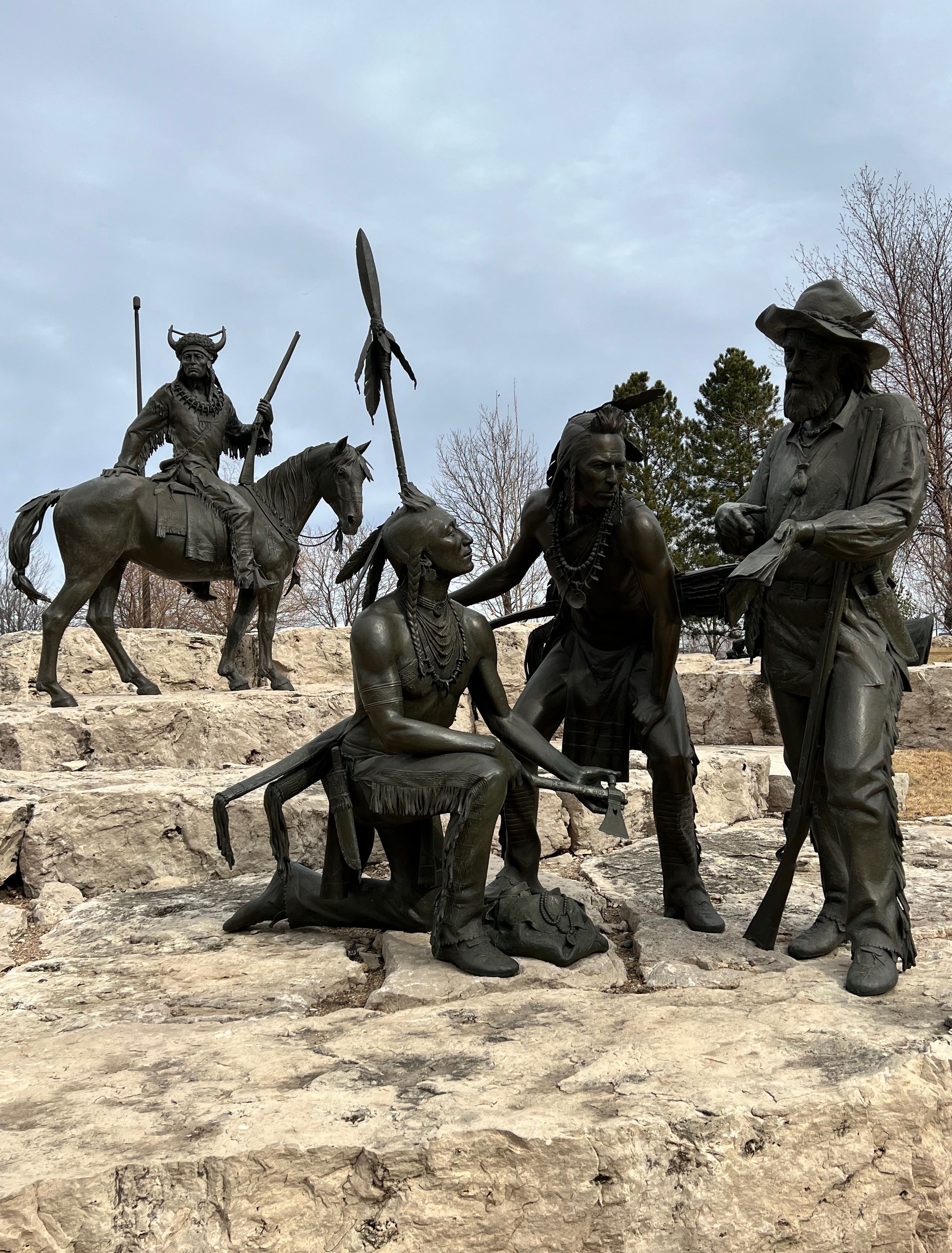
One of the first places I encountered was Pioneer Courage Park on Capitol, which is a collection of bronze sculptures commemorating westward migration. Families strained beside wagons loaded with everything they owned. Horses pulled forward. Faces were fixed on a horizon beyond the monument itself. The sculptures celebrated determination, and determination was undeniably there. It is difficult to imagine what it meant to gather a family, load every useful possession into a wagon, and set out toward a place you had never seen.
Lower on the rock, a kneeling man with braided hair held out a small trade axe to a bearded settler. Another man stood behind him, a hand on his shoulder. Above them, a mounted warrior in a horned headdress watched from higher ground, rifle still upright in his hand. Three days earlier, in the Dakotas, I had heard a different version of what these exchanges led to. This particular stretch of rock and grass had once belonged to the Omaha, the Ponca, and the Otoe.
Growing up on the East Coast, I experienced a different version of our nation's story. Boston, Philadelphia, New York, Trenton. The founding captured my imagination because those places were within reach. Westward expansion arrived later, another chapter in a textbook. Driving across the Plains, it stopped being a chapter. It became the landscape itself. I left the monument and kept walking.
The transition into the Old Market happened gradually. Glass towers gave way to older masonry. Streets narrowed. Brick replaced concrete. Warehouses stood shoulder to shoulder, their loading docks and heavy windows hinting at work they no longer performed. I wandered into an alley and realized I had arrived somewhere different.
I had found the Old Market without intending to.
That accident mattered. Discovery feels different when nobody has told you what you are supposed to admire. There was no list of locations to photograph. I was simply following streets that seemed increasingly reluctant to surrender their past.
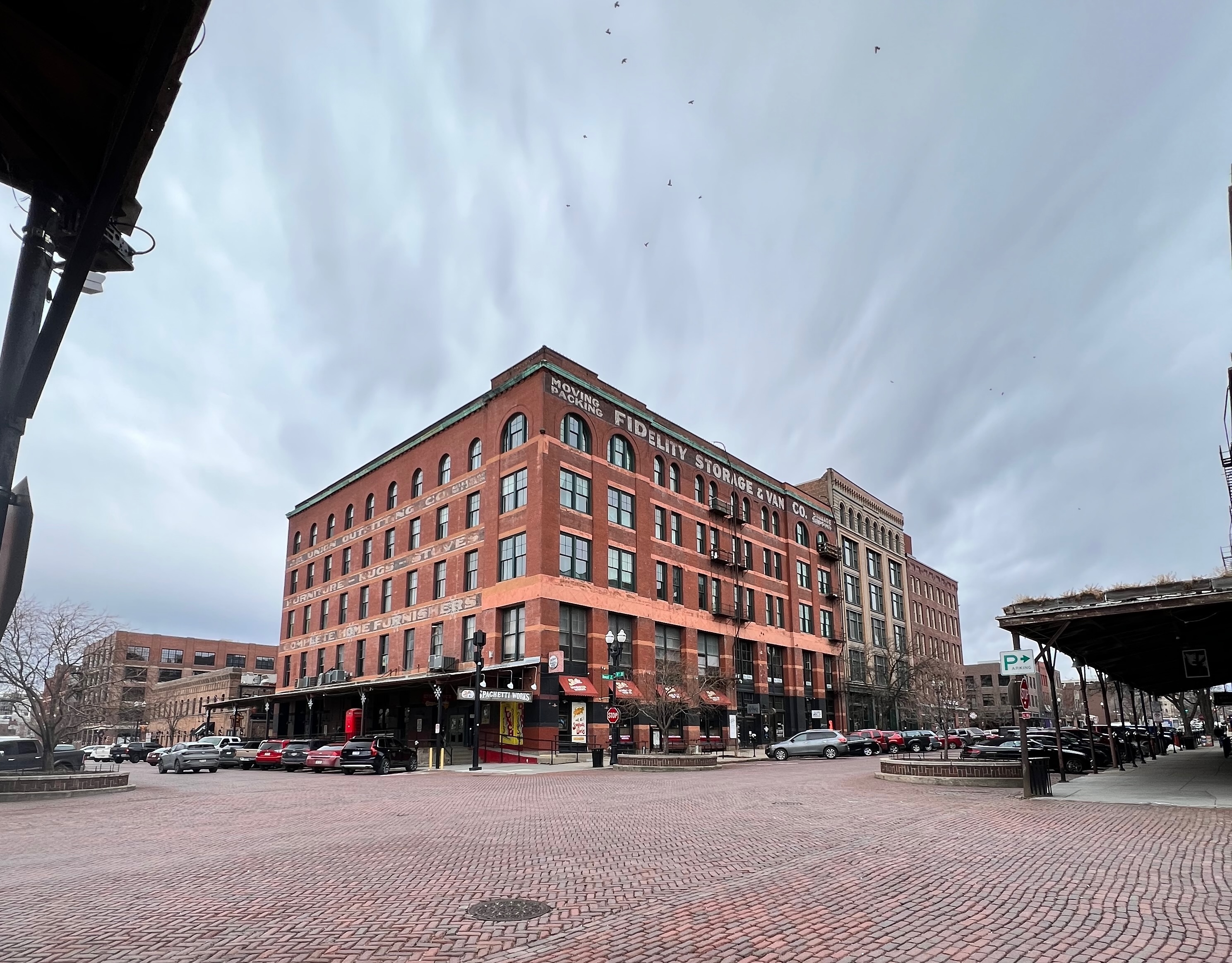
The neighborhood felt lived in rather than staged. The Fidelity Storage Building had been converted into apartments, Spaghetti Works filling its ground floor. Stores, restaurants, and cafes lined not just Howard Street, but Jackson, Harney, 11th, and 13th. This was not a museum pretending to be a city. It was a city still negotiating with its own history.
I've long been drawn to places like this. The Old Market's brick warehouses were never intended to become charming. They existed because Omaha occupied an important place in a continental network of railroads, warehouses, wholesalers, and telegraph lines. Goods arrived, were stored, sorted, and shipped elsewhere. Floors bore enormous weight. Loading docks stayed busy. People built ordinary working lives inside structures that visitors now photograph because they seem picturesque.
When the economy changed, those buildings lost the purpose for which they had been constructed. The neighborhood survived because people were willing to imagine a future different from their past. Warehouses became restaurants, galleries, apartments, and shops.
The Old Market Passageway captures that idea better than anything else I saw.
At first glance, it feels ancient. A narrow corridor of brick, plants, staircases, storefronts, and filtered light that seems to have emerged naturally over generations. Learning that it was assembled during the 1970s changes the experience without diminishing it. An alley was excavated. Adjacent basements were opened. A roof was added overhead. Bricks salvaged from an old street found a new purpose beneath people's feet.
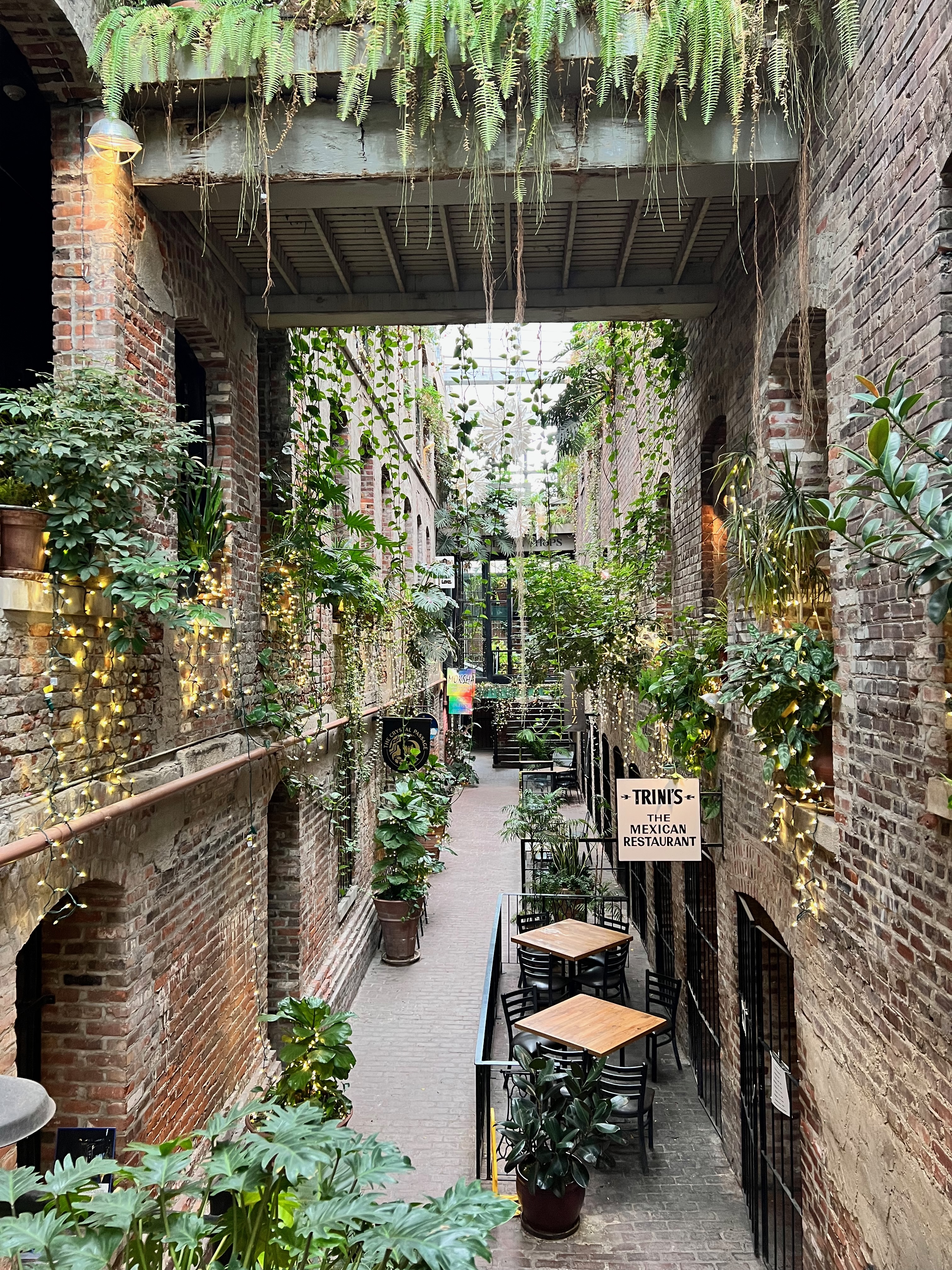
Nothing about that makes the space less authentic. The Passageway is convincing not because history stopped there but because history was carried forward instead of discarded.
As I continued walking, I learned about another part of Omaha's past that no longer existed.
Only a few blocks away stood Jobbers Canyon, once one of the country's largest warehouse districts. Preservationists argued that its buildings could be adapted much as the Old Market had been. Their historical significance was recognized.
They were demolished anyway.
That knowledge reshaped the afternoon I'd already experienced. Without Jobbers Canyon, the Old Market can appear to tell a reassuring story about a city that chose preservation over demolition. With Jobbers Canyon in mind, the picture becomes more complicated. One collection of buildings received another life. Another disappeared. Historical importance alone did not determine the outcome. Timing, economics, imagination, and political will mattered just as much.
I don't know enough about today's Old Market to say much beyond that afternoon. I didn't spend enough evenings there to understand who lives in the neighborhood and who merely visits it. An afternoon of walking is observation, not expertise.
What I do know is smaller, but perhaps more durable.
I know the neighborhood slowed my pace. I know I found myself lingering in alleys instead of hurrying toward destinations. I know the warehouses did not feel like relics preserved behind glass. They felt inhabited.
When I drove away from Omaha, I found myself wanting to return, not simply to revisit the Old Market for another afternoon, but to live there long enough for novelty to give way to routine.