Issue 21 · October 9, 2026
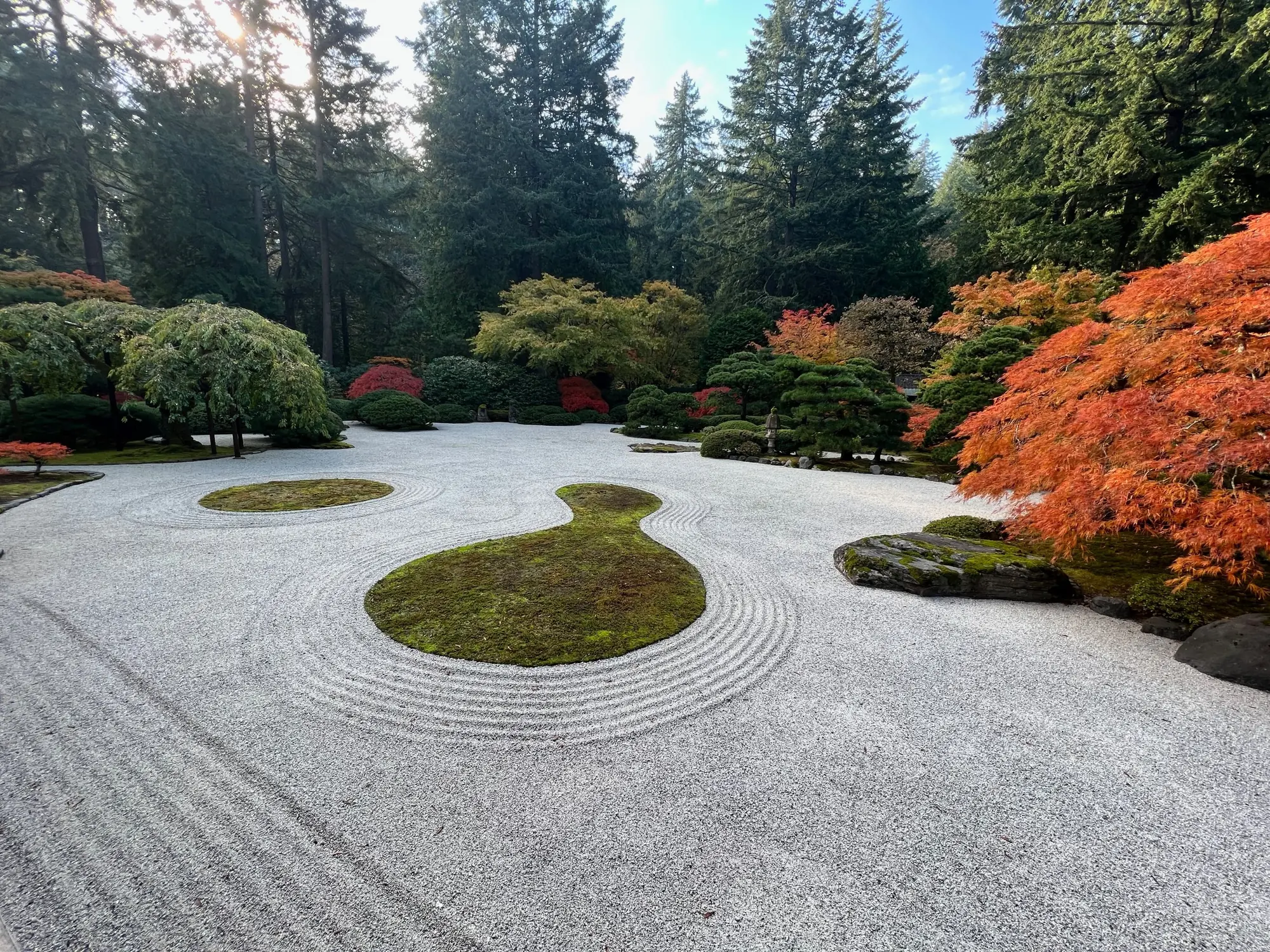
High in Portland’s Washington Park, tucked into the wooded hills west of downtown, the Portland Japanese Garden occupies twelve and a half acres of streams, ponds, stone paths, carefully tended moss and Japanese maples set against the towering evergreens of the Pacific Northwest. There are intimate walkways, expanses of raked gravel and a Japanese tea house constructed in Japan and shipped to Portland in pieces.
Nobuo Matsunaga, a former Japanese ambassador to the United States, called it “the most beautiful and authentic Japanese garden in the world outside of Japan.”
But the garden was never intended simply to be beautiful.
Its origins reach back to the years after World War II. Portland and Sapporo became sister cities in 1959, and Mayor Terry Schrunk and other civic leaders began imagining a Japanese garden on the abandoned grounds of Portland’s old zoo. The idea was partly civic beautification. It was also reconciliation between Portland and Japan.
That history carried particular weight in Portland. Before the war, the city had been home to a thriving Japantown. In 1942, thousands of Portland’s Japanese American community were uprooted as part of the forced removal and incarceration of people of Japanese ancestry across the West Coast.
In the years after the war, Japanese gardens began appearing across the United States as places of cultural exchange and understanding. As the Portland Japanese Garden describes the idea today, Americans could encounter Japanese ideals and values through nature, “needing no translation.”
The site was dedicated in 1961, and Takuma Tono, a professor at Tokyo Agricultural University, was brought to Portland to design it. Rather than reproduce a single Japanese garden tradition, Tono incorporated five different styles across the hillside, allowing visitors to encounter different periods and approaches to Japanese landscape design. The garden opened to the public in 1967 and over the decades expanded to its present twelve and a half acres.
I did not know all of that when I arrived. What I remember is the walk.
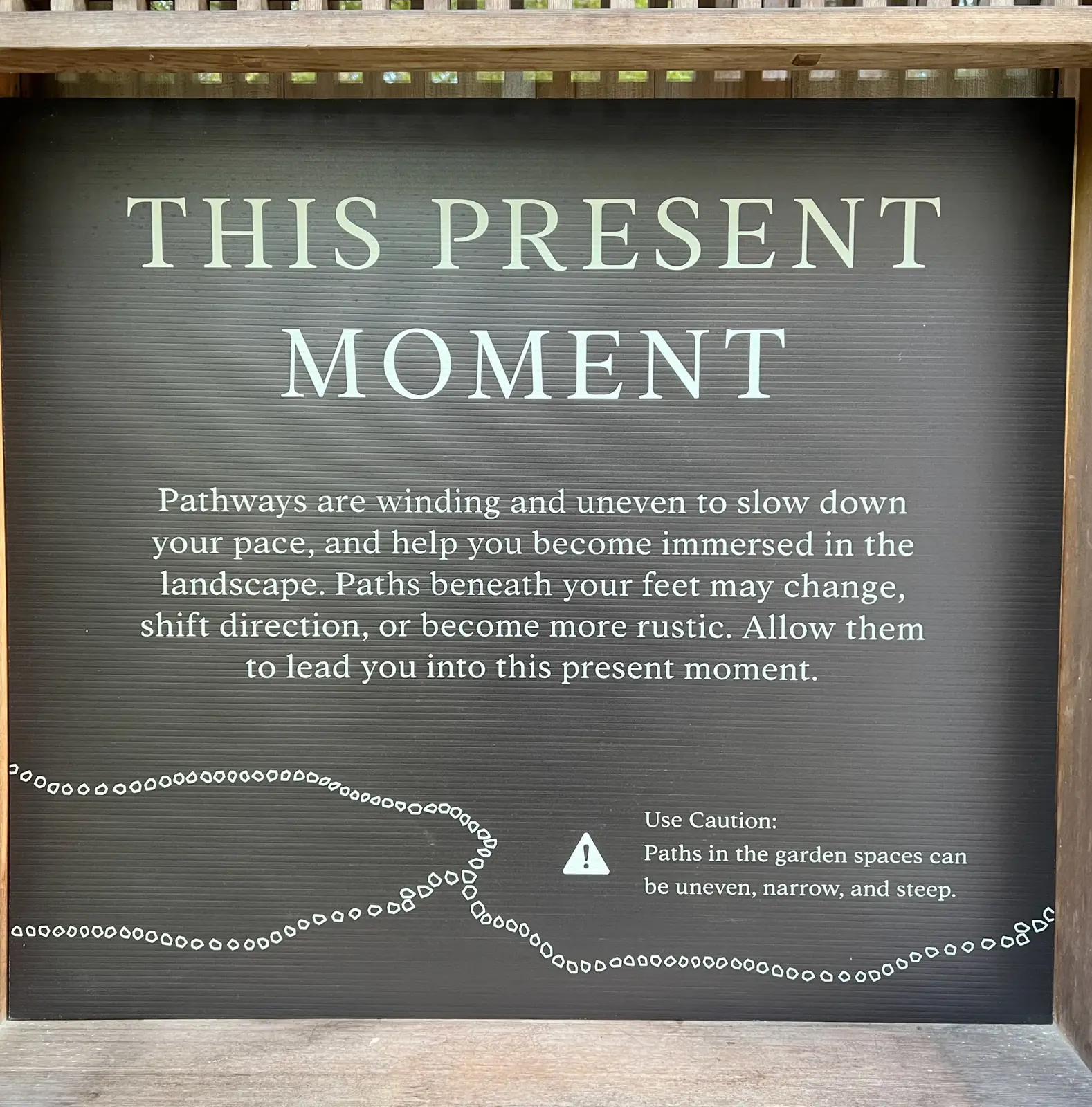
I had come on foot up W Burnside Street, as I did almost everywhere during those early months of traveling, then climbed through Washington Park until I reached the entrance to the garden. Beyond the gate, the path wound uphill through a series of switchbacks to the Cultural Village. I explored the Bonsai Terrace before walking toward the Nezu Gate to enter the historic gardens. Near the gate was a small sign: THIS PRESENT MOMENT.
It proved to be good instruction.
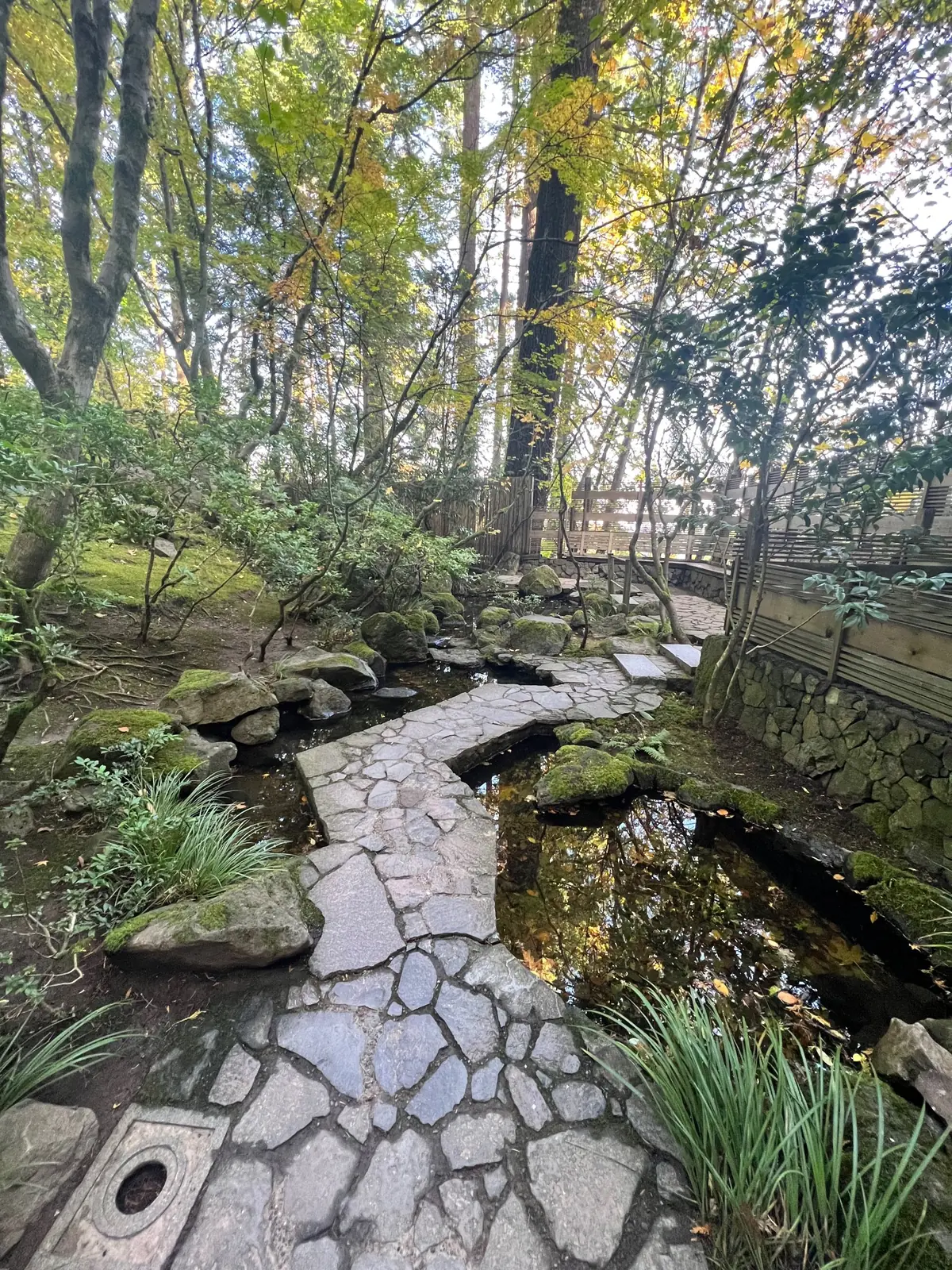
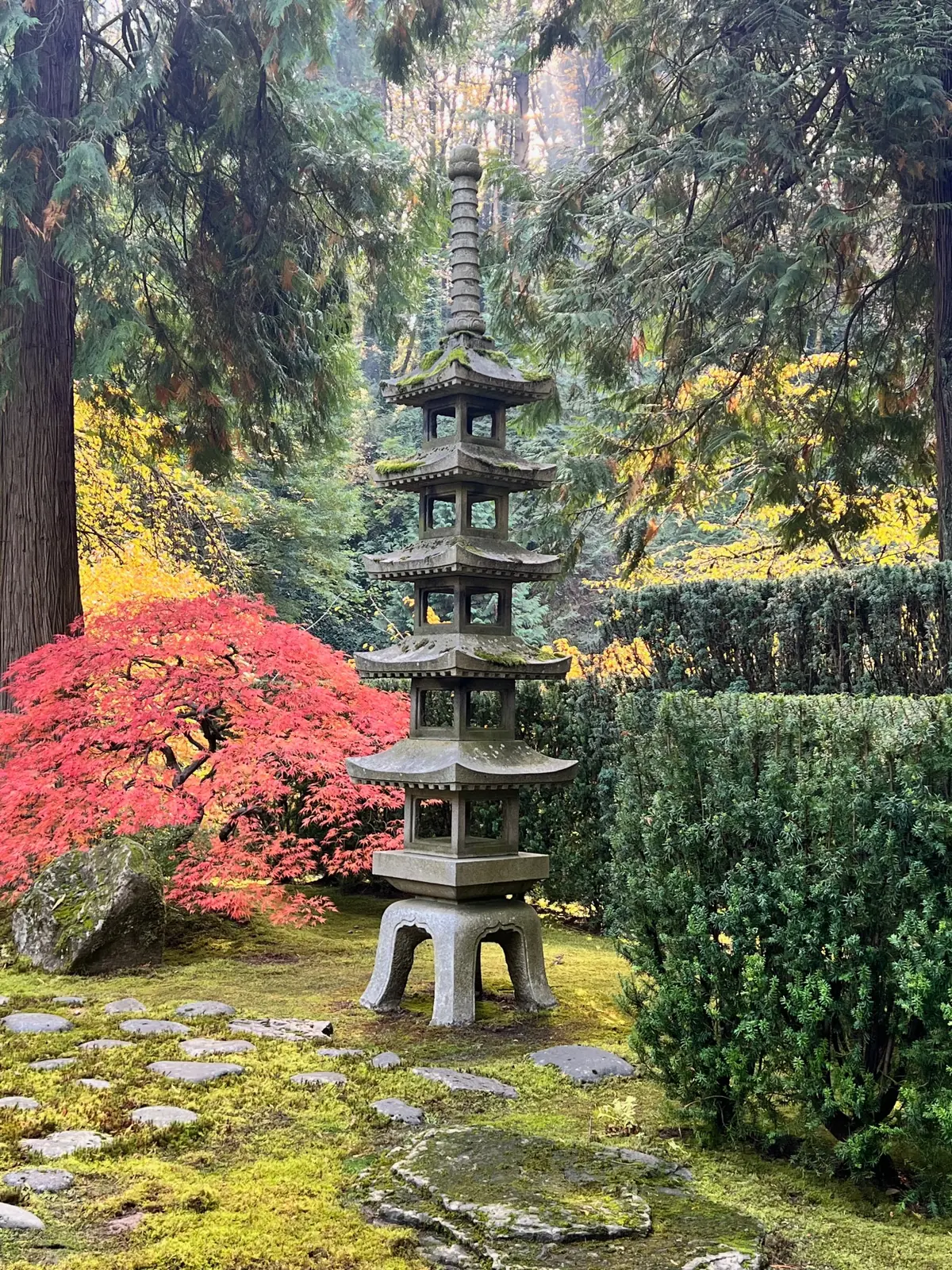
The farther I walked, the more Portland receded. There were other visitors, of course, but what I remember most is the quiet: water moving through stone basins, paths disappearing around bends, moss spreading between rocks, brilliant red and gold maples reflected in dark ponds. Koi moved beneath the surface. In the dry landscape garden, gravel had been raked into great curving patterns around stone and moss. Even looking at it slowed me down.
I had made a reservation at the Umami Café for afternoon tea, something I had been looking forward to before I arrived. I sat with a small pot of loose-leaf tea, a handleless cup and a Japanese sweet, another small ritual that belonged to the pace of the place. Nothing demanded that I hurry.
That may be what has stayed with me most. So many places we visit seem designed to accelerate us. We move from exhibit to exhibit, landmark to landmark, trying to make sure we have seen everything before moving on to whatever comes next. The Portland Japanese Garden asked the opposite of me. Walk more slowly. Notice where you are stepping. Listen to the water. Look at the maple again.
For an afternoon, in the middle of a major American city, I felt almost completely removed from one.
I learned much of the garden’s history later. More than sixty years ago, people in Portland imagined this place in the hope that experiencing another culture could help rebuild a relationship damaged by war. They believed beauty, nature and attention might create a form of understanding that did not begin with an argument or even require words.