Issue 20 · October 2, 2026
By the time the tour reached the upper floor of the Mark Twain House on Farmington Avenue, I had already moved through the rooms of a life. There had been an entry area where visitors left calling cards, a room with a piano, a dining room, parlors, and service areas. I remember the kitchen being downstairs. Then we came to the billiard room, which had also been Twain’s working space. The large billiard table dominated the room. At the back were two desks, one large and one small. Our guide told us that Twain did more of his writing at the smaller one.
I had one thought while standing there: I am in the room where he wrote.
I went to Hartford partly because my friend Howard Pulchin had recommended a book called The Last American Road Trip by Sarah Kendzior, which includes her reflections on Twain and the family trip to his home there. I had become fascinated by its account of looking for pieces of America that were easy to pass by.
Mark Twain had been present in my life mostly as an American monument. I don’t remember exactly when, but like many readers, I came in through The Adventures of Tom Sawyer, which then led to The Adventures of Huckleberry Finn. I knew the Mississippi, the whitewashed fence, the name Mark Twain. I had grown up in Connecticut and spent a significant part of my life there, but I had never connected those books very strongly to Hartford.
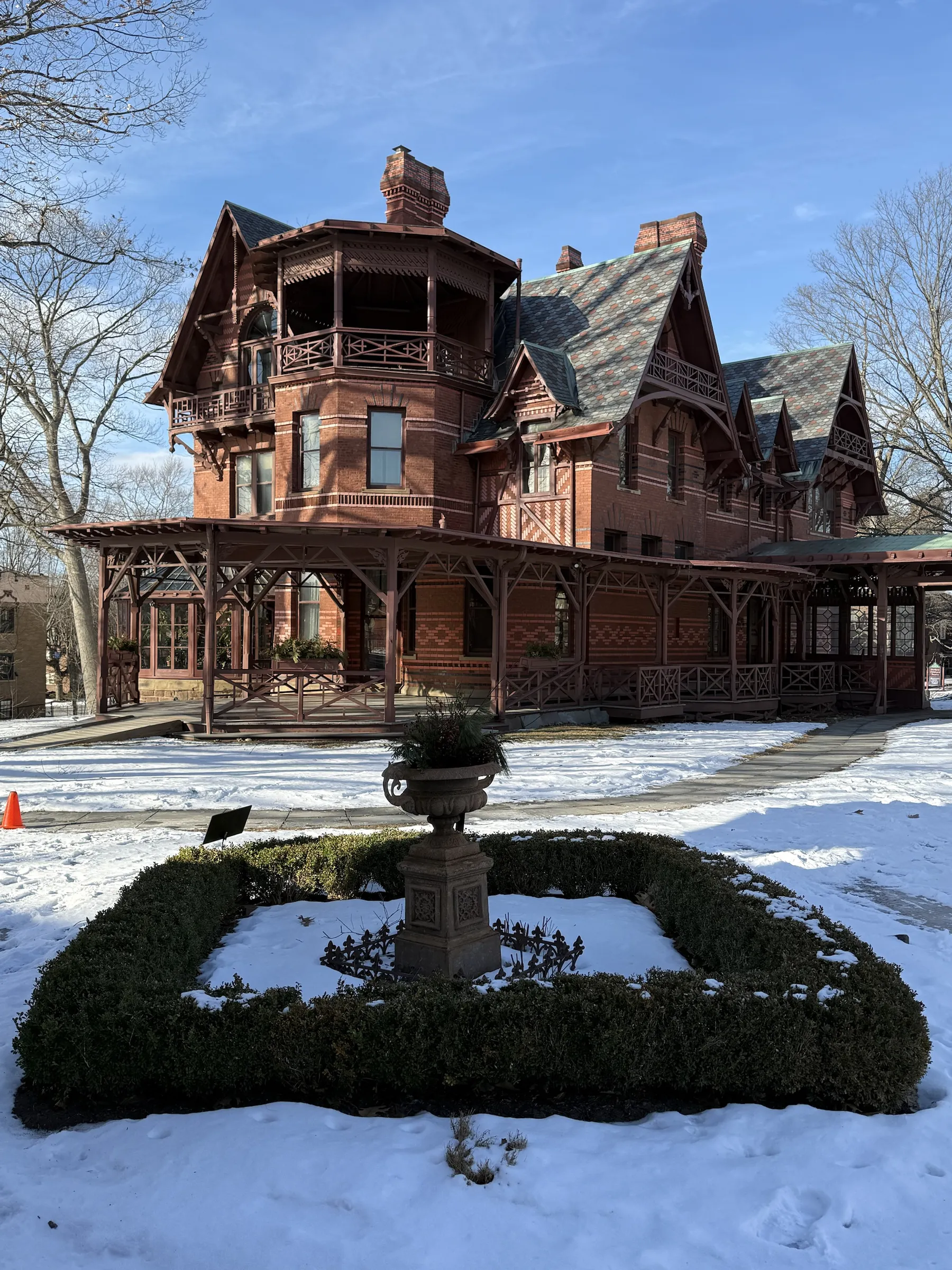
The house made that connection impossible to ignore. It was large and magnificent, built for a family with money, guests, servants, and a complicated social life. I chose the Living History Tour, led by an actor portraying George Griffin.
George had been born enslaved in Maryland and later became the Clemens family’s butler, supervising much of the household staff while also taking an active role in Hartford’s Black community and his church. That is enough to make him worth knowing by his own name. Twain remembered Griffin as “wise, polite, always good-natured” and “a cautious truth-speaker,” as well as a devoted friend of the family. Some critics have suggested that Griffin may have helped inspire Jim in Huckleberry Finn, but that remains speculation rather than an established line of influence.
Moving through the house, I was encountering something more domestic than the figure I had carried from school. Samuel Clemens was a homeowner, husband, father, employer, host, and neighbor. The writing room waited upstairs, but it did not stand apart from the rooms below it. The tour also made visible the household that sustained that life.
Still, the billiard room felt like the culmination. Twain used the room as an office and private territory. The billiard table could hold manuscript pages as well as the game for which it had been built. Friends joined him there for billiards, cigars, drinks, and conversation.
I have felt this pull toward writers’ places before. At Ernest Hemingway’s home in Cuba, Finca Vigía, I looked through a window and saw his standing desk and typewriter. I was feeling that pull again when our guide, the actor portraying George Griffin, mentioned something I didn’t expect: Quarry Farm.
Only later, when I began reading more about Twain’s working life, did I understand how incomplete the sentence I had said to myself in the billiard room had been. The major books belong to Twain’s Hartford years, and the house was the center of the family and social world in which his mature work took shape.
But much of the actual writing happened during summers at Quarry Farm in Elmira, New York. The Center for Mark Twain Studies says that during those years he worked on books including Tom Sawyer, Huckleberry Finn, and A Connecticut Yankee in King Arthur’s Court.
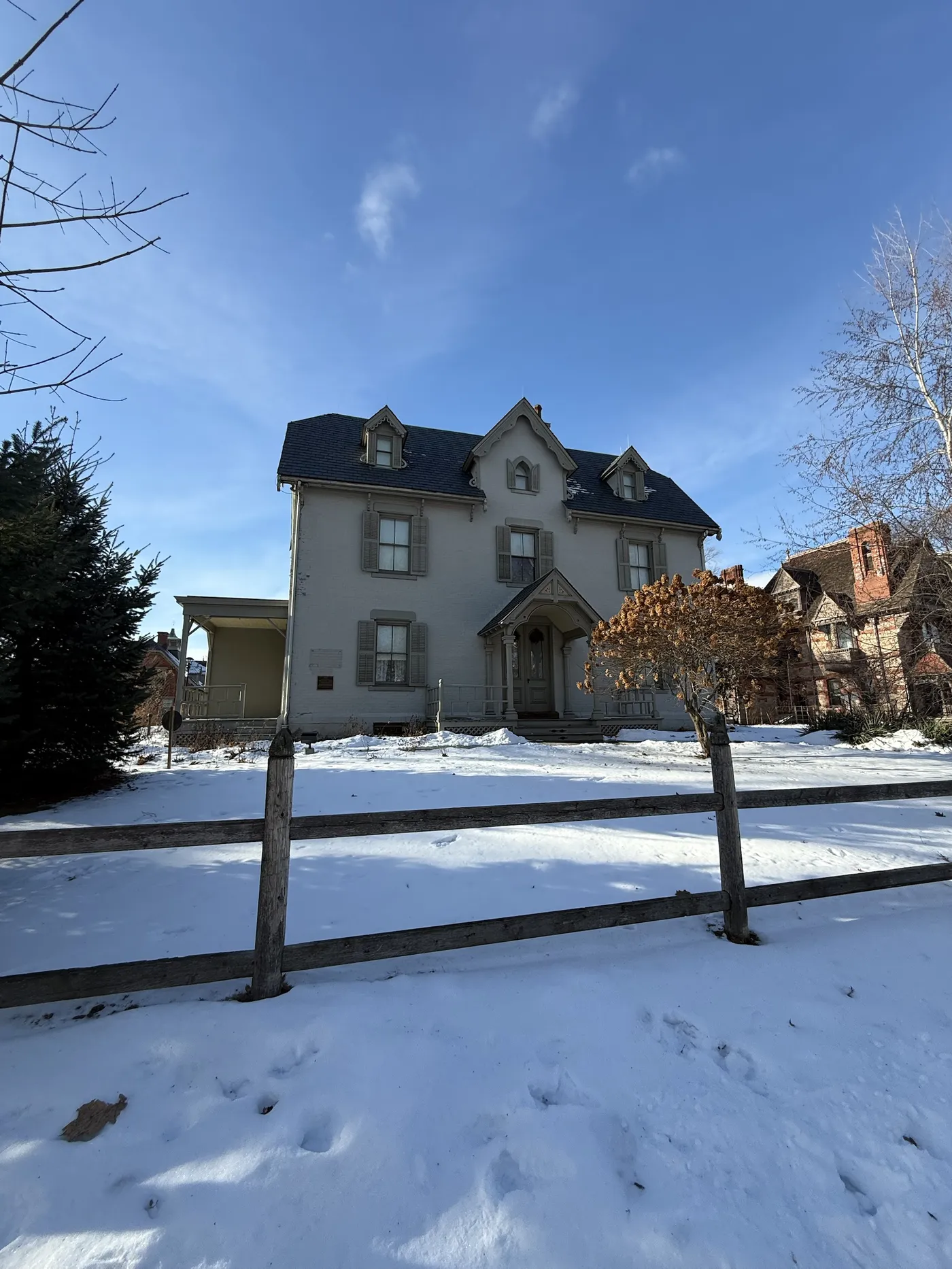
The same day, I went next door to the Stowe Center for Literary Activism. The author of Uncle Tom’s Cabin and the author of Huckleberry Finn had lived beside each other. No one was portraying a historical figure. The visit was structured as a facilitated dialogue that ranged across media and news, life in America today, and Stowe’s writing.