Issue 28 · November 25, 2026
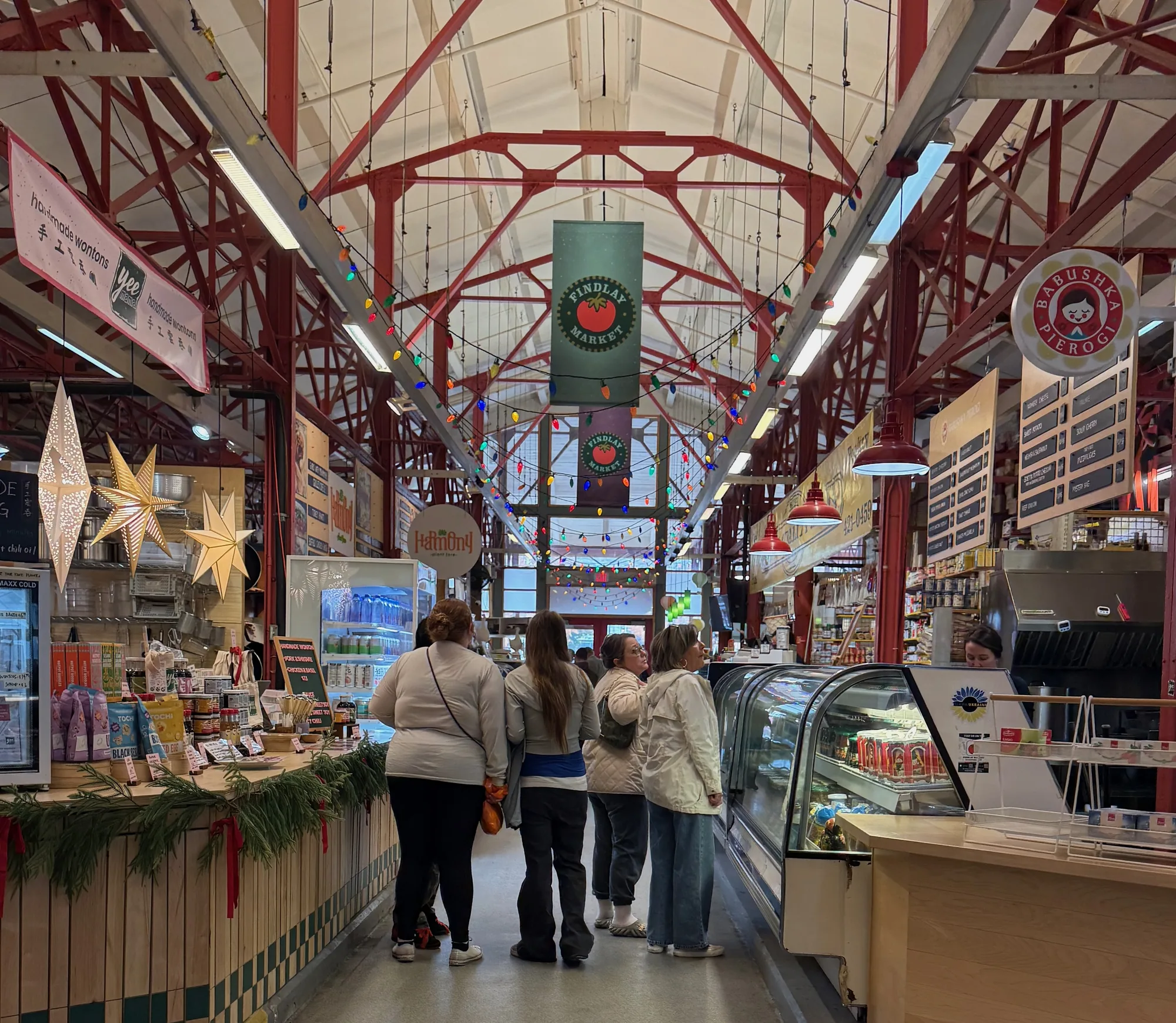
From my apartment in Cincinnati’s Over-the-Rhine neighborhood, I could walk up Elm Street to Findlay Market. In a city I don’t know, a public market is one of the first places I look for because it’s a good place to see what people make, what they eat and what holds their attention. I’ve browsed the baskets and paintings at Charleston City Market, watched the fishmongers at Pike Place in Seattle and walked the streets of Omaha’s Old Market.
But of all the things I might have looked for when I got to Findlay Market, I doubt it would have occurred to me to look for a bell. There is one in the market tower, and it belonged to another Cincinnati market. When the city’s Pearl Street Market came down in 1934, its bell went to Findlay. It’s an odd thing to learn about a place you remember chiefly for the pleasure of having it within walking distance. Once, somebody could say much the same thing about Pearl Street.
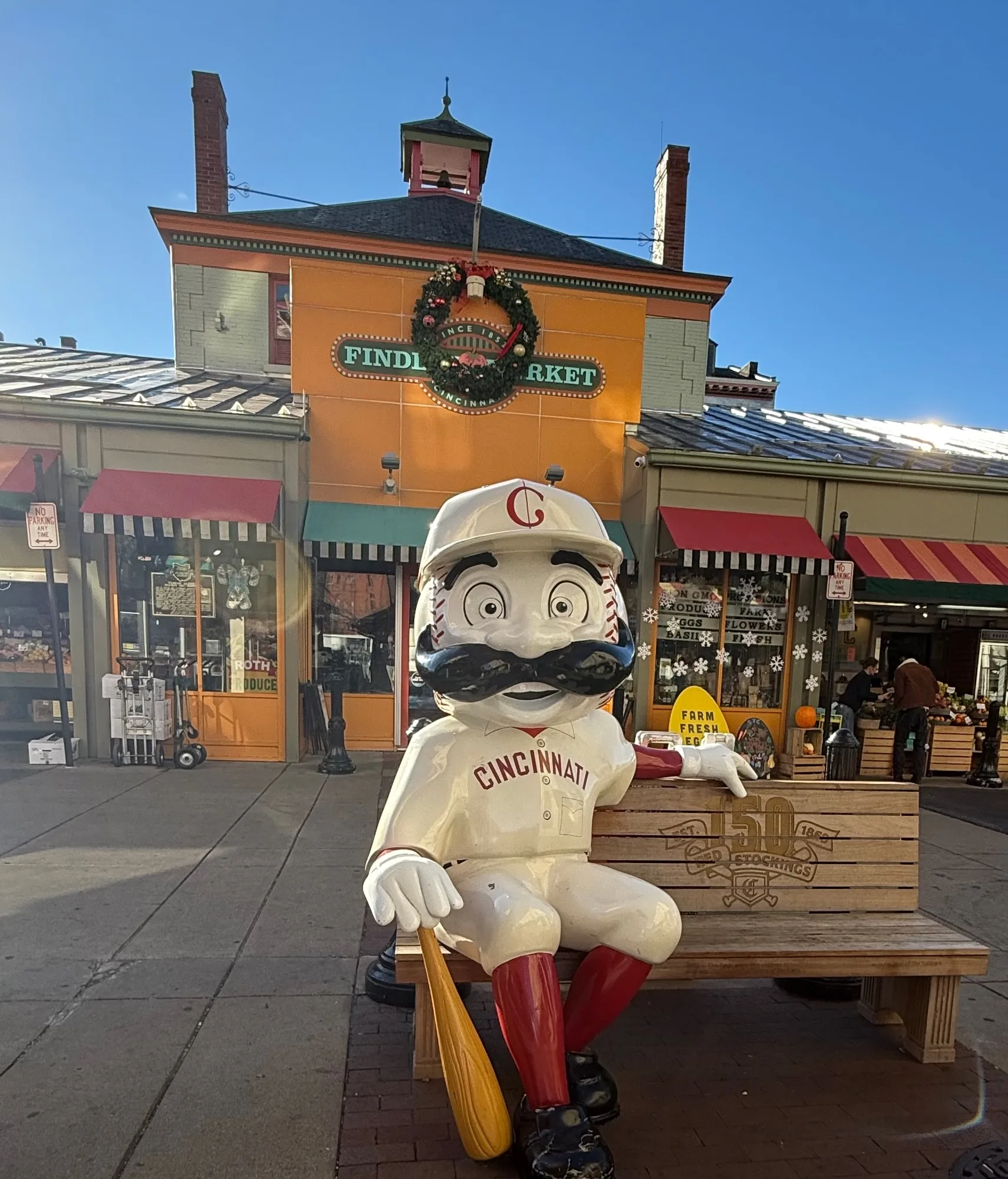
Cincinnati had nine public markets at the start of the Civil War. Findlay is the only municipal market house left. When it opened in 1855, its iron frame supported a roof over an open-sided pavilion. Merchants used the cellars of nearby breweries to keep food cool. Later, as the city grew concerned about exposing food to pollution, the market acquired walls, plumbing and refrigeration. I like the brewery cellars in particular. It takes a little effort now to picture the territory a market occupied when some of the most important work of a food stall went on under somebody else’s building.
The city engineer had overseen the design of Findlay. The people who laid out a system of nine markets had a more pressing interest in where people got their supper. A household could get its groceries elsewhere as other ways to buy food came along. The interesting question for a city was what to do with a building that might occupy a considerable piece of downtown once people no longer needed to shop there.
Boston found an answer I’ve been enjoying since college. When Liam and Brendan were little, I took them down to Quincy Market for Boston cream doughnuts. I still go back when I’m in Boston. The area around Faneuil Hall has an awful lot of shops for tourists, an observation I make with the credentials of a father who took two sons there for doughnuts.
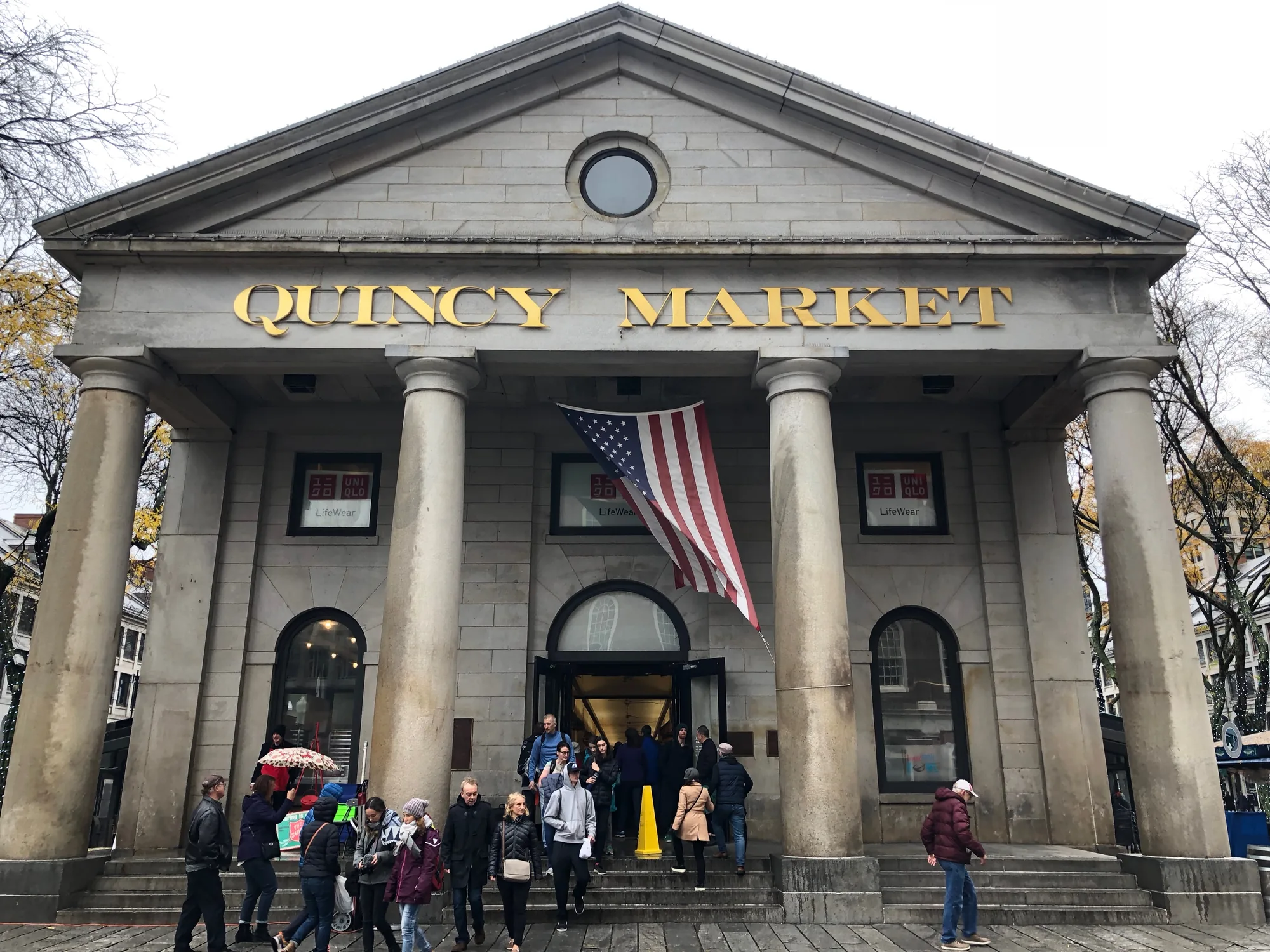
Quincy Market’s long granite hall opened in 1826. The stalls inside it and the warehouses alongside it helped feed Boston for well over a century. By the middle of the twentieth century the buildings were deteriorating, supermarkets were competing for the food business and people were moving to the suburbs.
The hall came close to demolition. In 1976, a hundred and fifty years after it opened, people could once again walk down the middle of it deciding what looked good to eat. Only now there were tables under the dome where they could sit and eat what they had bought. I knew where to take my boys because somebody had figured out what else Boston could do with a wholesale food district.
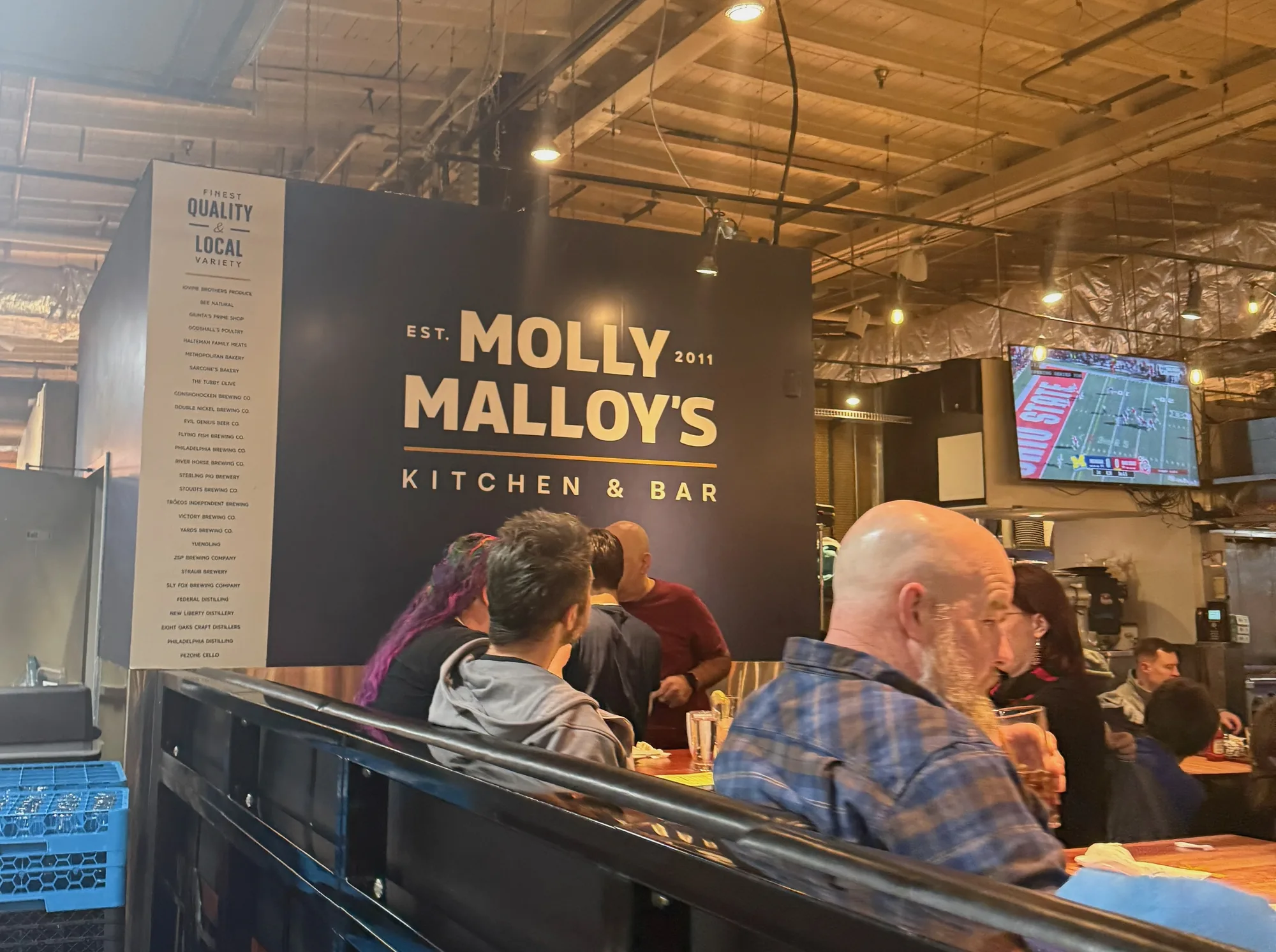
There was a less visible difficulty in Philadelphia. You could keep the building and still lose the people behind the counters. In 1976, the same year Boston reopened Quincy Market, a new leaseholder raised the rents at Reading Terminal Market. Of the fifty-six merchants still doing business there, thirty left. It gives me pause to think how little of that kind of change would register with someone like me. On a winter visit I took a photograph of Molly Malloy’s because a friend shares the name. I could tell you exactly why I stopped at that counter. I’d have been hard pressed to tell you whose counter was missing.
I like shopping in person at Reading Terminal, though some of its customers clearly valued the convenience of shopping from home. By 1935 Reading Terminal had four hundred telephone lines for customers to call in their orders. I’d gladly spend an afternoon meandering through a place whose merchants had gone to considerable trouble to spare their customers the trip.
In 2005, the Historic Third Ward Association built a new public market in Milwaukee. Produce dealers had done business for generations around Commission Row. The new market drew on that history and gave independent merchants a place to sell food in a neighborhood long associated with it. One of the pleasures of staying for a while in a city is getting to make a return visit for an ordinary reason. In Milwaukee I could walk over to the market, get something to eat and sit down. On a cold day there I had an exceptionally good hot chocolate. I can remember the drink with considerably more confidence than I could have guessed the age of the building.
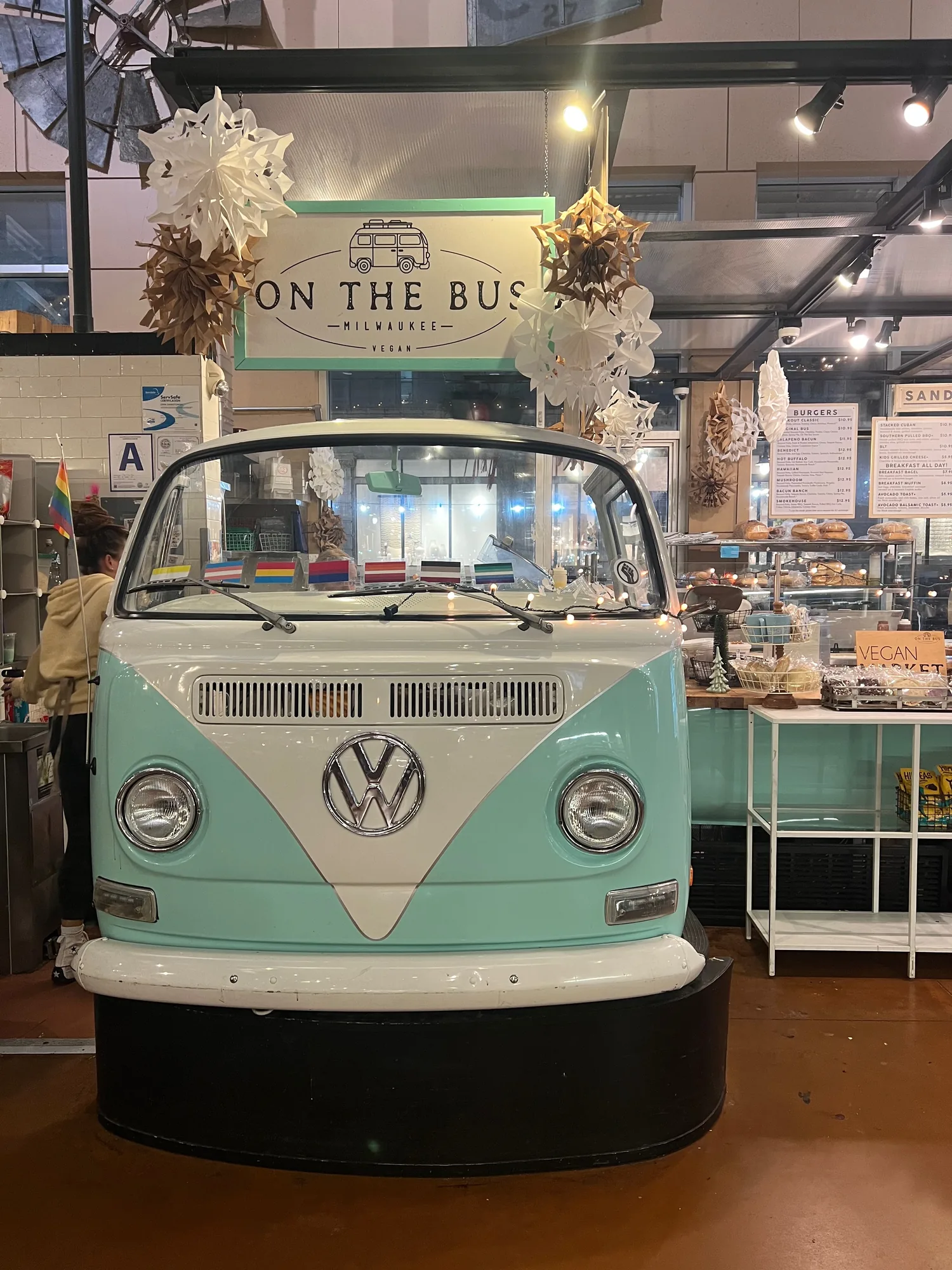
On another visit I saw what appeared to be parents meeting their son and his partner. They got food and went upstairs to sit together. Having two grown sons myself, I have some appreciation for an arrangement that gets everybody to the same place for a meal.
I don’t know whose idea it was to meet at the market or whether any of them gave a thought to the produce trade in the Third Ward. What I remember is that once the four of them had their food, they still had somewhere to go together. Upstairs was part of what Milwaukee had built, too.