Issue 27 · November 20, 2026
Ten days after her husband was assassinated in Dallas, Jacqueline Kennedy spoke by phone to President Lyndon B. Johnson.
She worried about bothering the new president. He told her she did not. In the voice of a man I associated with pressure and political bargaining, I heard affection. He wanted her to know she was loved, and that he was among those who loved her.
I listened to the recording of this December 2, 1963 phone call at the Lyndon B. Johnson Presidential Library in Austin. What stays with me is that these were their voices. Two people who had become figures in the national imagination were speaking to each other. There was no actor supplying the hesitation or the Southern accent. Johnson’s reassurance had survived the circumstances in which he offered it and become something a stranger could hear in a museum.
I listened to other recordings, including conversations between Johnson and Martin Luther King Jr. and Robert Kennedy, though I cannot now recover their substance. I was hearing voices I had known mostly through speeches and historical accounts.
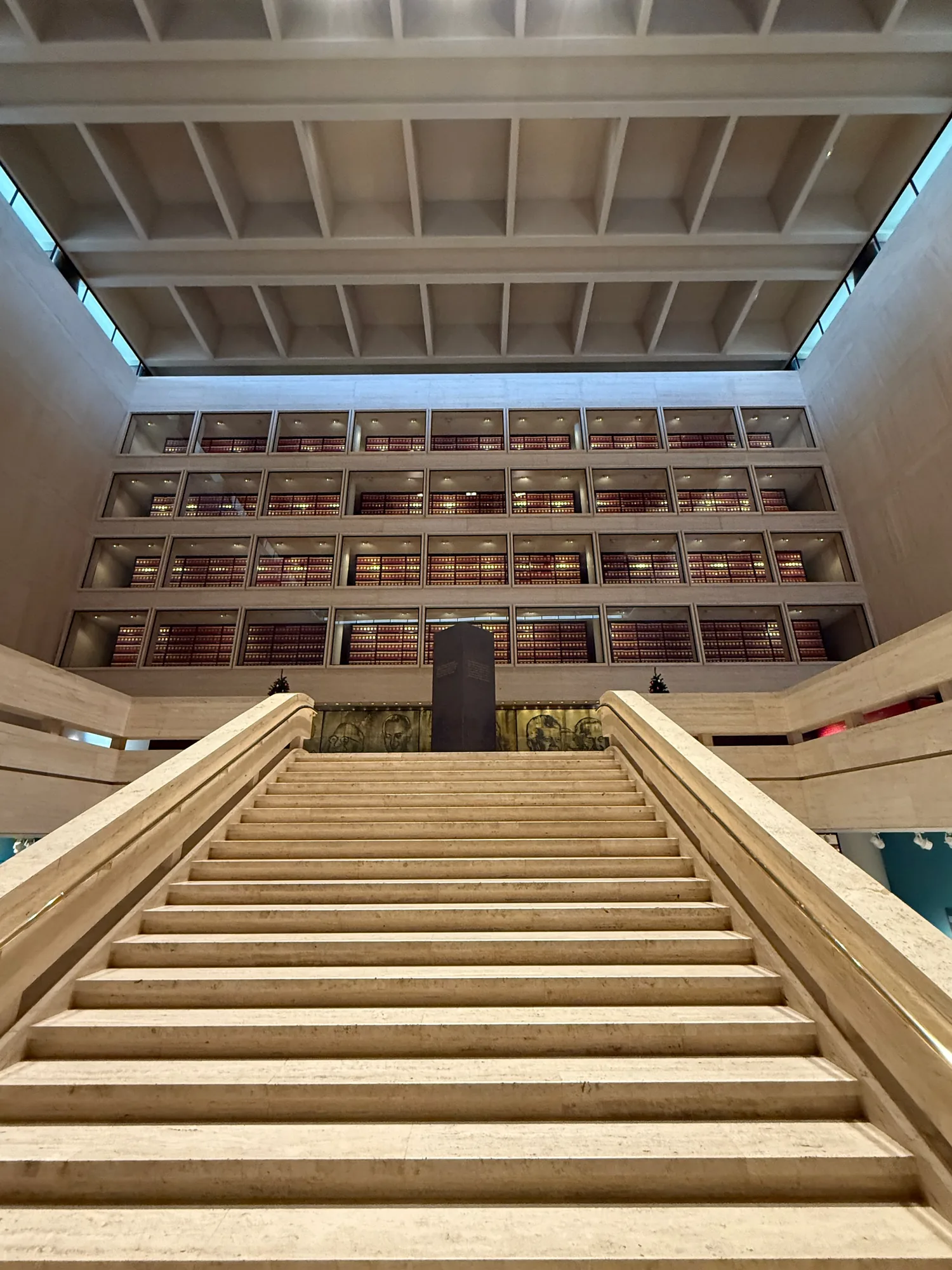
I had walked up Congress Avenue, around the Texas State Capitol, and along San Jacinto Boulevard toward the University of Texas campus to reach the library. From outside, the building struck me as a fortress. Inside, steps led toward the Great Hall and the red archival boxes visible behind glass, row after row rising above the visitor. There was so much to preserve, and so little of it I could absorb in an afternoon.
Before Austin, I had visited the Lorraine Motel and National Civil Rights Museum in Memphis. I had walked across the Edmund Pettus Bridge. I had been to the Dexter Avenue King Memorial Baptist Church in Montgomery and stood on Montgomery Street where Rosa Parks was arrested on December 1, 1955.
But here, I wanted to understand more about the president whose administration had helped turn the demands of that movement into law. I knew the broad outlines: Kennedy’s vice president, the Great Society, Vietnam, a physically imposing politician who knew how to get legislation through Congress. The voice speaking to Jacqueline Kennedy did not fit entirely inside that outline.
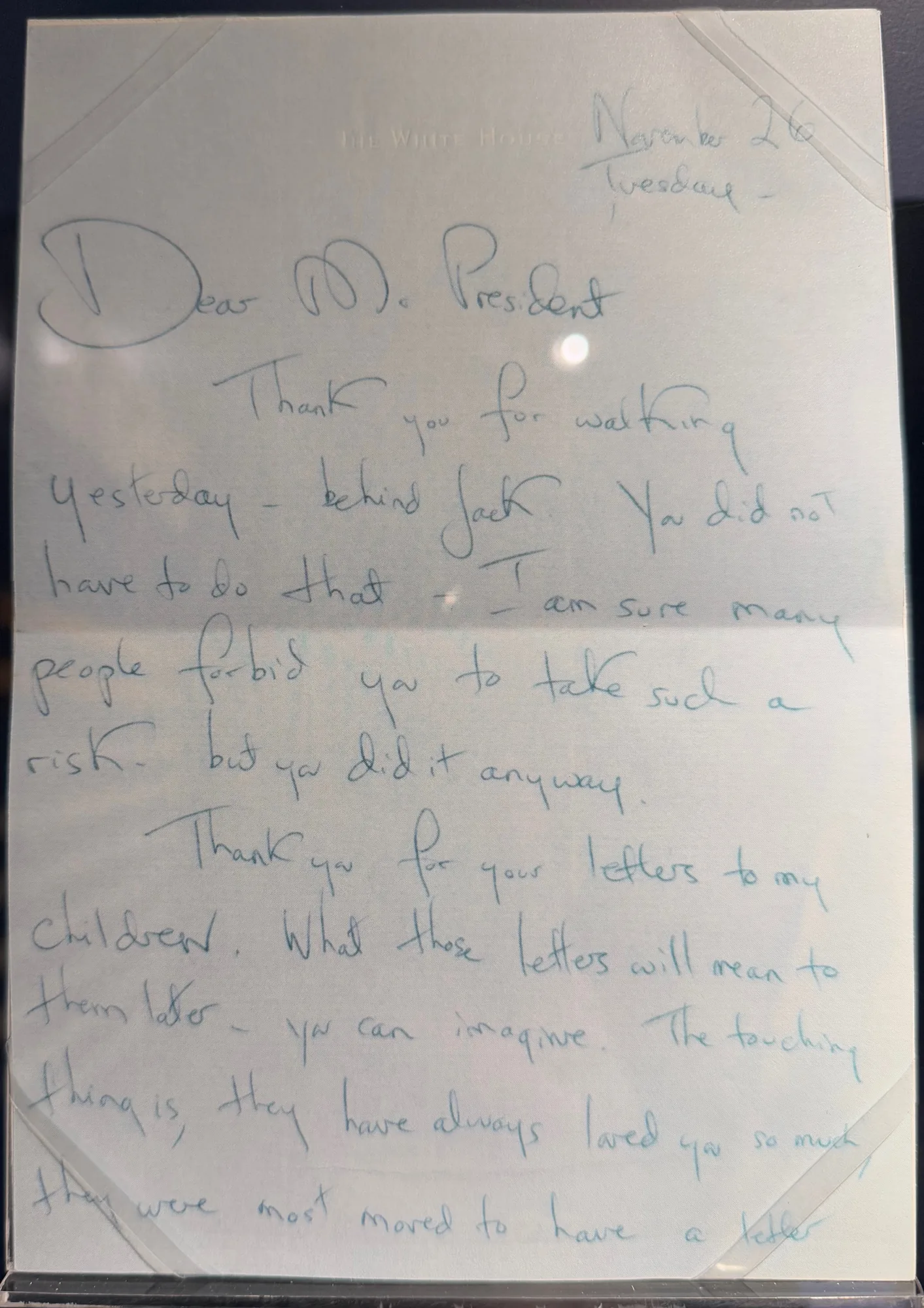
Her November 26 handwritten letter was on display, too. She thanked him for walking behind her husband’s coffin and for writing to her children. The letter and the recording brought the transfer of power down to the scale of people trying to speak to one another after a death.
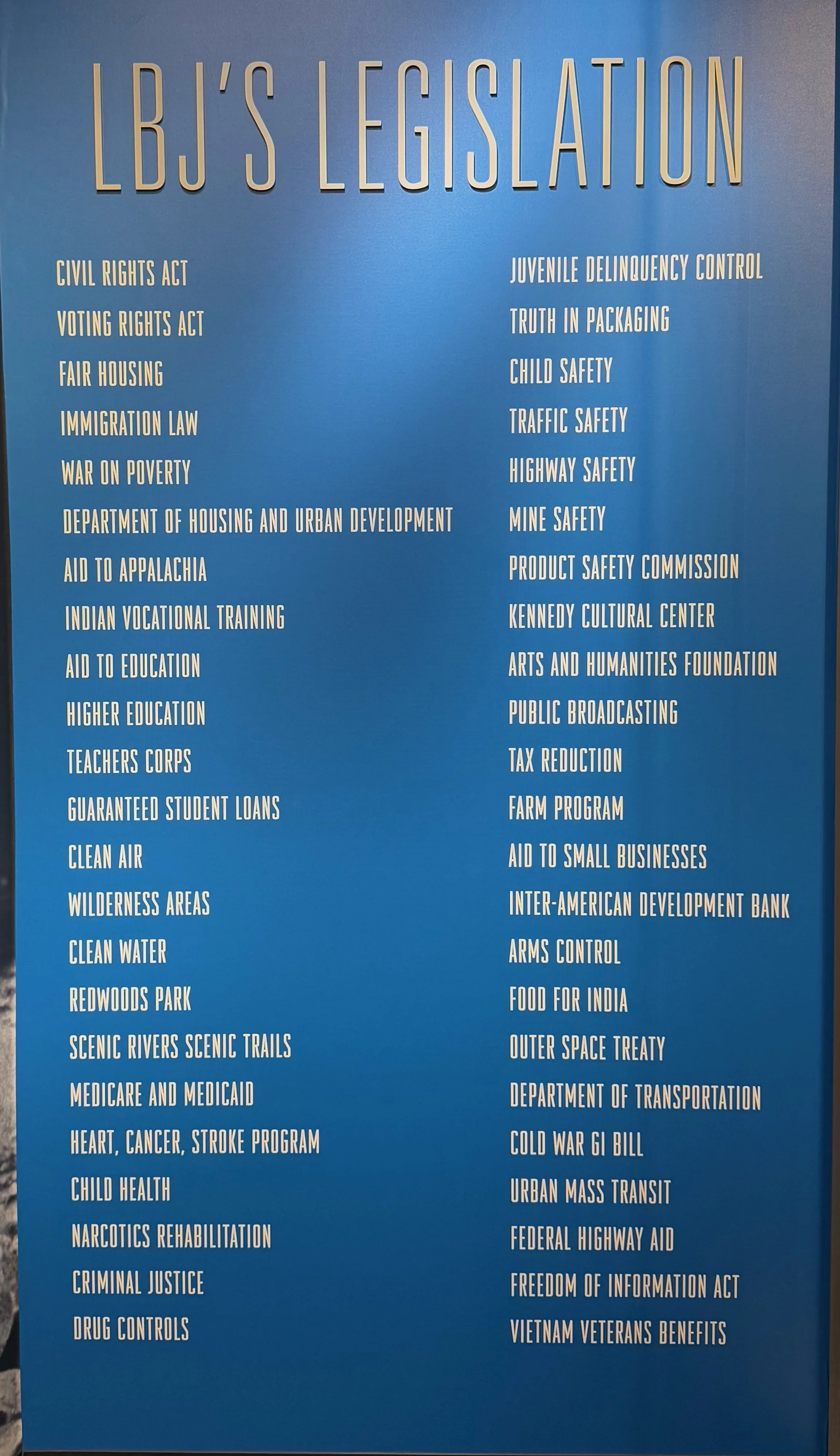
The library also held the record of what followed. Johnson signed the Civil Rights Act in 1964 and the Voting Rights Act in 1965. Organizers had registered voters, challenged segregation, marched, and endured violence to force those claims onto the country’s agenda. Johnson helped move legislation through Congress. The places I had already visited made it impossible for me to regard that work as belonging to one man.
Medicare and Medicaid, education, the War on Poverty. Vietnam was present as well. Johnson inherited American involvement and expanded it into a much larger war. Military objects, government documents, and a wall-sized image of Vietnamese people with soldiers in the background.
One exhibit included a small card headed “Nine Rules.” Its first instruction reminded American servicemen that they were guests. Other rules called for respect for local customs, courtesy toward women, and friendship with Vietnamese soldiers and civilians. The final rule made them responsible for their official and personal actions.
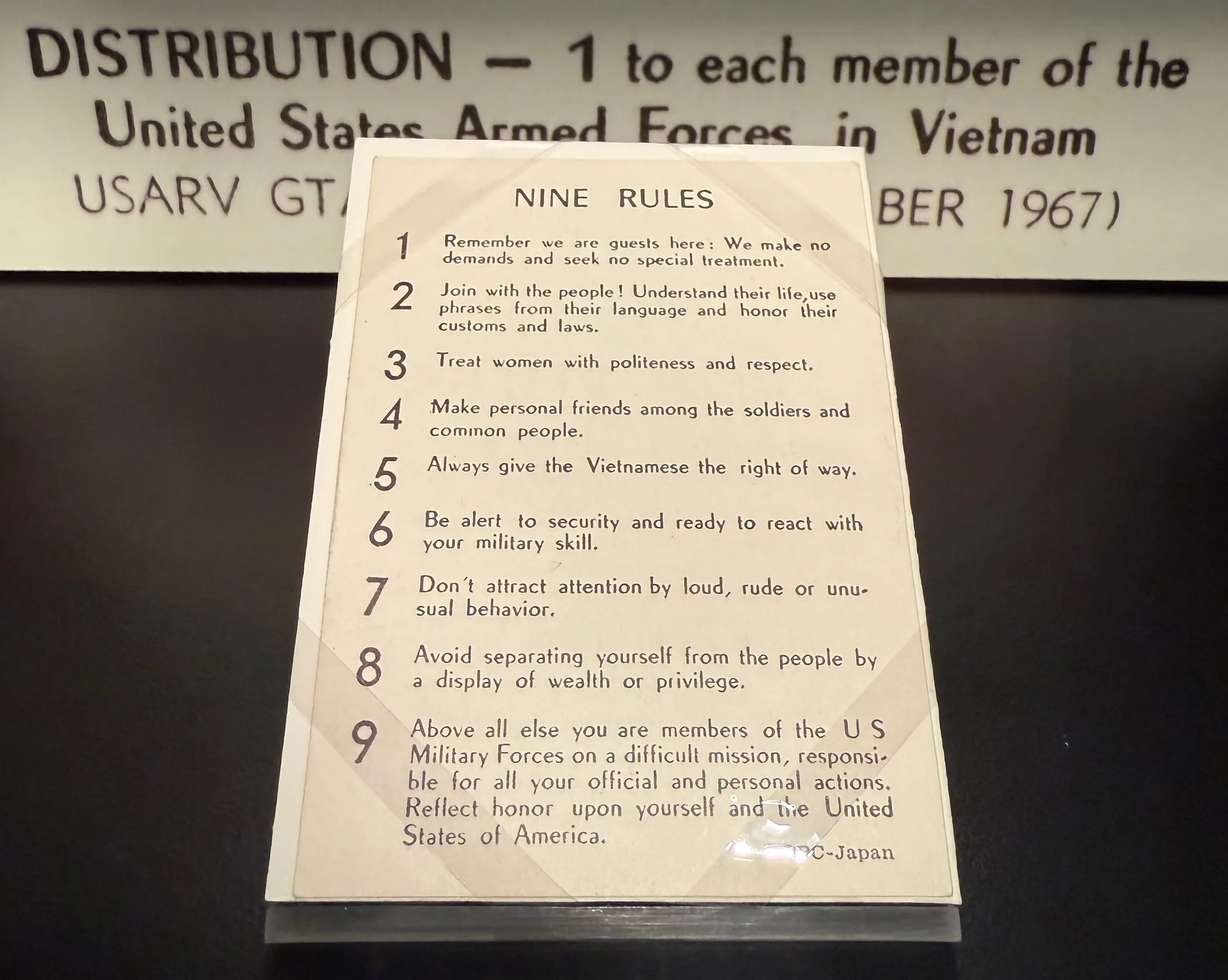
A card cannot tell me how those instructions were followed. But it preserves the terms in which Americans were told to conduct themselves, alongside the record of a war in which Vietnamese people suffered death, injury, and displacement. The language of respect did not settle the question of what American power was doing there.
That distance changes how I think about the conversation with Jacqueline Kennedy. I can hear tenderness in Johnson’s voice without knowing everything that voice could persuade someone to do. Yet the tenderness was part of the record, too. Leaving it out would make the man easier to judge and harder to see.
On the upper floor, I looked into the Oval Office replica. The room seemed surprisingly small. It is a seven-eighths-scale reproduction, which qualifies the impression. I stood in the doorway, imagining the conversations that had taken place in Washington.
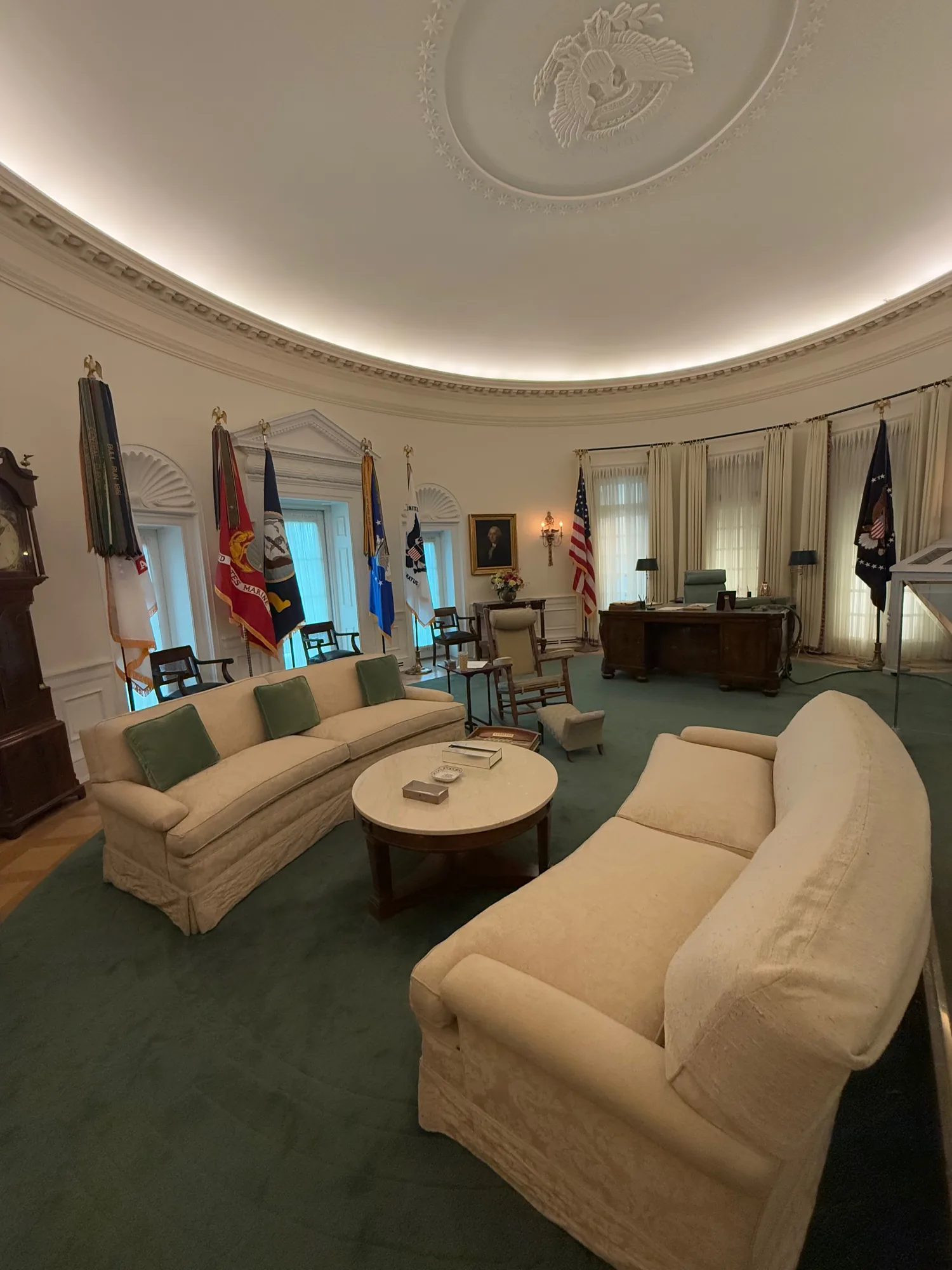
There was much I still needed to learn about the period and the people who had lived through it. The struggles over poverty, civil rights and voting rights have not stayed inside the decade the museum preserved.
Outside the library, I stopped. For a while, I stayed there, quiet.