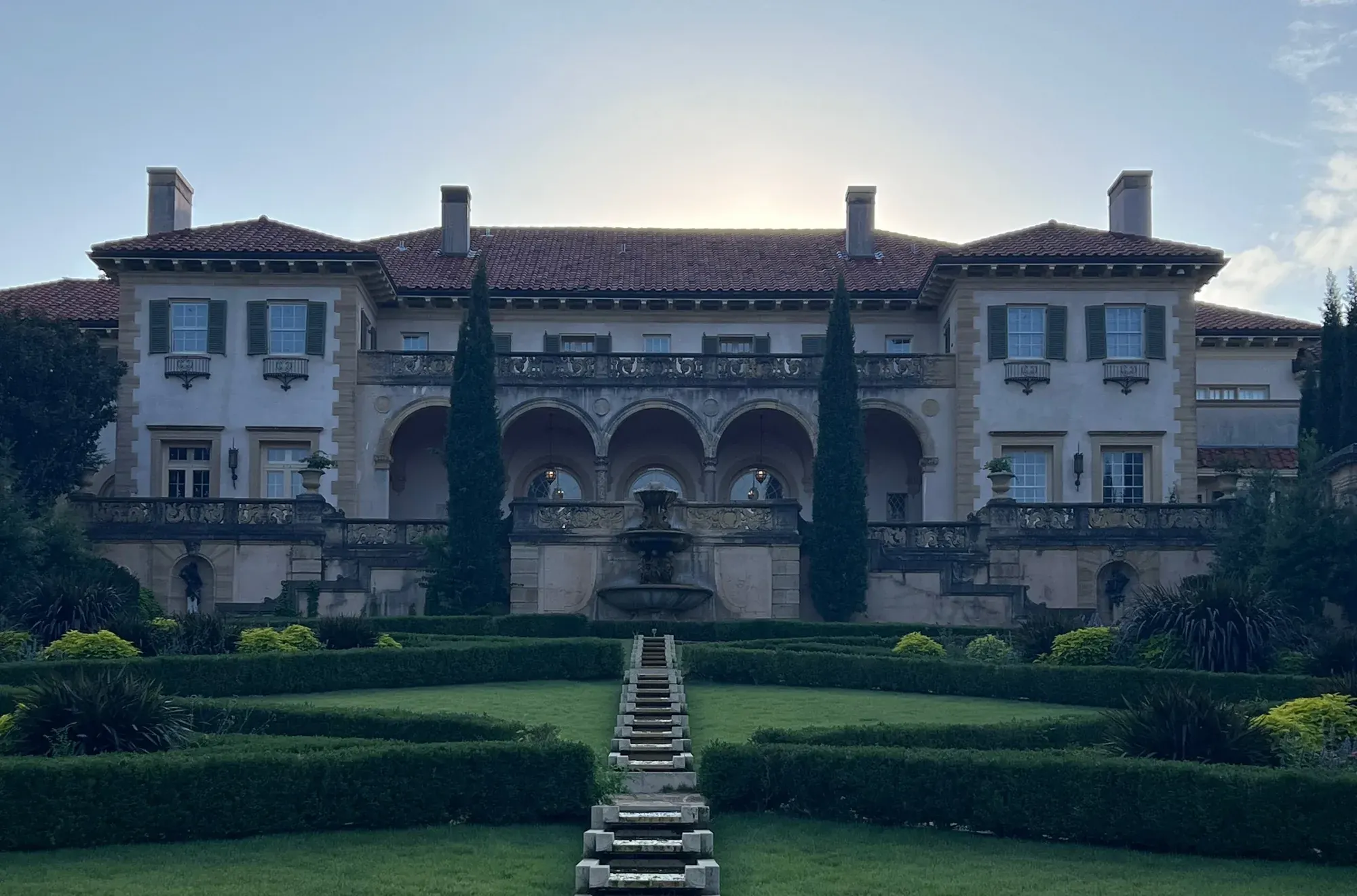
Friday at the Philbrook
On a villa, a museum, and an ordinary evening that let them overlap
On a villa, a museum, and an ordinary evening that let them overlap
The first photographs I made inside the Philbrook are close enough to lose the museum around them. A face carved in pale stone fills the frame. A bronze figure raises both arms in front of a fan of masonry. An iron panel encloses a figure assembled from red, yellow, blue, and white glass. I had gone to see the art, and for a while my camera behaved as though the rest of the place could be cropped away.
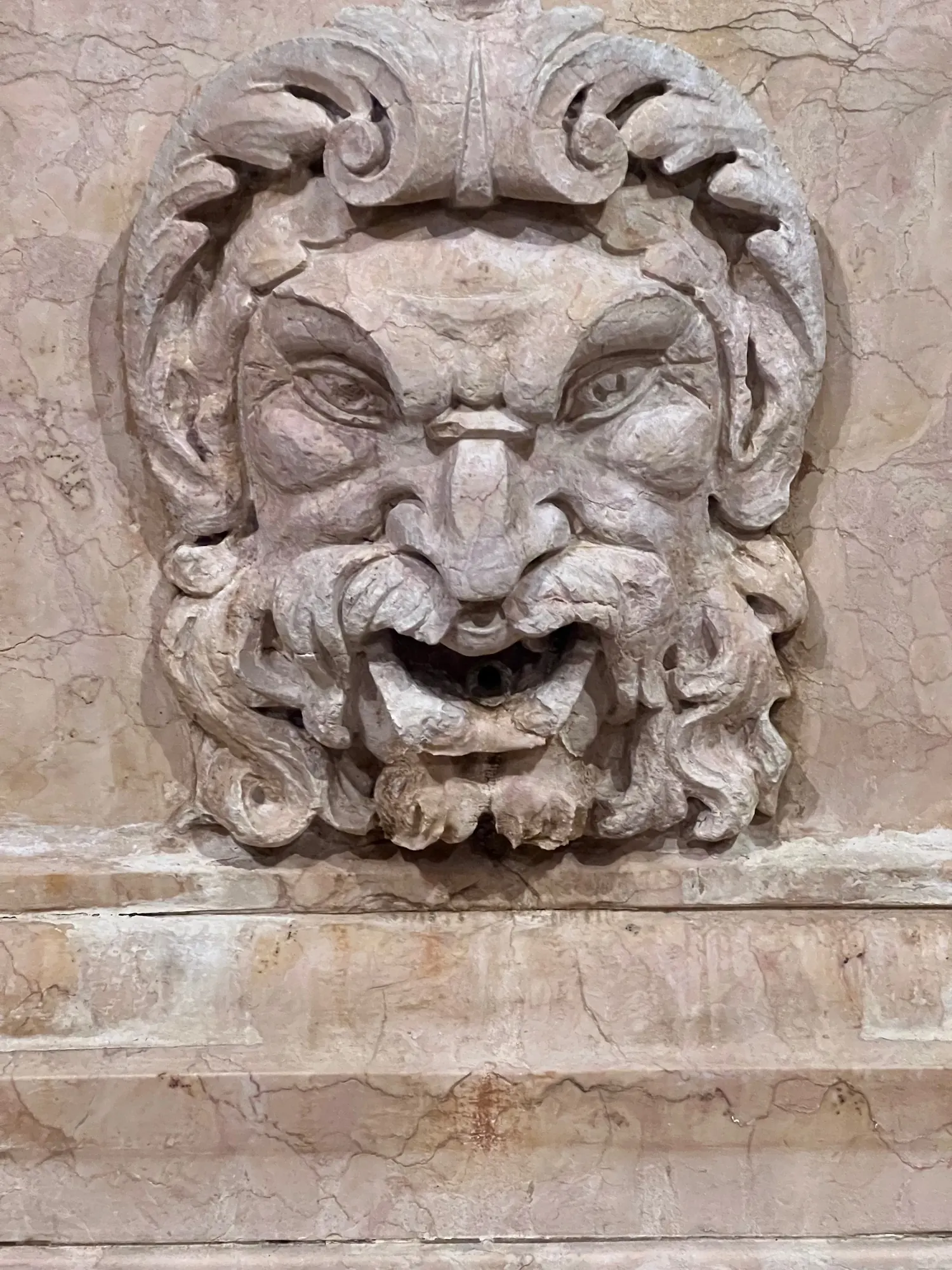
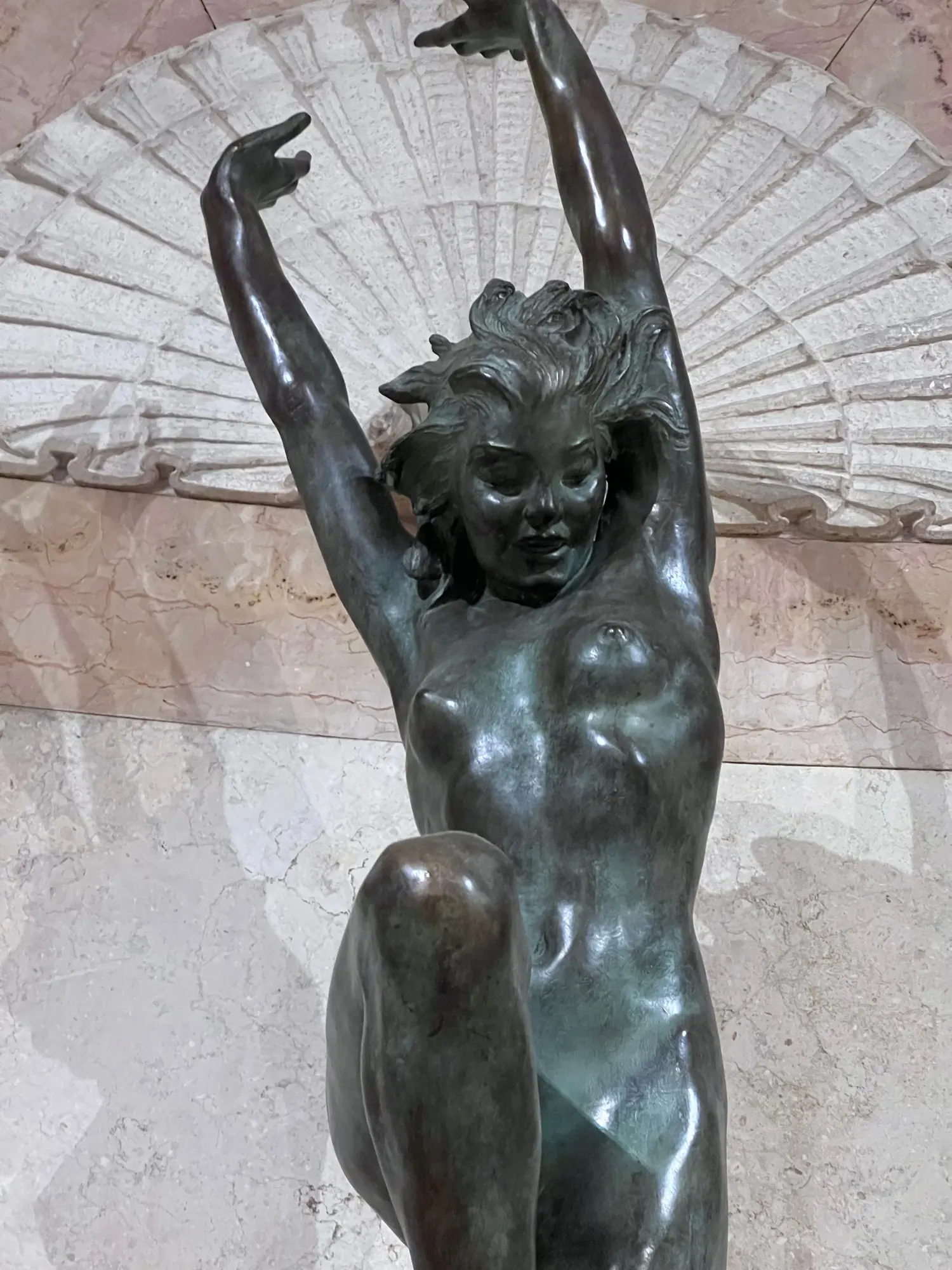
A carved stone face and a bronze figure inside the Philbrook Museum · Tulsa, Oklahoma (Michael Holland)
The Philbrook had begun as someone's house, although "house" is too modest a word for the Italian Renaissance villa Waite Phillips built in 1927. Phillips made his fortune in oil. In 1939, the property became a public art museum.
I remember the Indigenous, Mexican, and American art, but the building kept entering the pictures. Stone faces emerged from the walls. Bronze bodies stood against carved arches. A Madonna and child occupied a window washed with late-afternoon light. Even when I pointed the camera at an object, the villa became part of the composition.
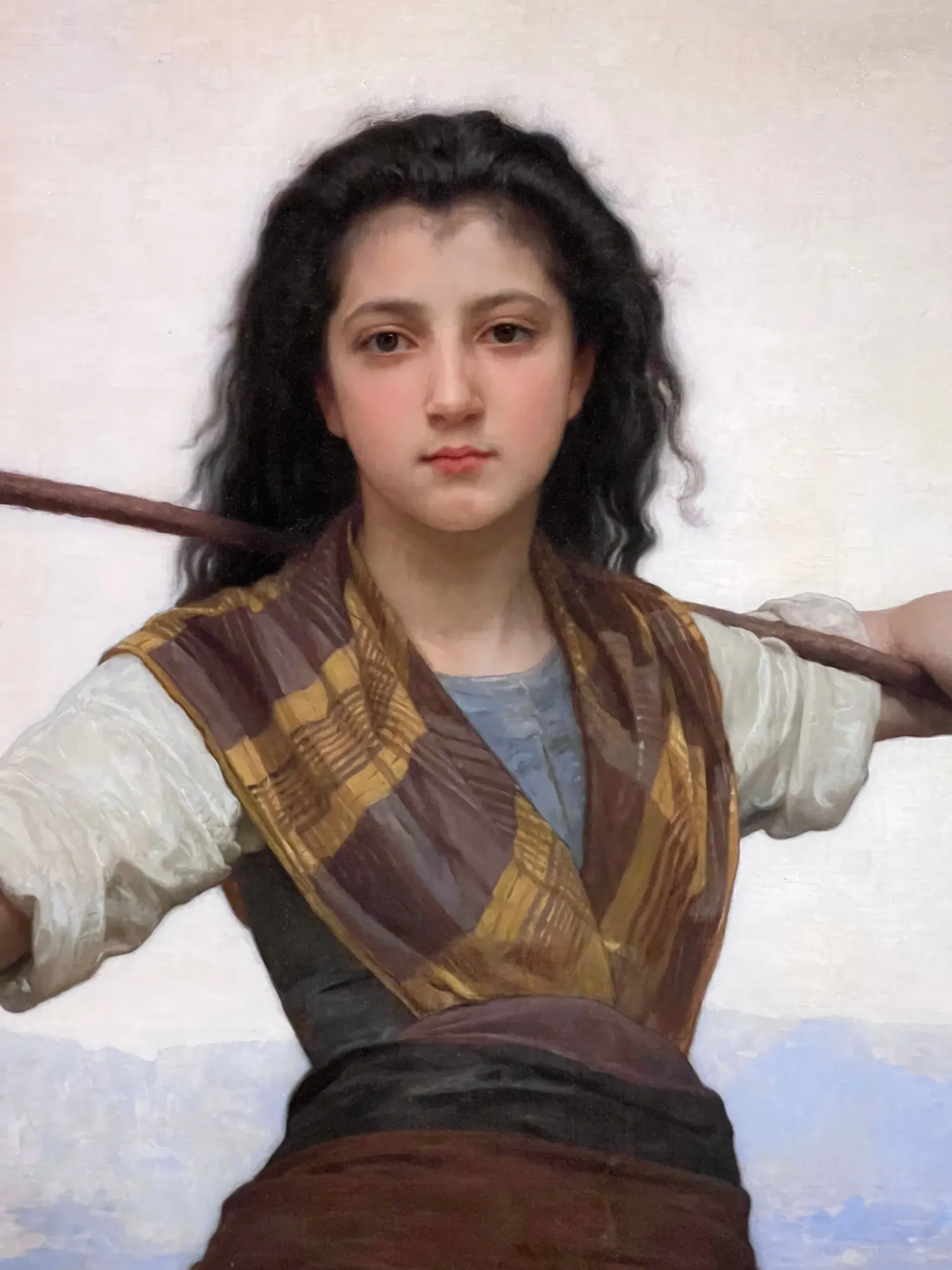
A close-up of The Shepherdess by French artist William-Adolphe Bouguereau (Michael Holland)
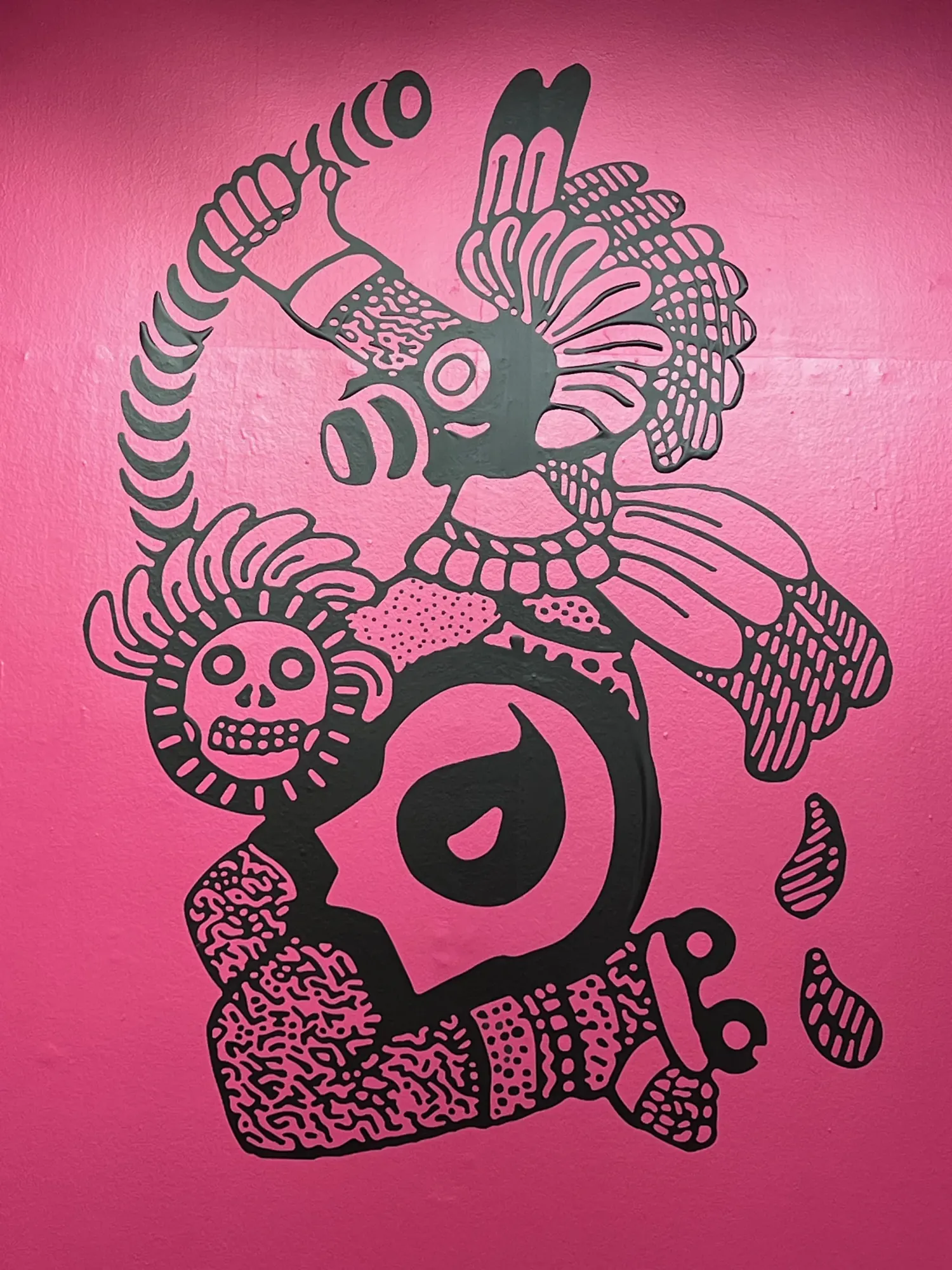
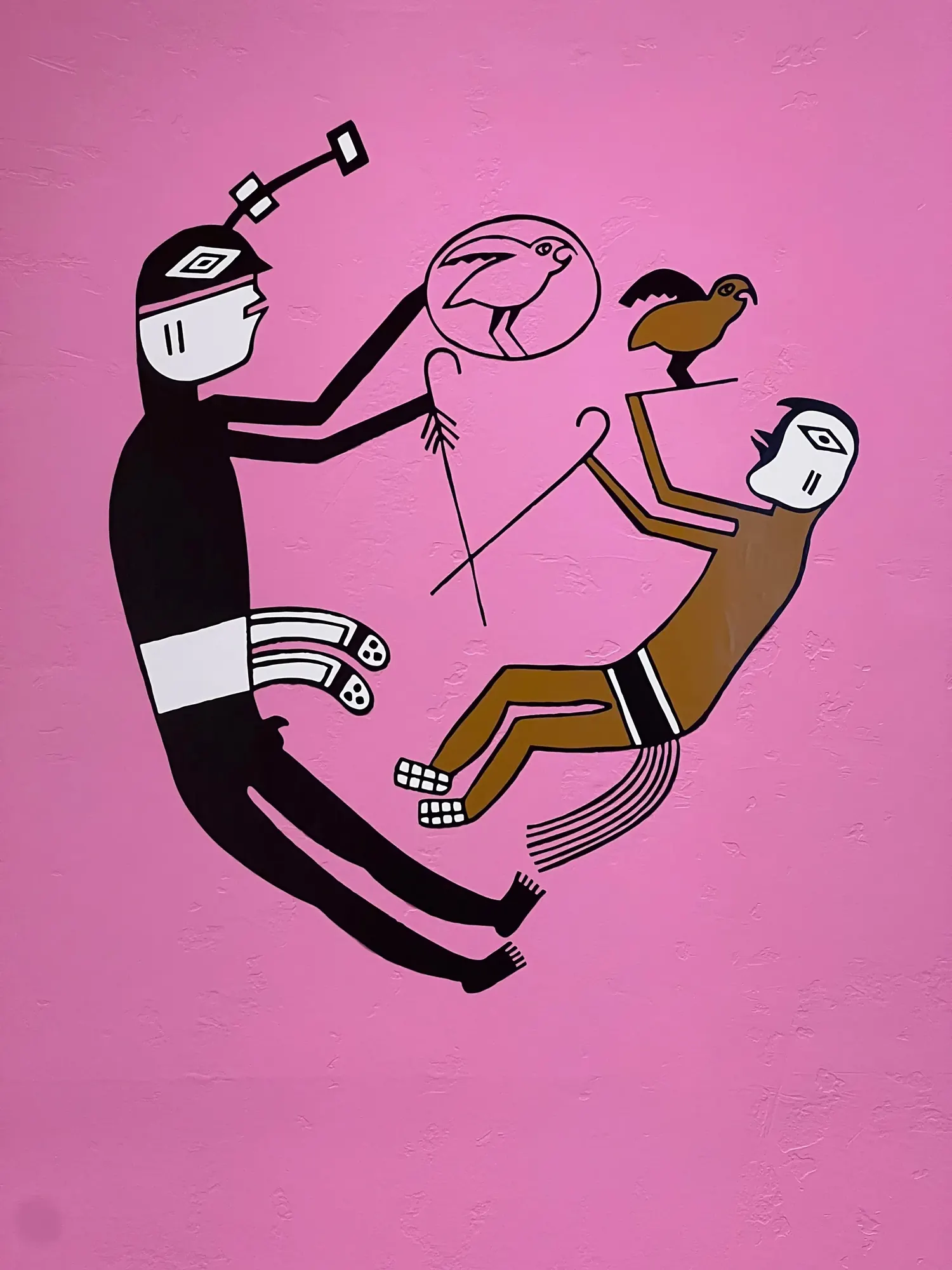
Mexican art on display at the Philbrook Museum · Tulsa, Oklahoma (Michael Holland)
Then the visit widened. The interior gave way to arcades and terraces, clipped hedges, fountains, stone stairs, and a long narrow course of water descending through the lawn. The back of the villa rose above the garden with a symmetry so complete that it seemed less like a backdrop for the collection than another work inside it. In later reflection, I called the building and grounds architectural and natural art. The phrase is rough, but it records the change in my attention: I had stopped separating the art from the place that held it.
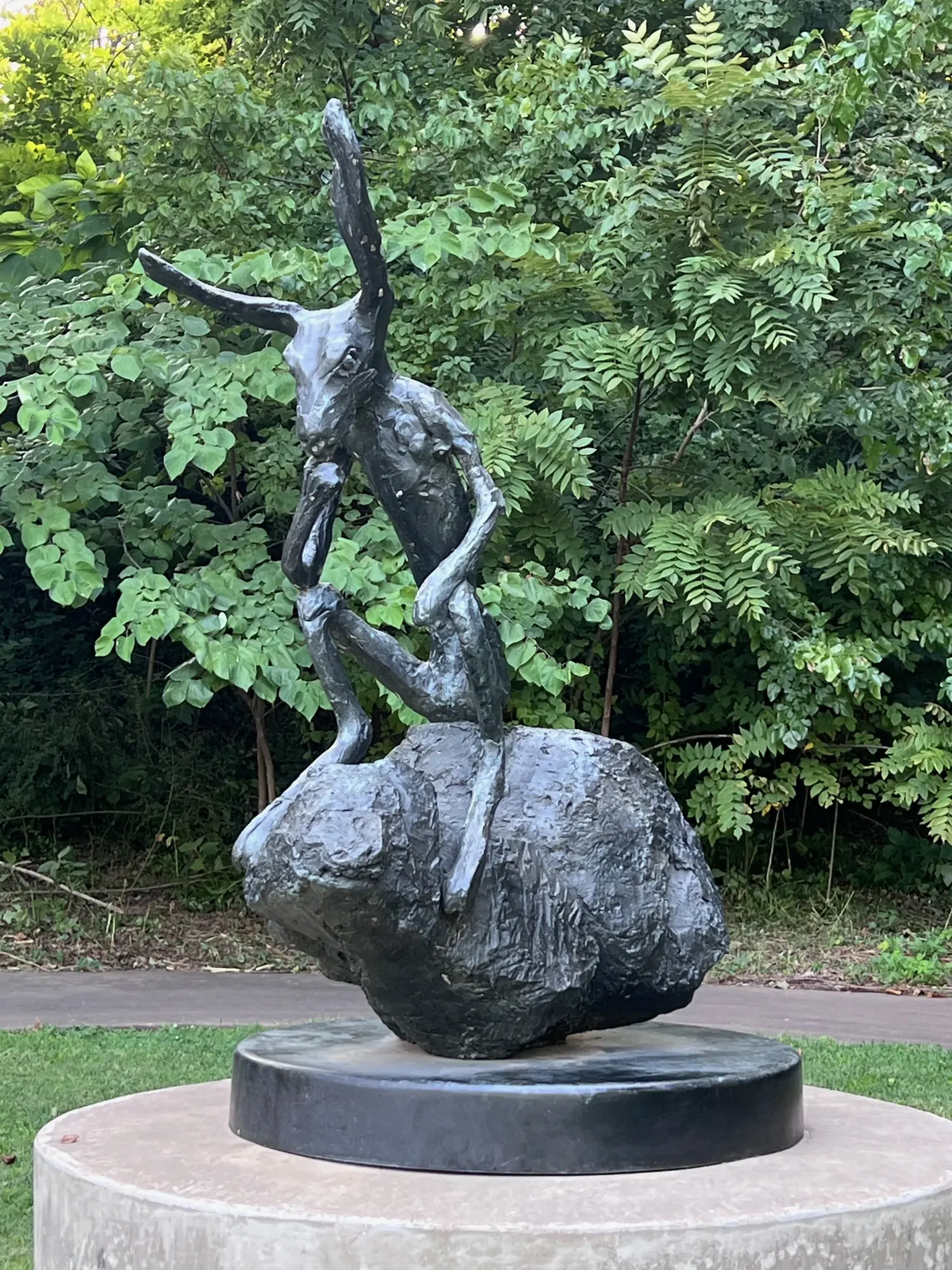
A bronze sculpture in the Philbrook gardens · Tulsa, Oklahoma (Michael Holland)
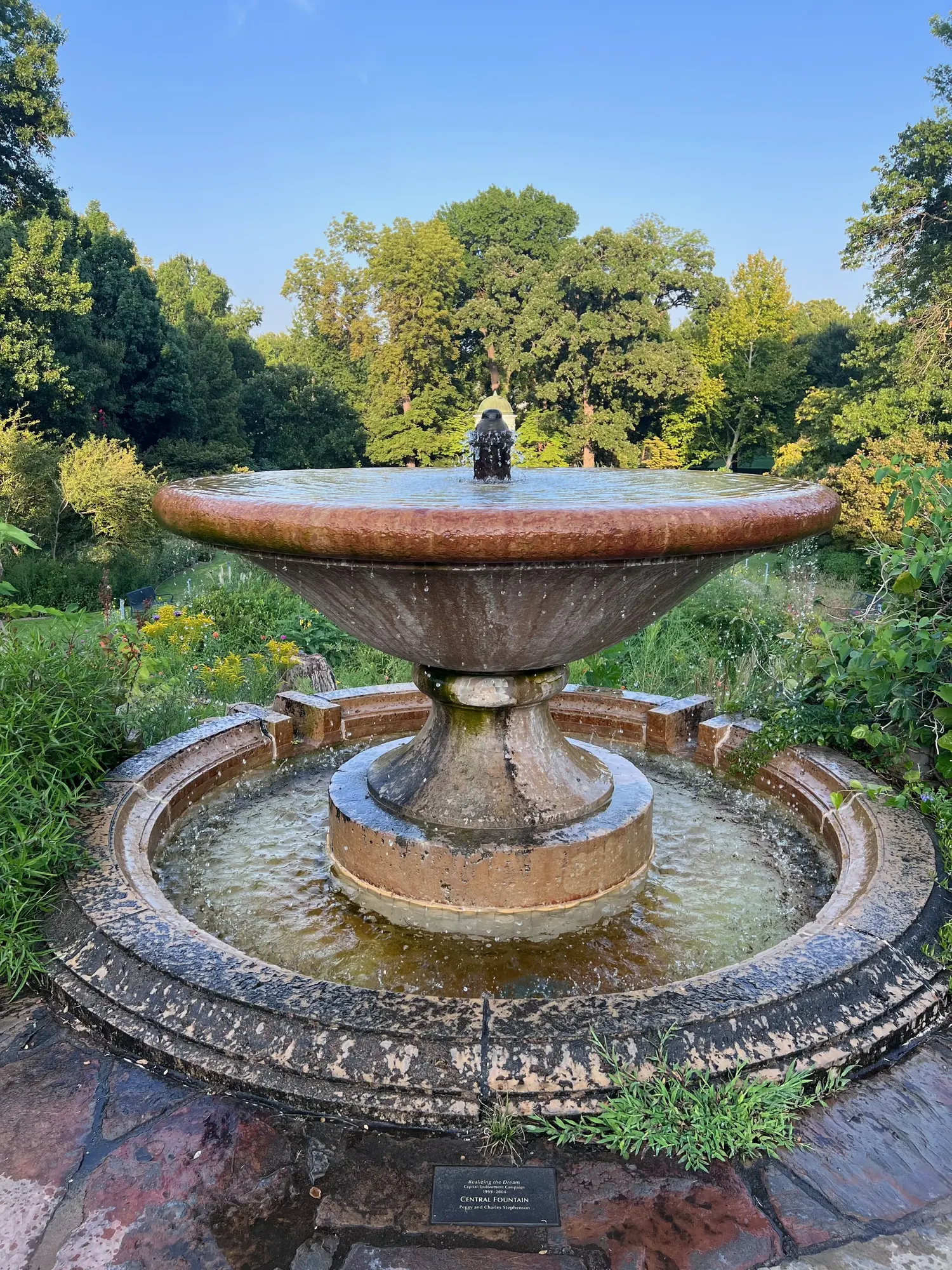
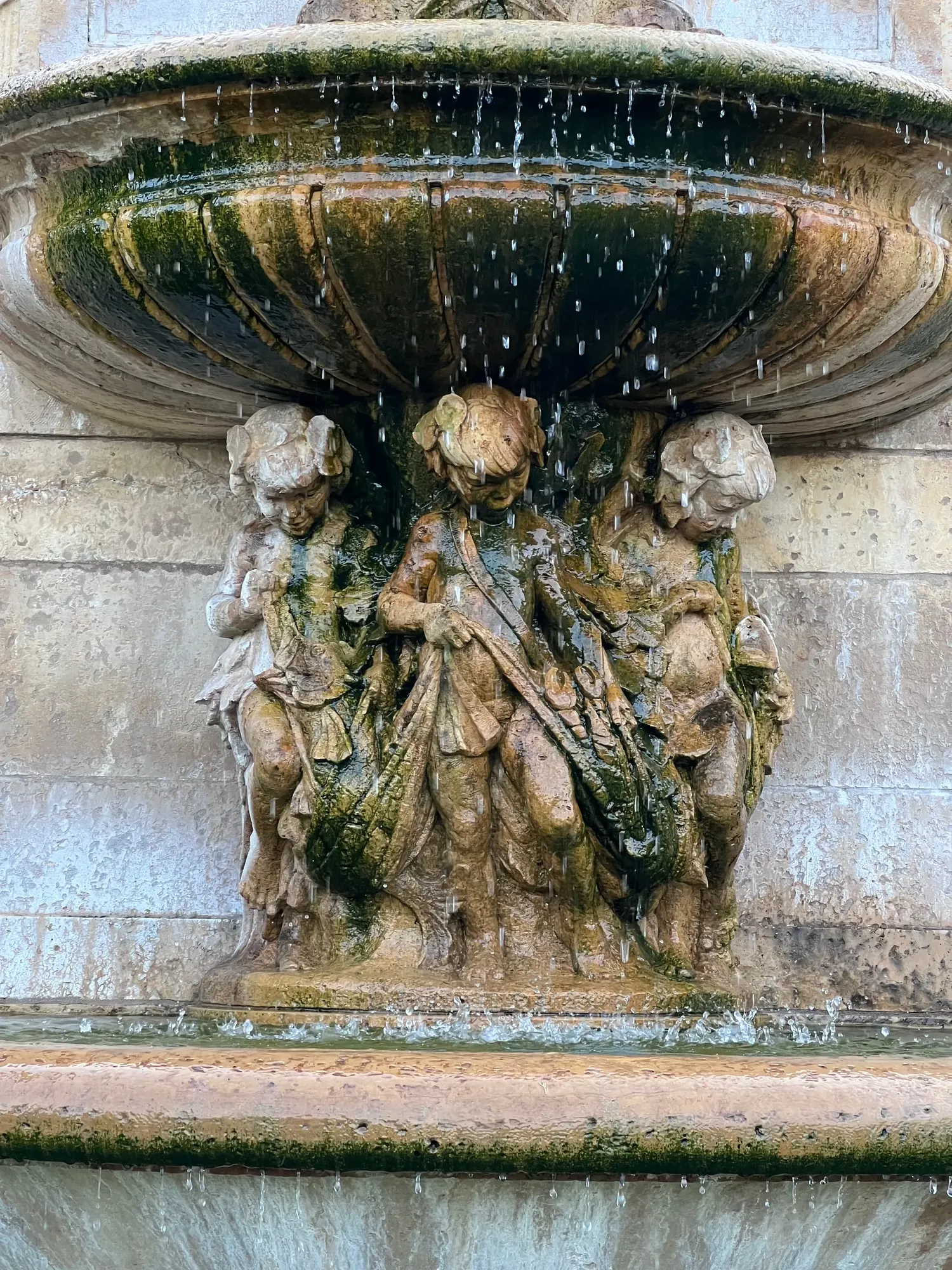
Fountains in the Philbrook gardens · Tulsa, Oklahoma (Michael Holland)
I was there on a Friday afternoon when the museum was open late. What I hadn't realized was that the café also served drinks. People were gathering on the grounds. I bought a margarita, found shade, and stayed. I took more photographs and continued walking through the gardens.
That small change of plan became the part I remembered most clearly. A private villa had become a place where people could spend an ordinary Friday evening. They could come for the collection or the garden, for the architecture or a drink, and allow those reasons to overlap.