The Size of Greenwood
On walking the streets of Black Wall Street, and the distance between a number and a place
On walking the streets of Black Wall Street, and the distance between a number and a place
I chose Tulsa because of Greenwood. A friend of mine leads an initiative named for the district, and her work first drew my attention to Greenwood. I began learning more about "Black Wall Street" and what had happened there in 1921. I had passed through school without being taught that a white mob had destroyed a prosperous Black neighborhood in an American city. I could read more or watch a documentary, but I wanted to walk the streets where it happened.
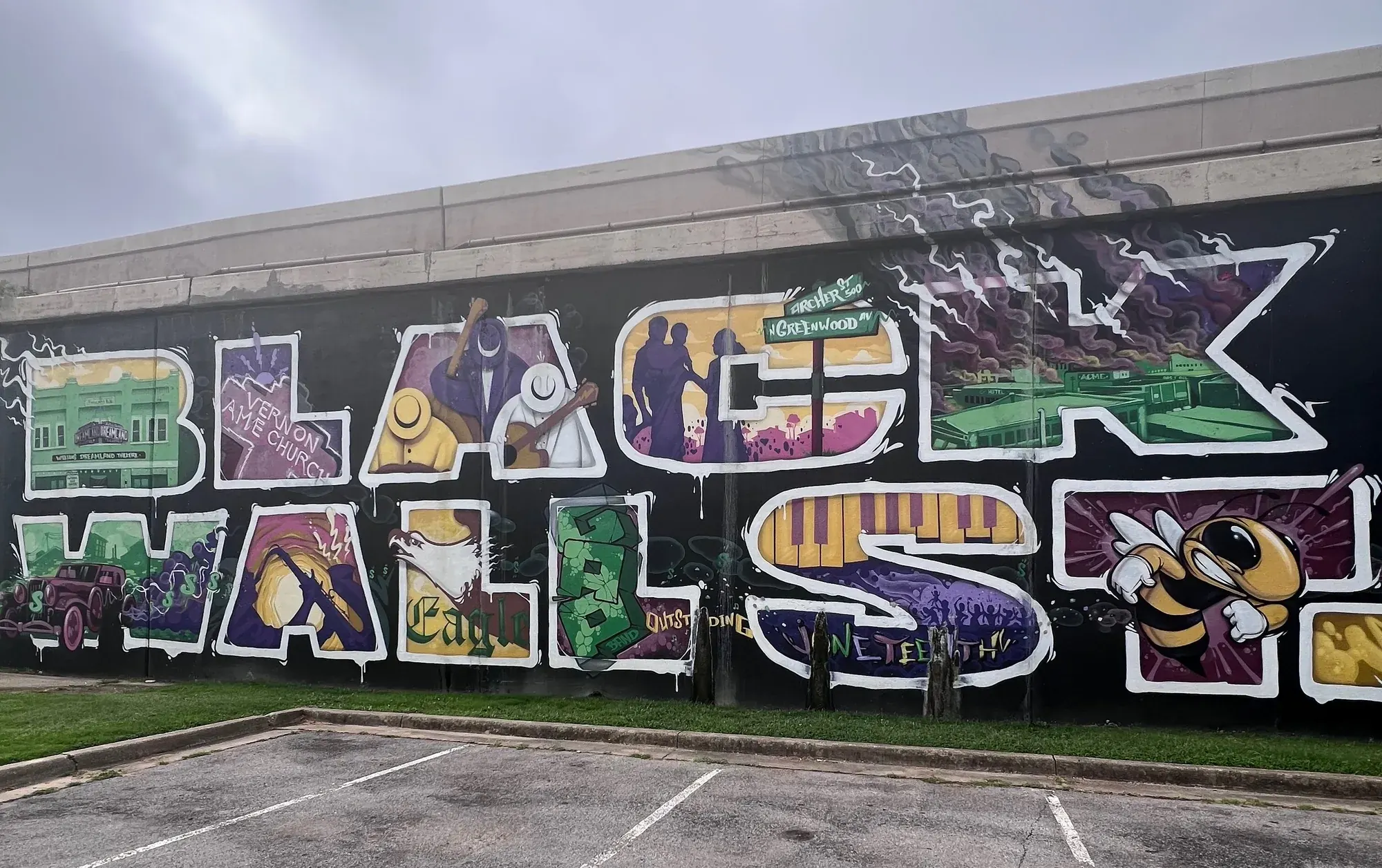
On my first full day in Tulsa, I left my apartment downtown, went around the corner, through the Center of the Universe, over the bridge, and into Greenwood. I arrived looking for history. What I found first were streets of ordinary dimensions. There were murals and markers, restaurants and businesses, a baseball stadium nearby, and a street called Reconciliation Way. I stopped there for a while before continuing to John Hope Franklin Reconciliation Park, where a bronze figure carrying a child stands inside a granite structure marked HOPE.
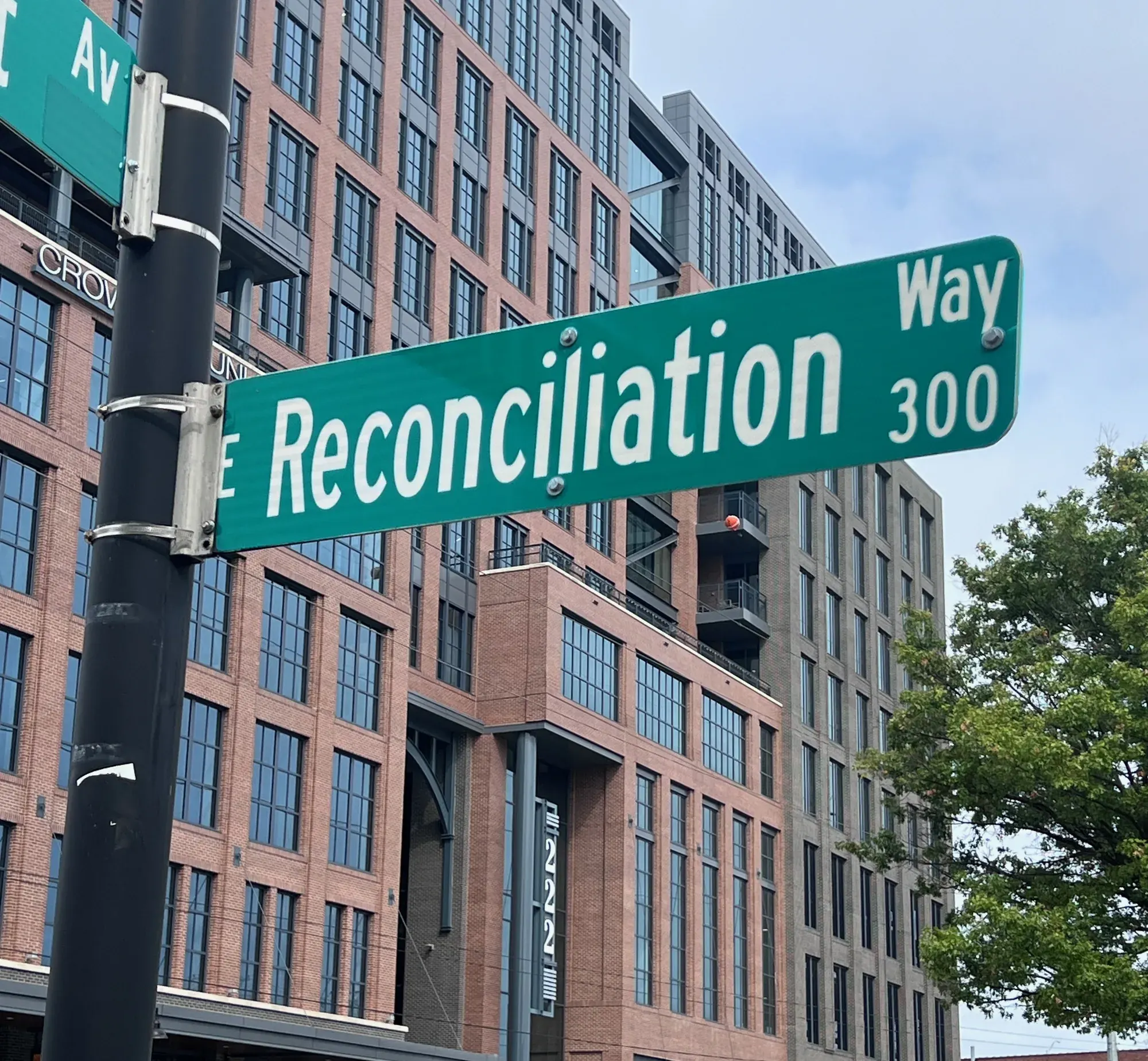
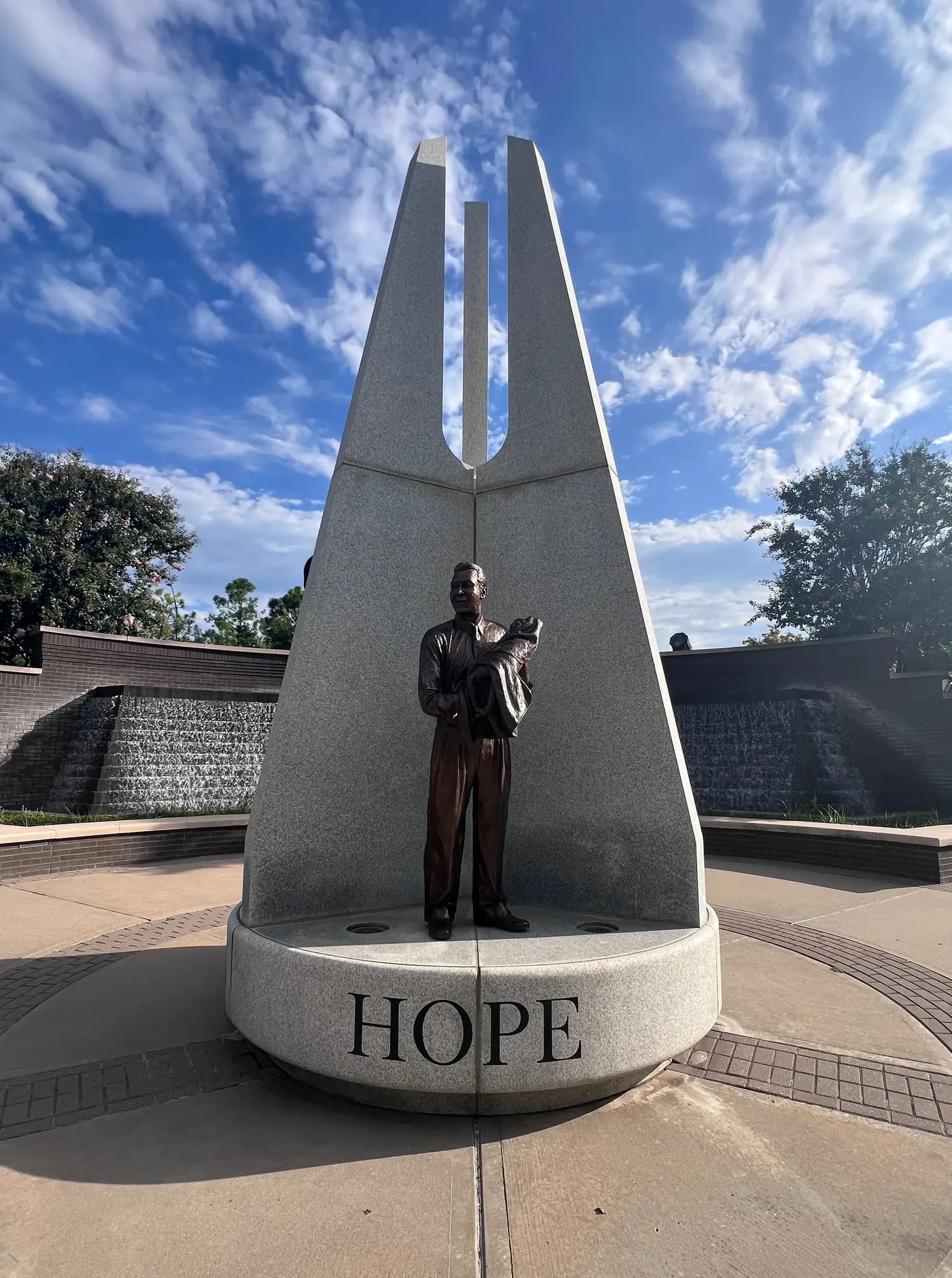
Reconciliation Way, and the HOPE sculpture at John Hope Franklin Reconciliation Park · Tulsa, Oklahoma (Michael Holland)
Nearby, a plaque begins with two words: "We survived." It describes people mourning their dead, helping one another, and returning to work. When city officials tried to use a fire ordinance to prevent rebuilding, B.C. Franklin and other lawyers fought them in court. Greenwood rose again "brick by brick, block by block."
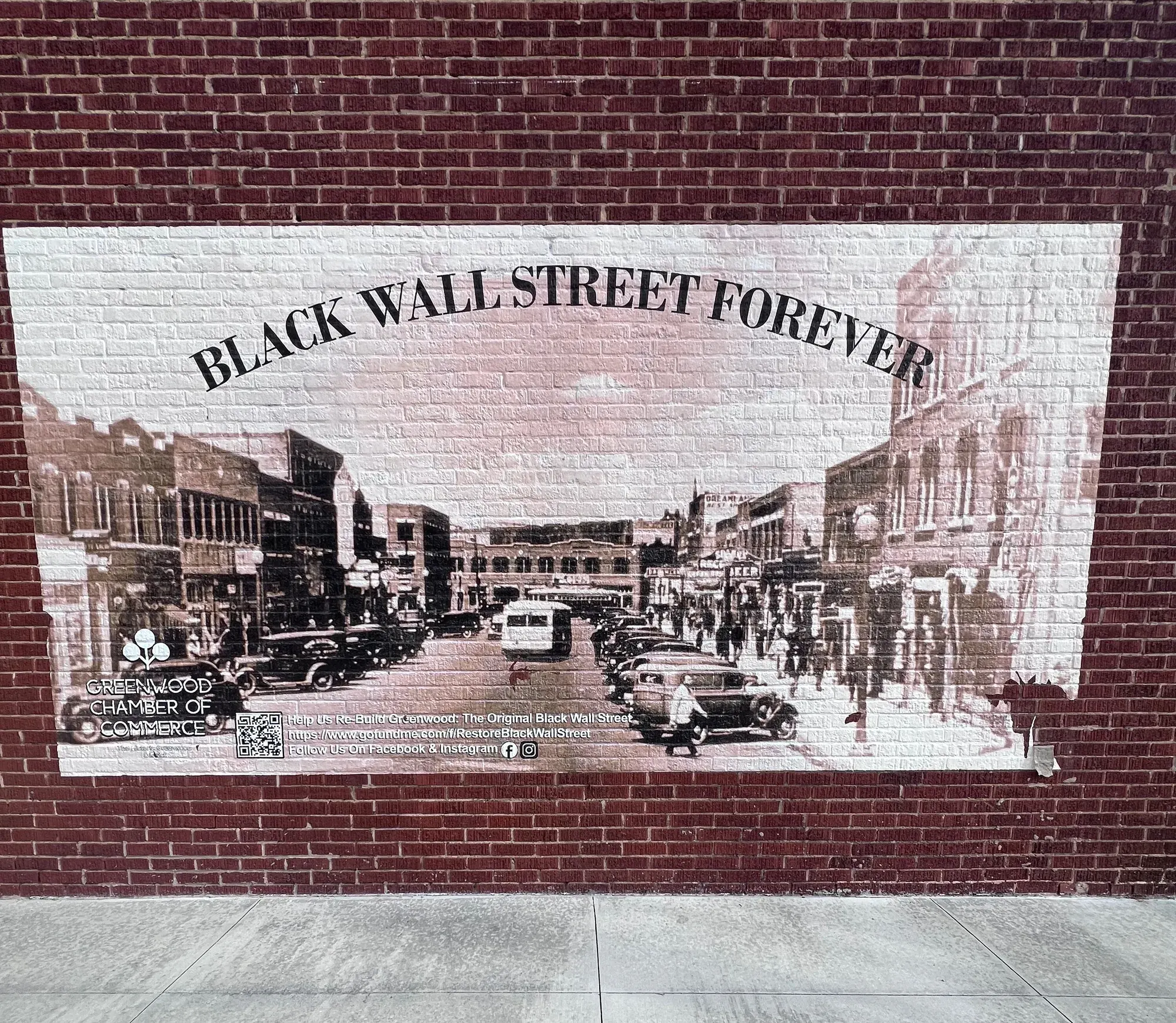
"Black Wall Street Forever" · Greenwood Chamber of Commerce mural, Tulsa (Michael Holland)
During the same Tulsa stay, I entered Greenwood Rising. Near the beginning, a wall announces "Systems of Anti-Blackness in America." The galleries place Greenwood inside the longer history of enslavement, segregation, criminalization, and organized racist power before narrowing toward the massacre. Figures move inside projected flames. Survivor accounts accompany images of fire. An enormous photograph shows the district afterward, people walking among blocks reduced to wreckage.
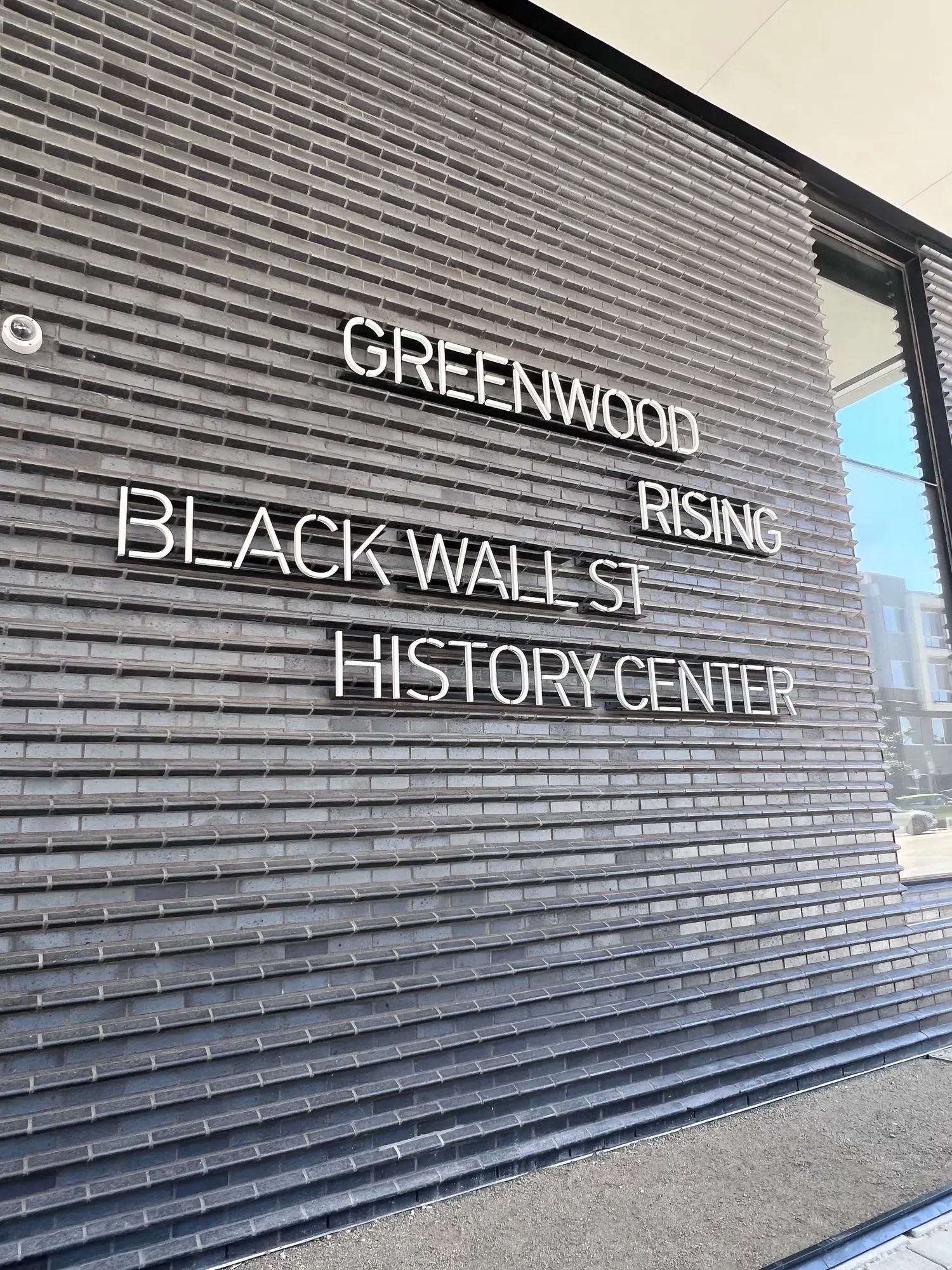
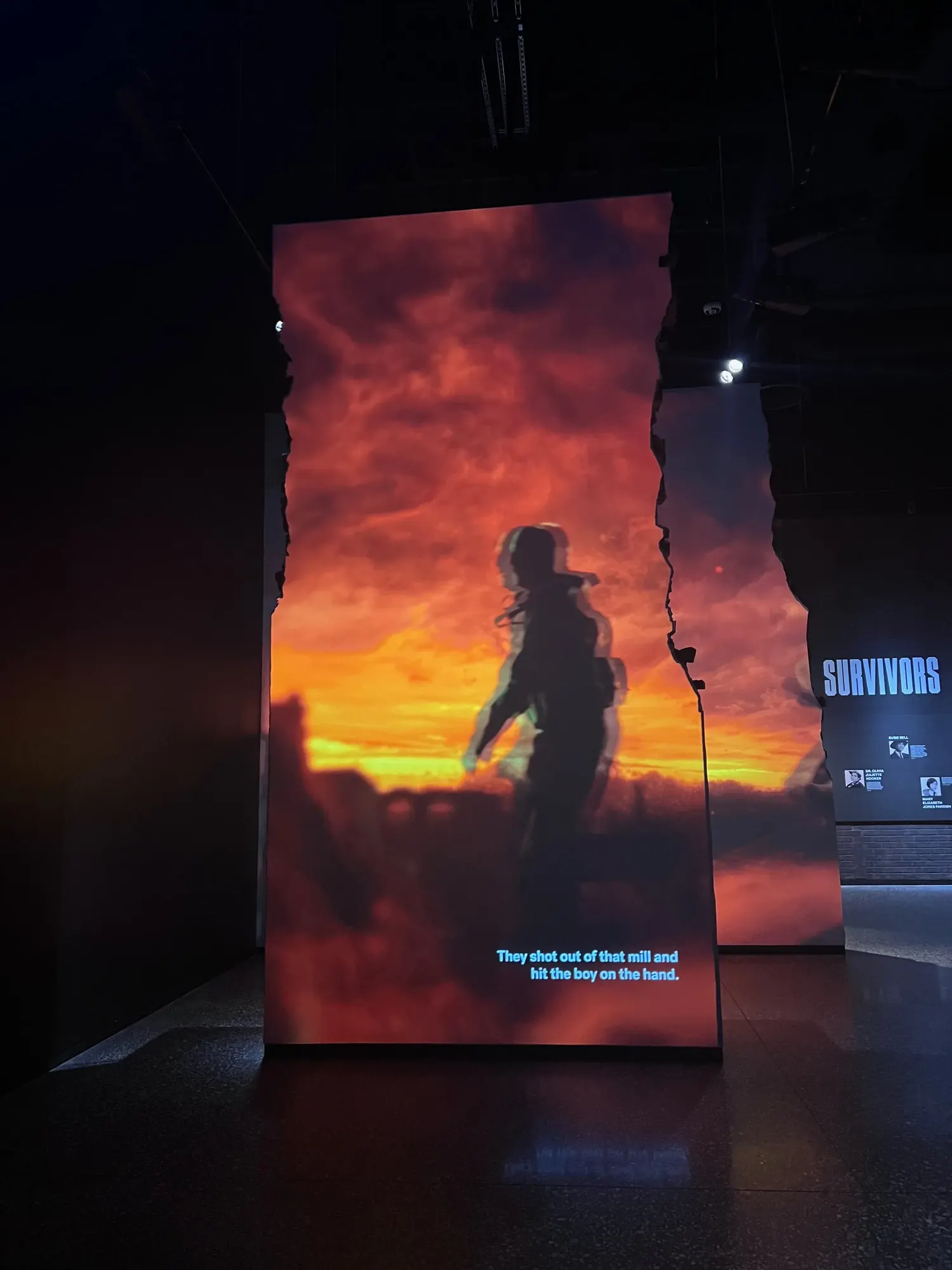
Greenwood Rising, Black Wall St History Center, and the "Survivors" exhibit inside · Tulsa, Oklahoma (Michael Holland)
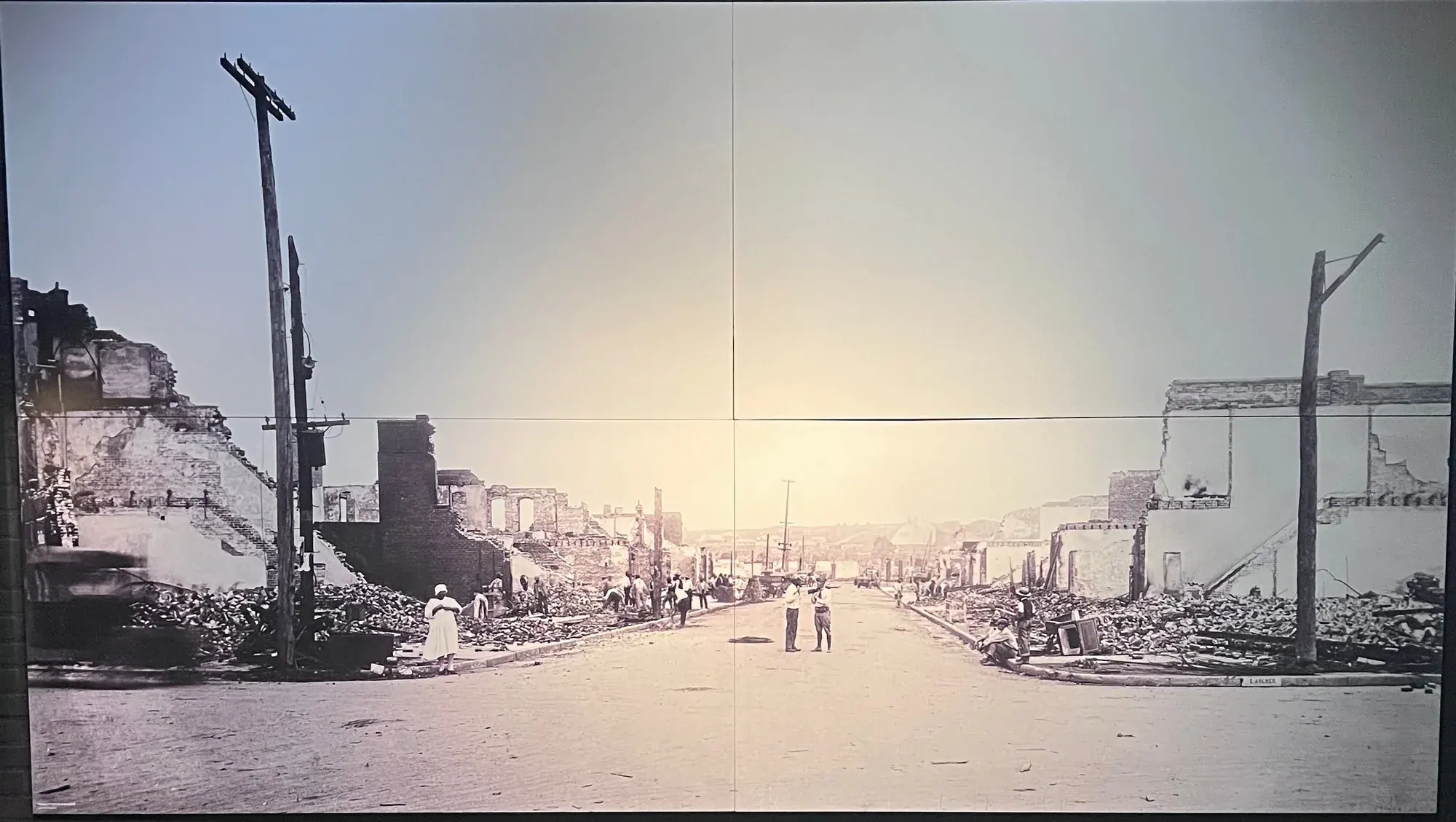
Greenwood in the aftermath of the massacre, as displayed at Greenwood Rising (Michael Holland)
On May 31 and June 1, 1921, after a disputed encounter between Dick Rowland, a young Black man, and Sarah Page, a white elevator operator, a white mob invaded Greenwood. Thirty-five blocks were burned. Homes, businesses, churches, and schools were destroyed. The number of dead remains uncertain, commonly estimated between one hundred and three hundred. Thousands of Black Tulsans were detained after the attack.
The museum moves beyond the fire, as Greenwood did. A display titled "Deny, Deny, Deny" explains how civic institutions blamed the Black community and how officials attempted to stop residents from rebuilding. The same panel records the legal challenge that defeated that effort. Letters and testimony carry the terror in individual voices. The history does not resolve into uplift, but neither does it end with the panorama of ruins.
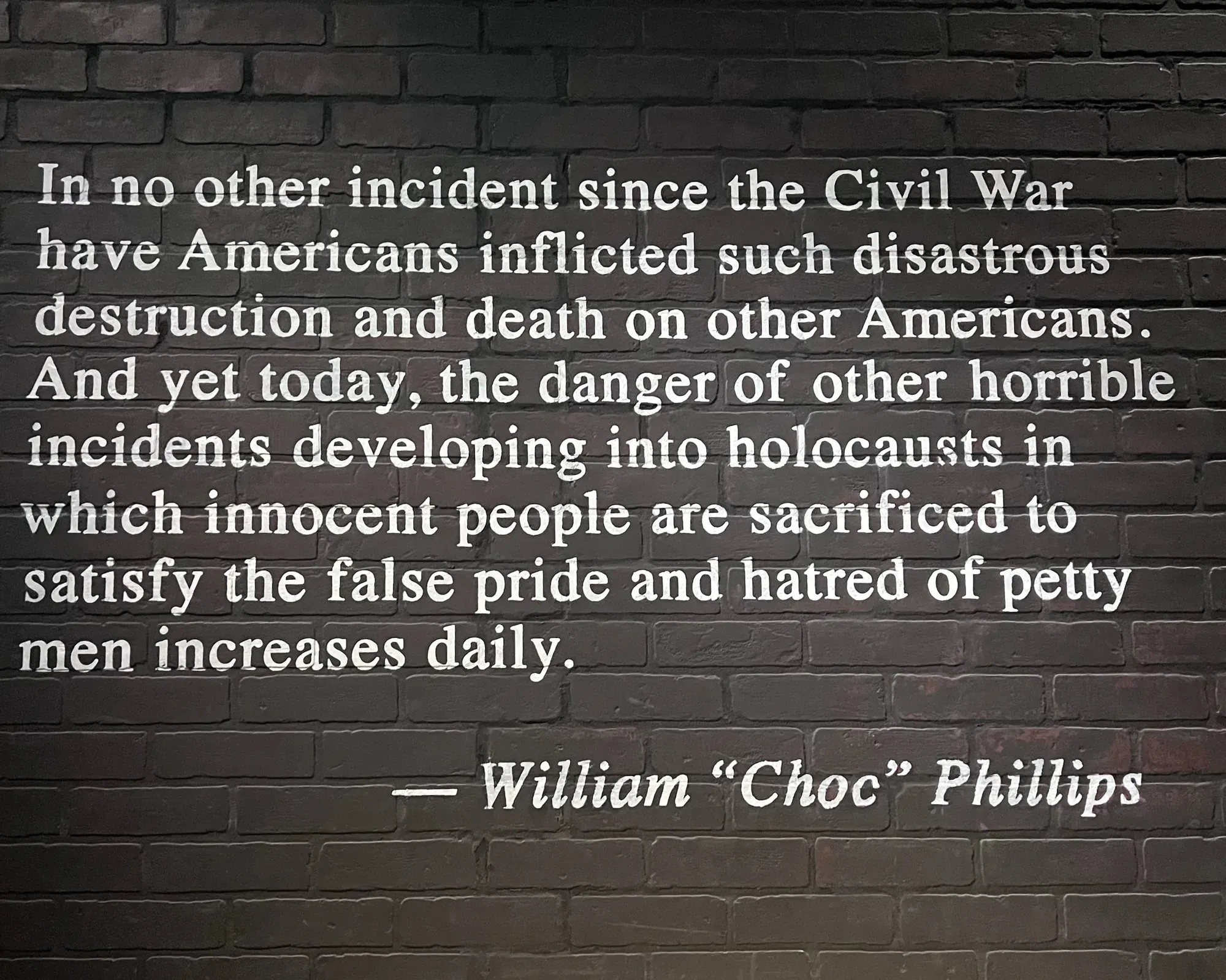
A wall text display at Greenwood Rising, Black Wall St History Center (Michael Holland)
I had known the number of blocks before I walked them. Numbers behave differently on a page. Thirty-five blocks can remain an item in a chronology, large enough to become abstract. In Greenwood, I kept returning to how small the streets felt. The museum's landscape photograph expanded the destruction across a wall; outside, the district returned to sidewalks, intersections, and short distances a person could cross on foot. The destruction became easier to picture because the physical place was graspable.
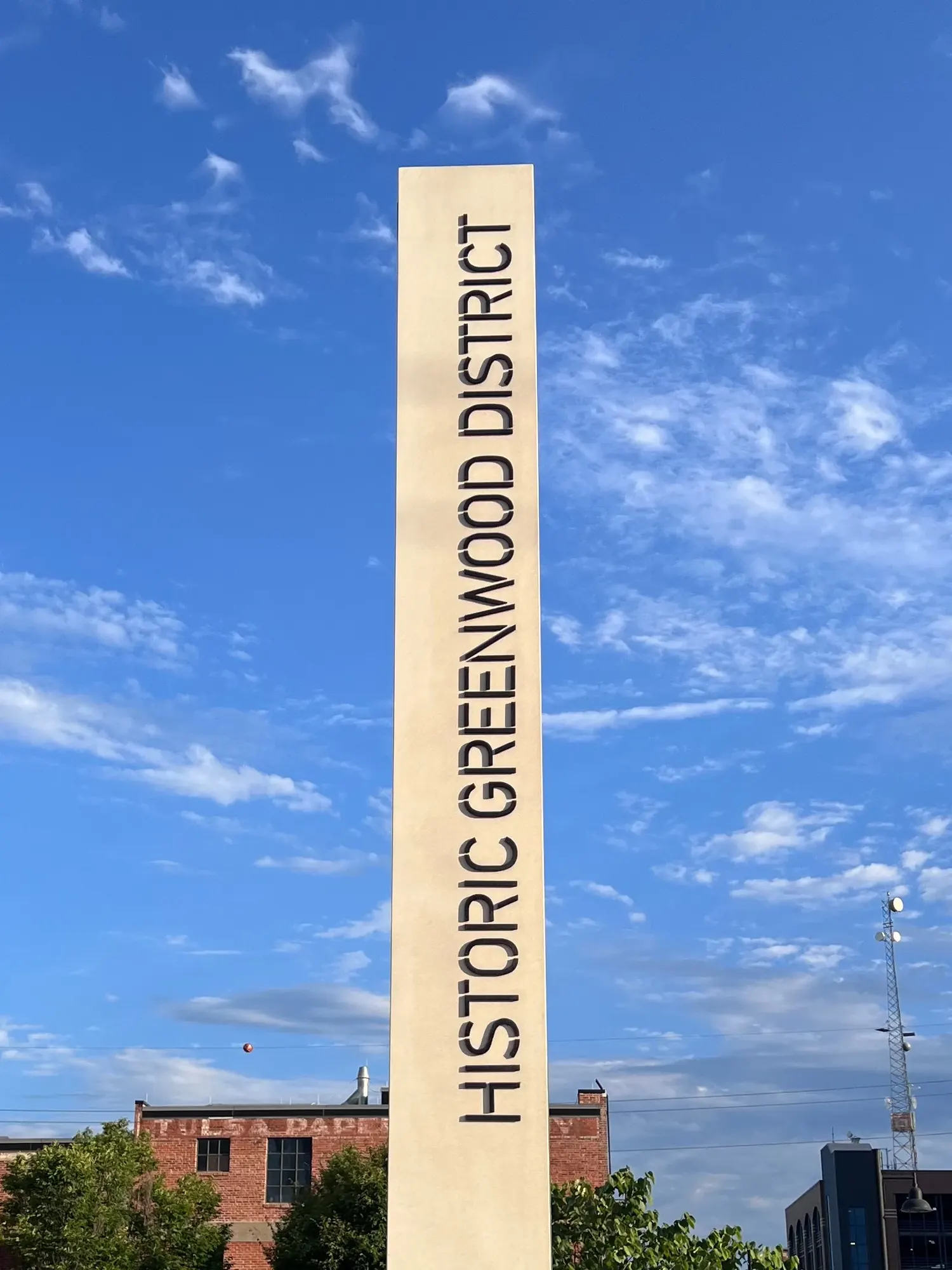
Historic Greenwood District · Tulsa, Oklahoma (Michael Holland)
Being there did not tell me what it was like to lose a home or business to the mob, to run with a child, or to return to neighbors who had participated in the destruction. It did make my previous distance less comfortable. I had thought of the massacre largely as a history I had not been taught. But someone had preserved the accounts. Someone had fought the ordinance. Someone had built the park and the museum.
The history had not been waiting silently for me to discover it. I had been late to it.