Issue 18 · September 18, 2026
I decided I was going to live in Iowa.
When I told friends and colleagues in Washington, D.C. what I was planning, some seemed genuinely puzzled. Of all the places I could go, why Des Moines?
When I started traveling full-time four months earlier, I had dreams of Porto, Rome, Seoul, and many other faraway destinations. If there was Wi-Fi, then I could work. And I was not shy about sharing the myriad opportunities this new lifestyle presented.
But something changed while I was living in D.C. For most of my career, I had worked at the intersection of business, government and civil society, and Washington was an environment I understood. To be there is to be immersed in policy debates and arguments being made on either side of an issue. These were conversations I had participated in for years.
If I had not just lived in Dayton, Portland and Miami, I probably would not have noticed anything different.
Instead, I found myself listening from a slightly altered vantage point. A month in these cities did not make me an expert. Yet that modest amount of proximity had made some of the conversations in Washington sound different. I began wondering how much of what I thought I understood had been shaped from a distance or through a screen.
So, Iowa seemed like a reasonable place to continue asking the question. It was one year away from the 2024 primary season and the state had played an outsized role in American presidential politics for decades. I had never been there. Never been to the Great Plains. I knew it mostly through elections, polling, the Des Moines Register, and the familiar images of candidates moving through diners and county fairs. So I rented an apartment in Des Moines in February and went to live there.
Then I walked.
Walking has always been part of my life. What changed after I left New Jersey was its function. For most of my adult life, I had owned or had ready access to a car. When I gave mine up, walking stopped being only something I chose to do and became part of the mechanics of everyday life. If I needed groceries, somewhere to work or a way to get to an event, I had to decide whether I could walk there, find a bus or subway or pay for an Uber. Mostly, I chose to walk.
There is nothing revolutionary about walking. Millions of people do it every day because they want to, and millions more because they have no alternative. What surprised me was how much I had been passing without seeing. Turns out, it was a lot.
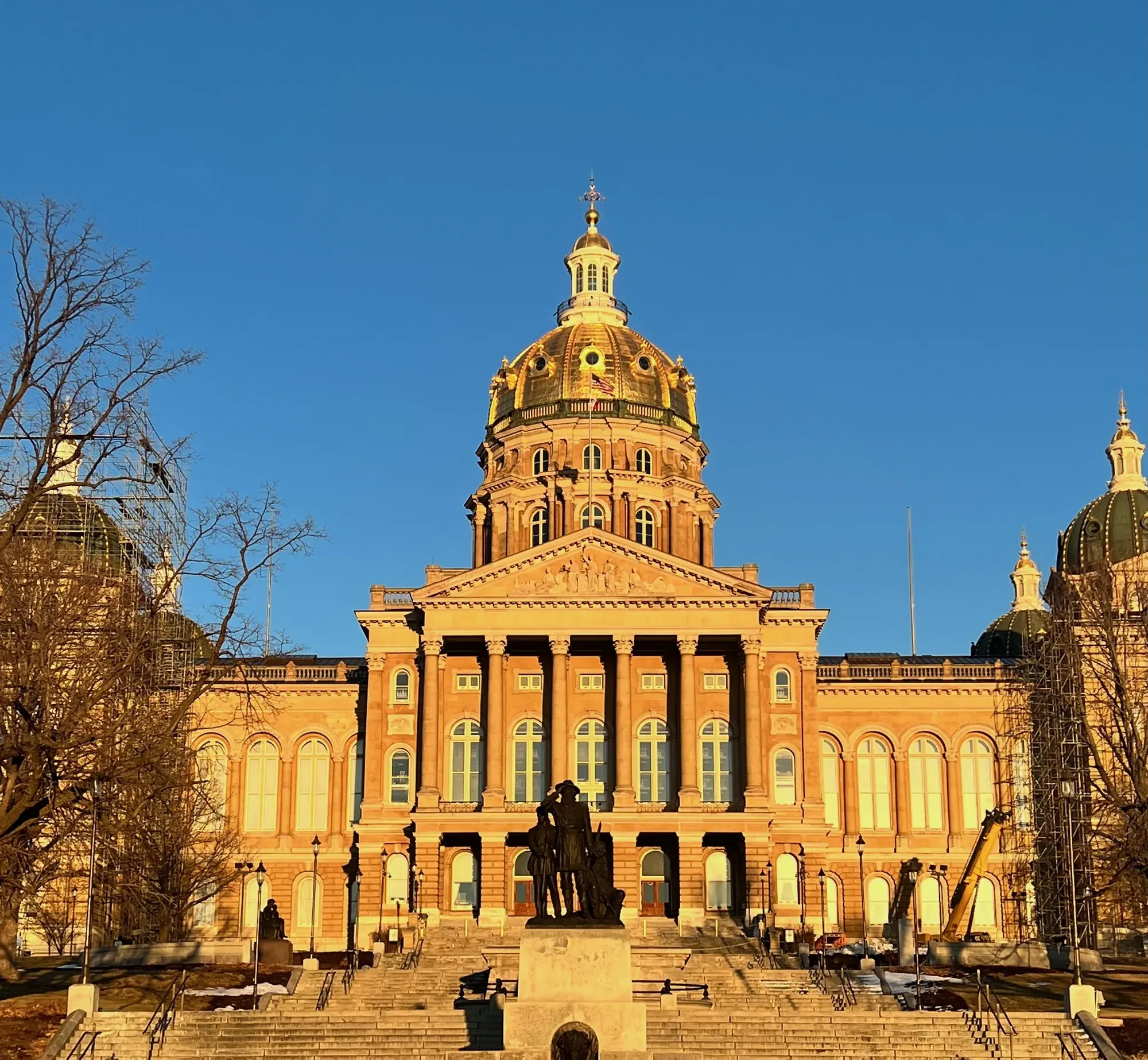
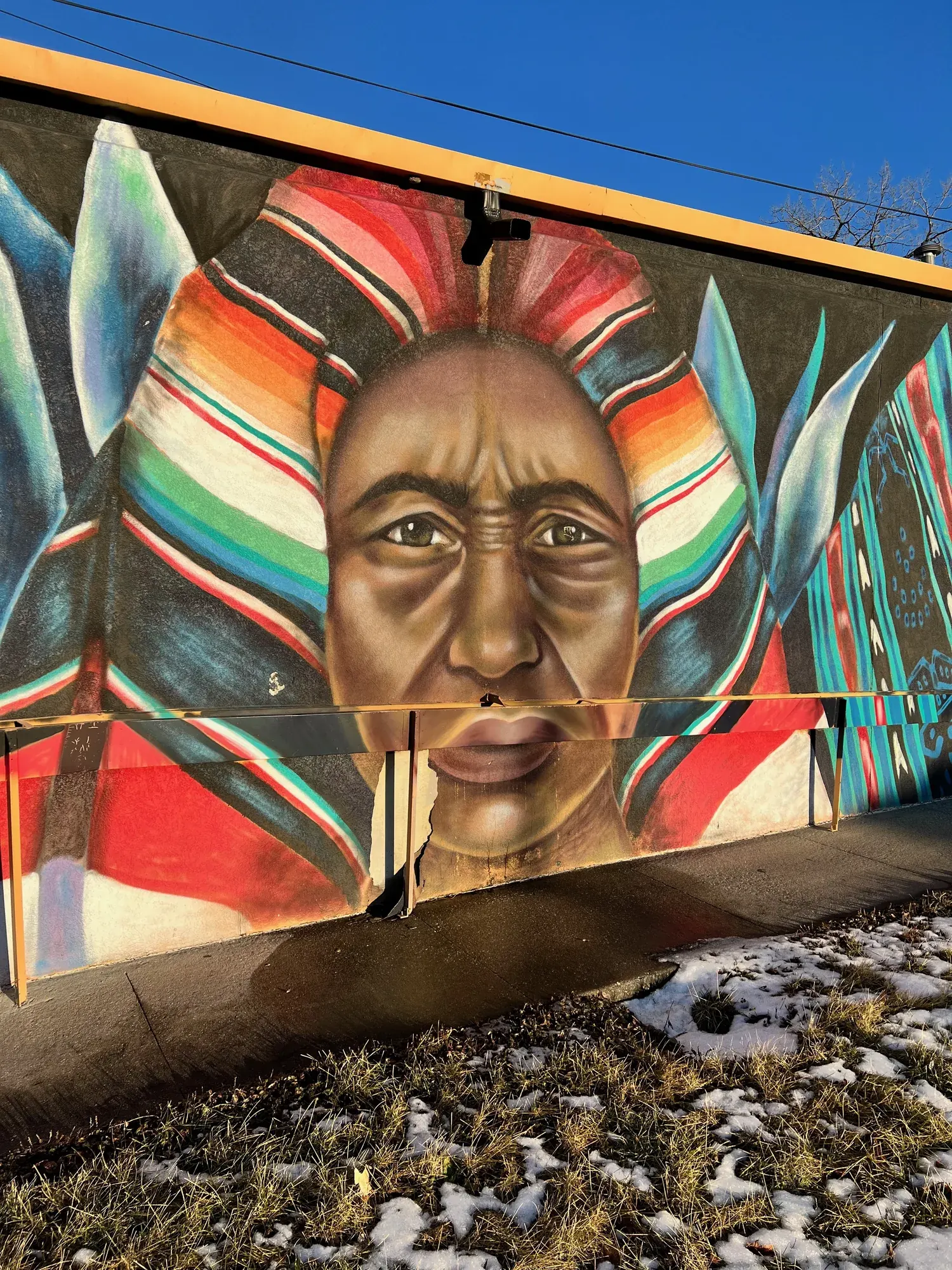
Des Moines began revealing itself almost immediately. On my first day, I walked down East 6th Street past the Capitol toward Grand Avenue in the Historic East Village. I wandered through streets and then along East Grand, where a mural covering the side of a Mexican grocery store stopped me. Eventually I made my way back toward the apartment. By then the afternoon light had changed. I passed the Capitol again, only now its dome and stone facade were glowing gold in the setting sun. I stopped and photographed it again.
Other walks began filling in the city. At Brenton Skating Plaza, I watched families circle the ice as the Des Moines River flowed by. The Hy-Vee on Court Avenue was about a mile from my apartment, which turned a trip for groceries into a two-mile walk through the February cold. East 6th became the route I knew well enough to follow without thinking. I passed the same buildings and storefronts at different hours and in different light, while unfamiliar streets gradually acquired landmarks and destinations. Occasionally someone stopped me for directions, which always amused me. Somehow, I had been there long enough to look as though I knew where I was going.
I started taking more photographs, not because I had set out to document a theory about walking, but because there was suddenly so much that caught my eye. I photographed architecture and street signs, murals and monuments, flowers growing beside sidewalks and the changing sky. Things I might once have passed in seconds now had enough time to become interesting.
Earlier in my career, I would travel the country with teammates to conduct focus groups to learn as much as we could as quickly as we could.
But I also remember where we sat: behind the glass.
I could see where one neighborhood began to give way to another, when streets filled with people and when they emptied again. I noticed who was waiting at bus stops and who was walking because, like me, they needed to get somewhere. I saw the celebrated parts of cities, but also what lay between them: vacant storefronts and neglected buildings.
Over the months and years that followed, those walks took me past people sleeping in doorways along East Grace Street in Richmond and beneath the Route 35 overpass in Dayton. In Richmond, one man slept in the same doorway along a route I walked regularly. I would see him settling in there night after night.
Then one day, as I passed, he looked at me and I looked at him. I didn't know his name, nor did he know mine. But we nodded to one another. Hey, it's you again.