
Issue 22 · October 16, 2026
I had spent the first thirty years of my career trying to become knowledgeable about the world. Then I spent the last four putting myself in situations that repeatedly showed me how much I didn’t know.
I still remember my flirtation with the word expert. There was an adrenaline rush from inserting it into a biography for a client presentation or an introduction for a conference panel. It was a peculiar kind of self-anointment, declaring an authority I had decided I’d earned. I don’t mean that entirely as self-mockery. Expertise is real. It is accumulated through years of work and mistakes, reading and observation, success and failure. After thirty years, I was confident in what I knew. What I hadn’t thought nearly as much about were the boundaries around it.
Much of my professional life had been spent in and around London, New York and Washington, where complex problems had to be made manageable. I looked out at the world from high-rise windows with a certainty that distance can sometimes provide.
We gathered research, analyzed data and identified trends. We threw around buzzwords like primary and secondary stakeholders. We put people into boxes with labels on PowerPoint slides and drew arrows between them. There was nothing inherently wrong with that. Abstraction is necessary when you’re trying to make sense of a complicated world.
But abstraction also flattens. A community becomes a demographic, a place becomes a market, and thousands or millions of individual lives become a category with a name. For years, I had understood the necessity of doing that without thinking nearly as much about what might disappear in the process.
Then people on SE 12th Avenue in Portland, N 2nd Street in Memphis, and N Florence Street in El Paso became my neighbors for a few weeks at a time.
The people I might once have encountered as categories became the women working at the Iowa Cubs Official Team Store at Principal Park in Des Moines, the trivia night host at Lakefront Brewery in Milwaukee, and the nurse who took care of me in the Coral Gables Emergency Room.
Many of these encounters happened by chance. Sometimes, though, I deliberately sought out experiences that might complicate the version of America I thought I understood. One that often comes to mind is watching Elisa Harkins perform at an Indigenous poetry reading at the Woody Guthrie Center in Tulsa. Harkins, an artist and composer of Cherokee and Muscogee descent and an enrolled member of the Muscogee Nation, spoke passionately about the Land Back movement and the connection between Indigenous people and ancestral land.
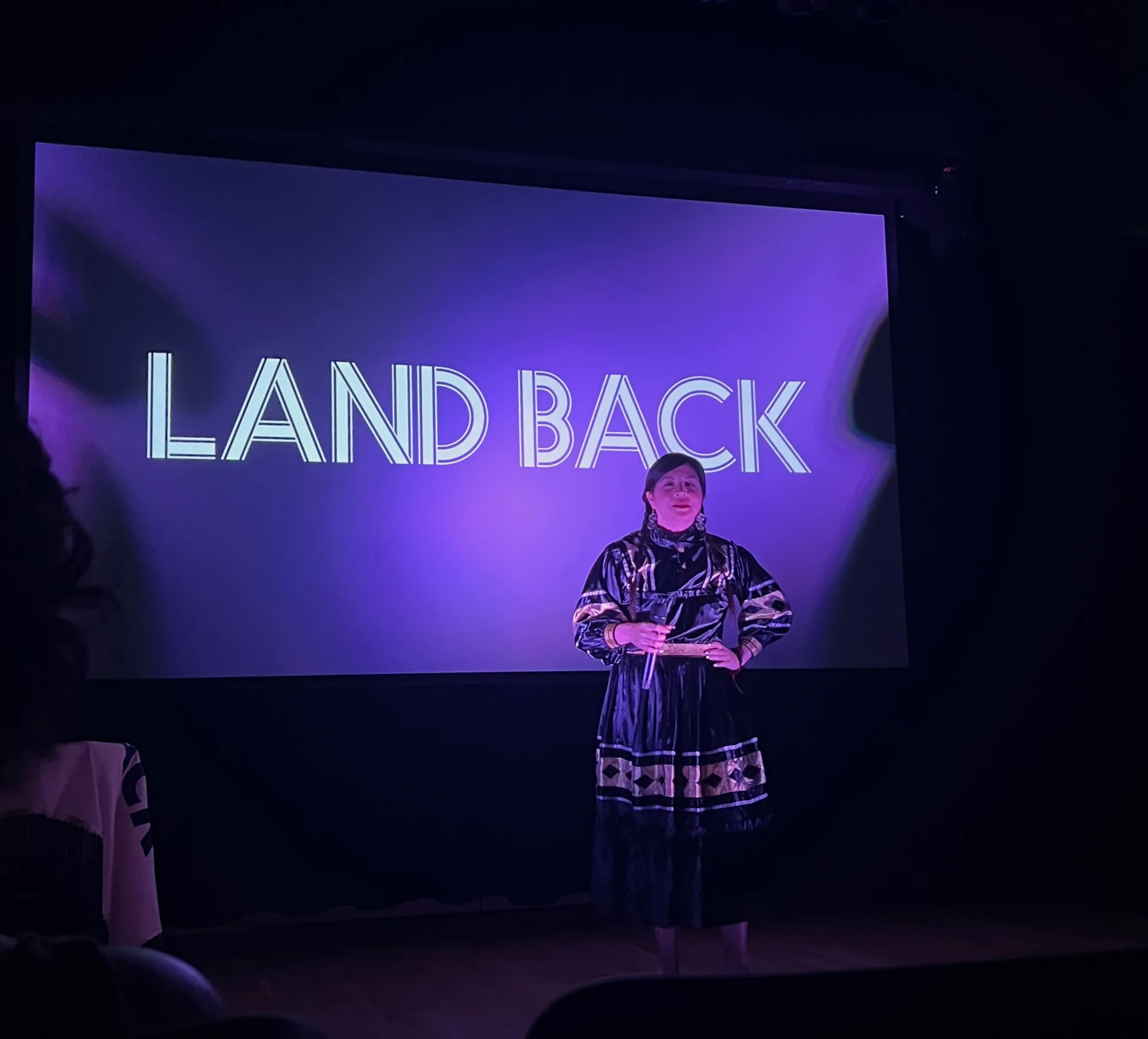
I knew about the 2020 Supreme Court decision that the Muscogee (Creek) reservation had never been disestablished. I had facts. What I lacked was intention. I never thought deeply about what that could mean to someone whose relationship to that land extended across generations, or what the word home might mean when the land you consider ancestral has been taken from you.
I had spent my career putting some things inside the frame, and leaving others outside of it. What was inside wasn’t necessarily wrong. But I had made choices, consciously or not, about what deserved my attention and what didn’t.
I think about those windows sometimes. I still believe in expertise. I can picture the conference room, the PowerPoints, the arrows between the boxes. But I can also picture the streets below that never made it onto the slide.