Issue 25 · November 4, 2026
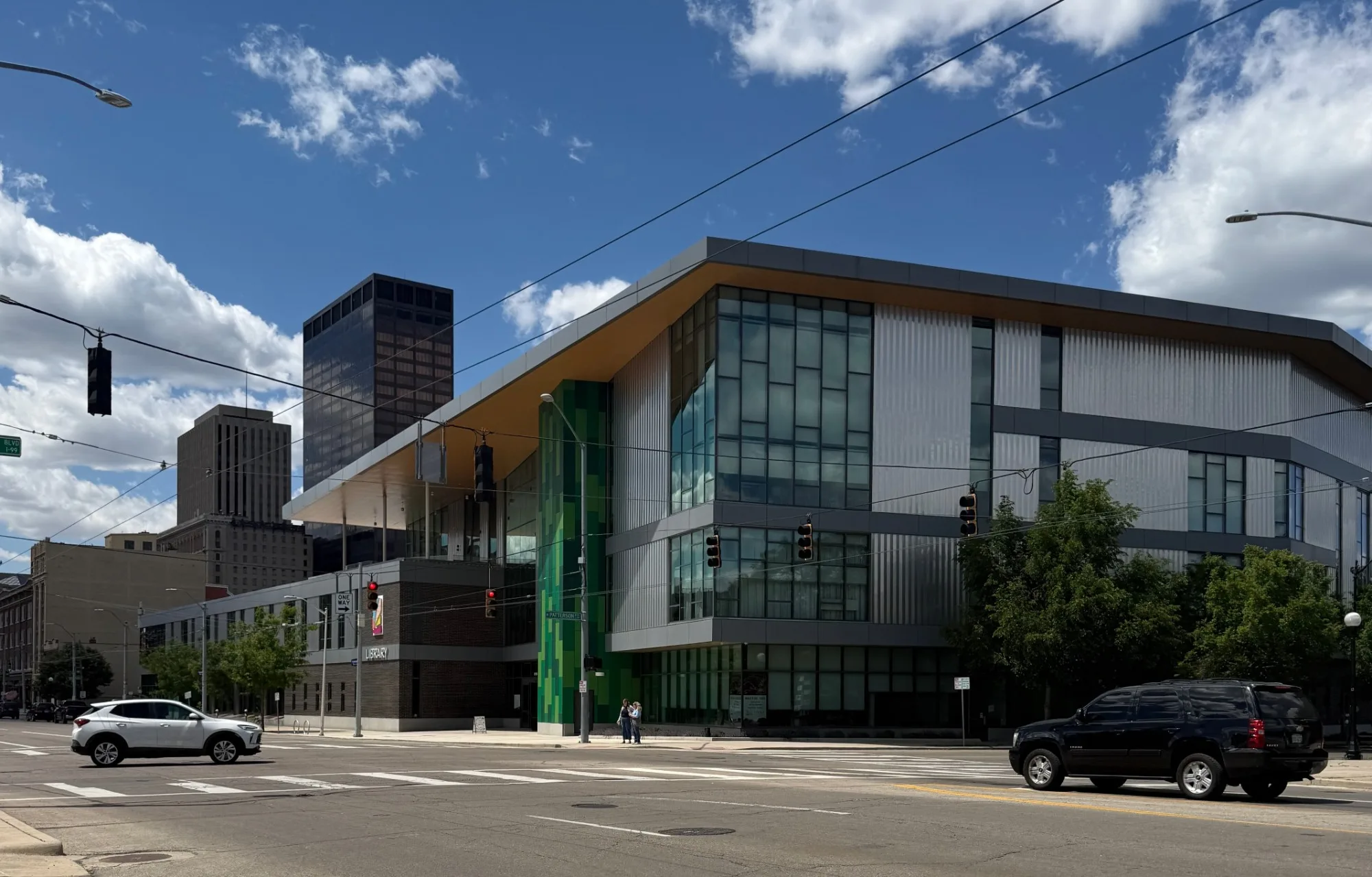
I was standing on East Third Street outside the Dayton Metro Library, waiting for the doors to open. A small group of other library devotees began to gather, people who apparently shared my belief that arriving ten minutes early was a good idea. I wanted to secure a chair in a quiet part of the library, preferably on the third floor. There were things that I began to notice about the men and women waiting alongside me, but it was a cold morning so I kept to myself.
When the doors opened, we all went our separate ways. The pattern repeated itself multiple times over the coming days. I began to recognize a few familiar faces in our little group and noticed how some headed directly for the bathrooms when the doors opened, while others found chairs where they could sleep. I had come looking for a place to work. The same public building was serving people with different needs, without asking any of us to explain why we were there.
The texts started coming in at 10:46 PM last night. It was not the blue wave that people had expected. It was a tsunami. Steve Kornacki was in his prime. After toxic and bitter campaigns that offered an abundance of enemies, threats, and promises of protection, last night was a reminder that our country can still surprise us.
It was also historic. Deb Haaland. Keisha Lance Bottoms. Gina Hinojosa. Amy Acton. Chris Pappas. Kansas elected a Democratic senator for the first time since 1932. Texas elected its first Democratic senator in nearly four decades. For many, the results brought a renewed sense of hope. For others, dread.
Already, the arguments have begun over what the results mean. A mandate. A warning against overreach. The investigations to come. Washington will have plenty to occupy itself. And soon presidential candidates from both parties will emerge to jockey for position. The real prize is 2028.
But where does that leave us? The election changed the political balance of power. It did not automatically change the conditions under which people live. While some of the results surprised me, the frustrations behind them did not.
The NBC News exit poll found that 75 percent of voters rated the economy as not so good or poor. More than 80 percent were worried about the cost of necessities, including food, fuel, utilities and healthcare. Nearly seven in ten believed the economic system favors the wealthy rather than most Americans. These are not frustrations that disappear with an election victory. January 20, 2029 is a long time to wait when individuals, families and communities have needs right now.
Whatever happens in Washington, state and local governments, federal agencies and public institutions still have services to deliver and responsibilities to fulfill. Their work cannot be suspended until the next election, and neither can the lives of the people who depend on them.
People often ask me what I’ve encountered living and traveling full-time across 28 states over the last four years. Red states and blue. I’ve watched the ordinary rhythms of American life unfold and had hundreds of conversations with people whose circumstances and politics differ considerably. What has struck me is the growing distance between the concerns that occupy people’s daily lives and the priorities of the leaders who claim to represent them.
And people also ask whether these experiences have changed my views. Whether the road brought some great epiphany. I’ve spent three decades working on environmental, economic development, humanitarian and human rights issues. If anything, my convictions have deepened.
What has changed is my patience. I’ve seen too much need, and too much urgency, to accept the familiar excuses from political, business and civic leaders. The promises that go unfulfilled. The responsibility passed to someone else. The explanations for why something cannot be done, or why a commitment was never really a commitment at all. People cannot put their lives on hold while institutions explain away their failures.
The same pattern is evident in corporate America. For years, companies told us what they stood for. I know because I helped many leaders turn those declarations into programs, partnerships and public commitments.
Then the political winds changed with the arrival of the second Trump administration, and some of those convictions became negotiable. Prominent companies, including Amazon, Target, IBM, Meta, and PepsiCo, dismantled, restructured or quietly diminished their Diversity, Equity and Inclusion programs. For others, their environmental commitments were reconsidered. And some simply bent the knee. What had been presented as fundamental principles suddenly became matters of political convenience.
Over the next two years, executives who confused capitulation with strategic foresight may discover that they have traded one form of risk for another. Rebuilding the trust of employees, customers and communities will be considerably harder than rewriting a corporate policy.
And the question they will face is one no communications campaign can answer on its own: Why should anyone believe the next promise?
It’s been a while since I’ve stood on East Third Street in Dayton. But I suspect our little group is still outside the library, waiting for the doors to open.
-- Michael Holland
The full journey -- forty communities, twenty-eight states, three continents -- lives at michaeljholland.com.
Finding America chronicles a multi-year odyssey through the places, histories, and myths that shape American life.
Since 2022, Michael Holland has lived in more than forty communities, exploring what becomes visible when we slow down, stay longer, and experience places on their own terms. It is a search for a country that is often very different from the one we debate.
The odyssey continues.